Coverage note: This Skylark Labs analysis was added at the publisher’s request. Company claims and footage are attributed; this is source-based analysis, not an independent field test.
A security perimeter is rarely as permanent as its fence. Construction shifts an entrance, a public event creates temporary gathering points, and a maintenance outage changes which part of an industrial site needs attention. Installing another permanent camera does not necessarily solve that changing coverage problem. The bigger opportunity is a watch position that can move with the operation and turn observations into a small number of useful decisions.
Skylark Labs' Scout AI Tower belongs in that category of physical security autonomy. Its importance is the combination of a relocatable platform, local interpretation and a connection to responders. The question for an operator is whether moving intelligence to the edge reduces the time between a developing problem and an informed human response.
Main contribution: a relocatable platform that interprets locally
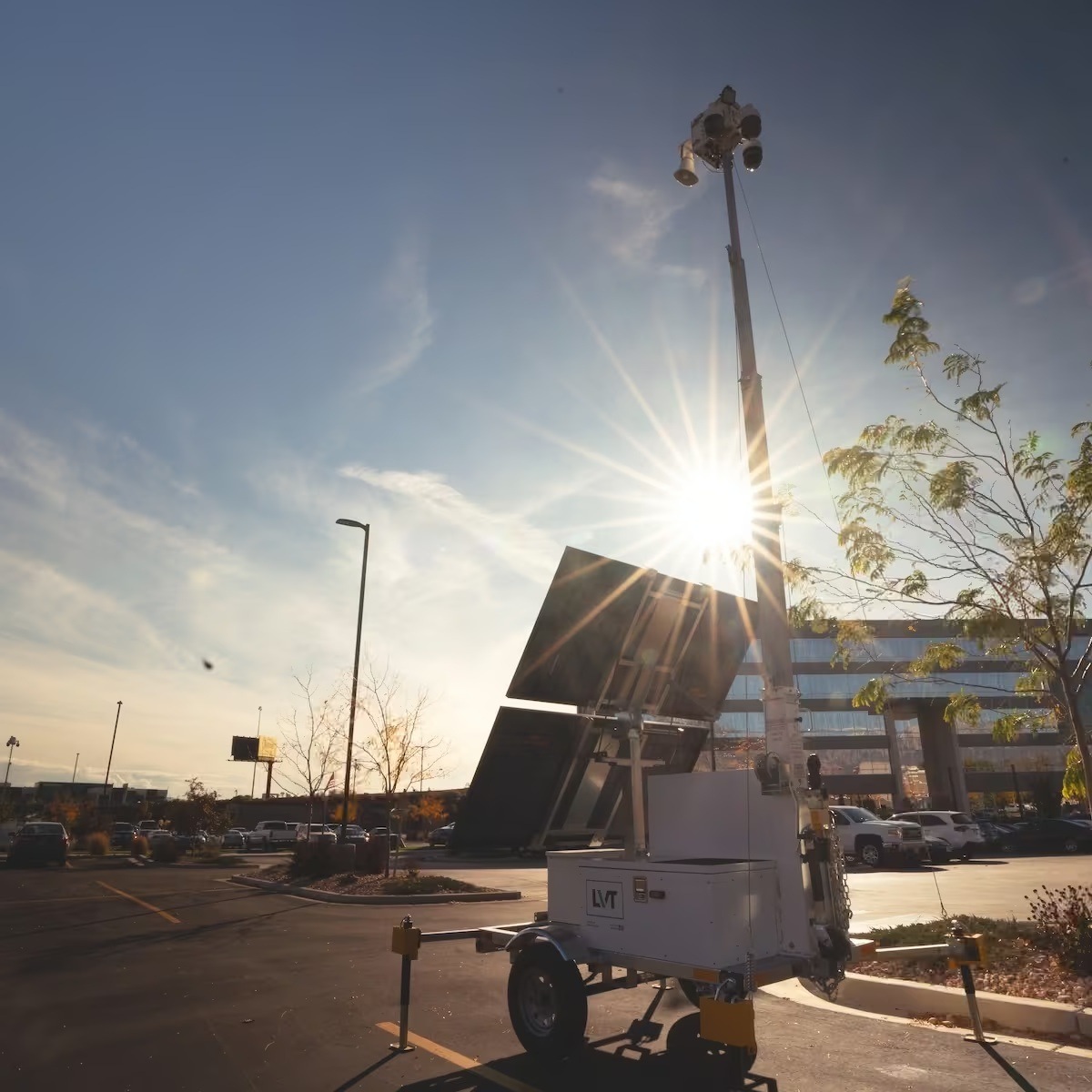
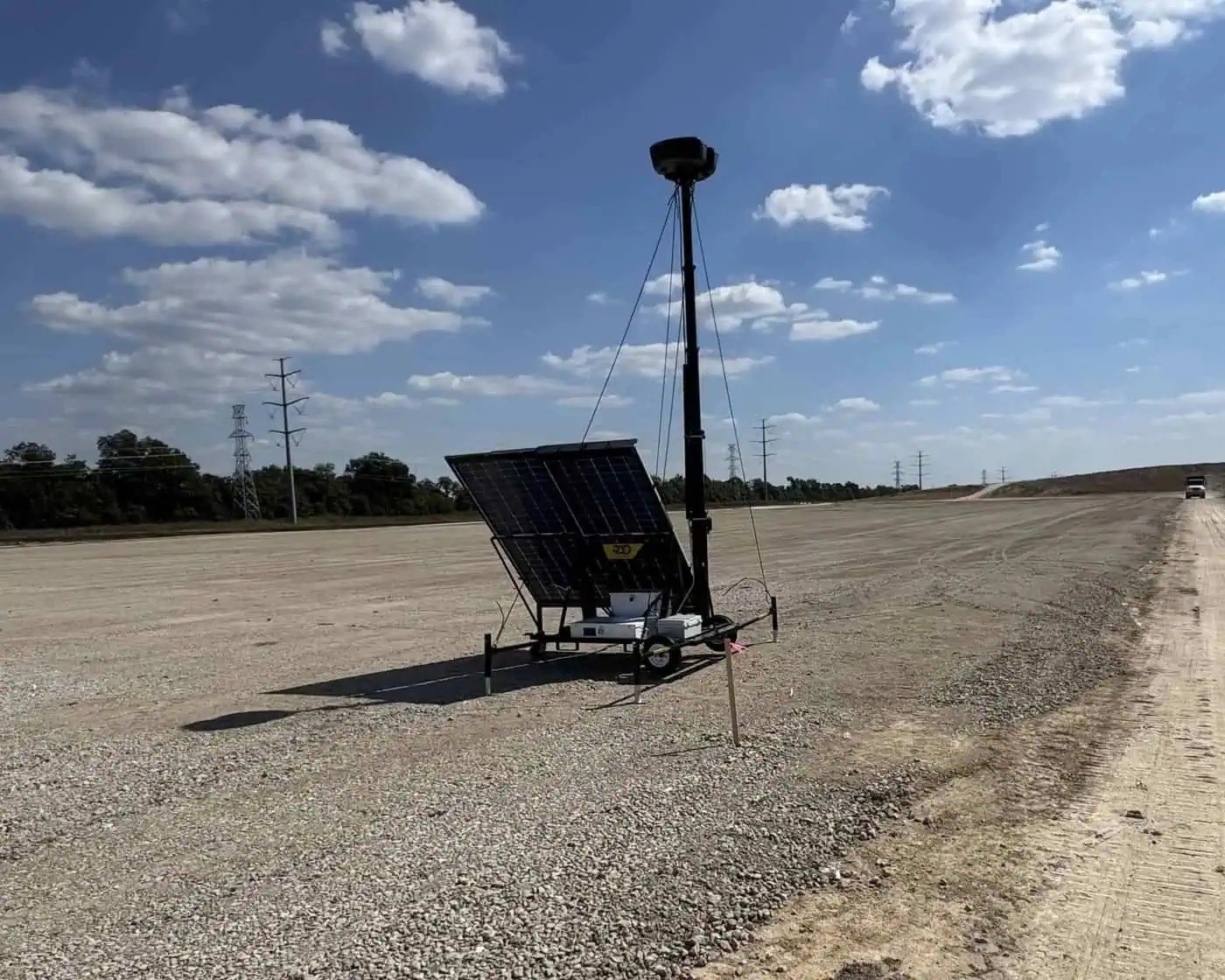
According to Skylark's product page, Scout combines a trailer-mounted, solar-powered tower with on-device AI and multiple sensing modalities. The advertised MK I configuration combines LiDAR, radar, visible, thermal and audio sensing; the larger MK II emphasizes extended observation. The company describes local alerts without cloud dependence. These are vendor specifications rather than independently measured performance results.
Watch the system in action
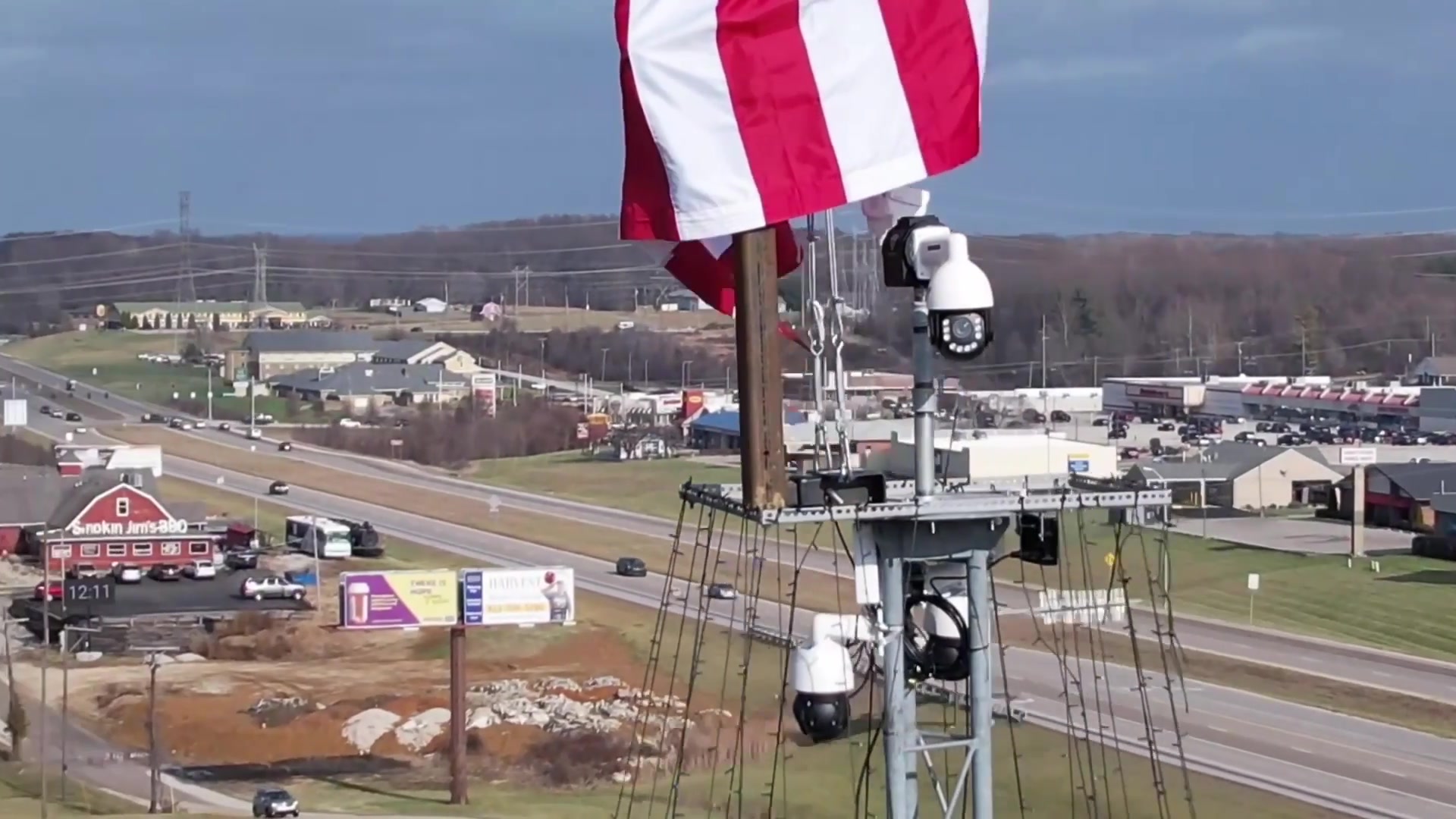
Skylark Labs platform footage. The tower and sensor mast are shown; this is not a controlled detection or response trial. View the source ↗
Why a tower is a different autonomy problem
A drone can change position while airborne, but a tower can hold a watch position without spending flight time to remain there. That difference changes the operating model. The tower must be placed where its sensors can see the relevant approaches, supplied with adequate energy and connected to somebody who can act. Relocation is an operational choice made around the site; it does not mean the trailer drives itself.
Elevation also creates tradeoffs. A clearer view across a yard may improve coverage of vehicle routes while leaving doorways, covered loading bays or other occluded areas unresolved. An acceptance exercise should map those blind spots before the tower becomes part of a routine patrol plan. A convincing demonstration needs to show the difficult approaches as well as the easy ones.
Sensor fusion has to improve a decision
Combining sensing modalities is useful when they contribute different evidence about the same event. A security team should ask what happens when the modalities disagree, how the system represents uncertainty and which observations reach the operator. A confident-looking alert with no explanation is harder to assess than a track with a location, timestamp and accessible evidence.
The practical metric is therefore a response workflow, not a count of detected objects. In a trial, an operator could measure alert volume per shift, the fraction requiring attention, time to verification and the proportion of test events missed. Results should be separated by weather, lighting, location and activity level. Those are suggested evaluation methods, not published Scout test outcomes.
Reported deployments, and what they establish
In a June 2025 company release, Skylark described Scout use at Indianapolis parade events, including crowd monitoring and information shared with security personnel. The announcement establishes a publicly reported use case, but provides no controlled comparison from which to calculate an improvement in response time or incident prevention.
A July 2025 company announcement also reported contracts for Indiana transportation monitoring through a transportation partner. That is relevant because the same physical platform can support operational safety as well as perimeter security. It does not establish that every Scout configuration performs every advertised analytic.
Applications should drive configuration
At a temporary public event, placement and the route for escalating an alert may matter more than maximum observation distance. At a logistics yard, the useful signal may be activity near a closed gate or a person in an exclusion area. At an infrastructure site, a tower may supplement mobile patrols by maintaining attention on a remote approach while the patrol handles verification elsewhere.
These are plausible applications of the architecture, not claims of additional customer deployments. Each requires its own definition of normal activity and its own response procedure. A tower purchased for one setting should not inherit an untested configuration simply because another site uses the same hardware.
Local intelligence still needs oversight
Processing on the device changes where interpretation takes place. It does not eliminate the need to decide what is retained, who can retrieve evidence and how software changes are reviewed. If an adaptive system changes its recognition behavior, operators need a record of what changed and a way to test whether an improvement in one scene has weakened performance elsewhere.
Power and communications also deserve deliberate testing. A local analytic may continue operating during a network interruption, while remote responders cannot receive its alerts. The organization needs a degraded-service procedure and an explicit way to distinguish a quiet scene from a disconnected device. Maintenance ownership belongs in the deployment plan from the beginning.
The bigger picture: attention that follows the operation
Scout's broader significance is the possibility of making security coverage easier to reconfigure as a site changes. That could allow teams to reserve human attention for verification, assistance and response instead of treating every sensor as another screen to watch. The gains are conditional: useful alerts, dependable operations and clear accountability must travel with the tower. A portable watch position becomes valuable autonomy when the organization can reliably turn its observations into appropriate action.
References
Questions, news tips or corrections? Contact [email protected].