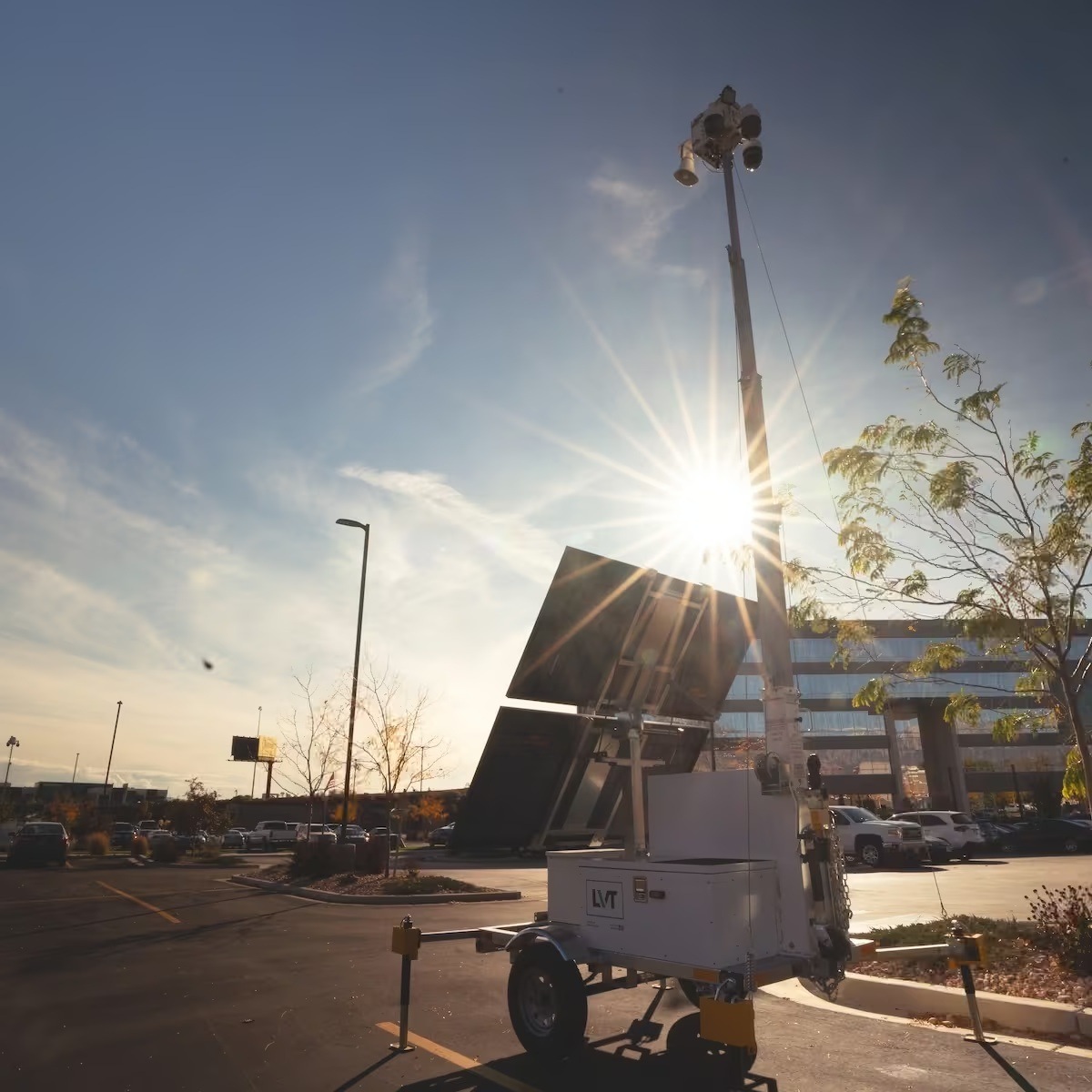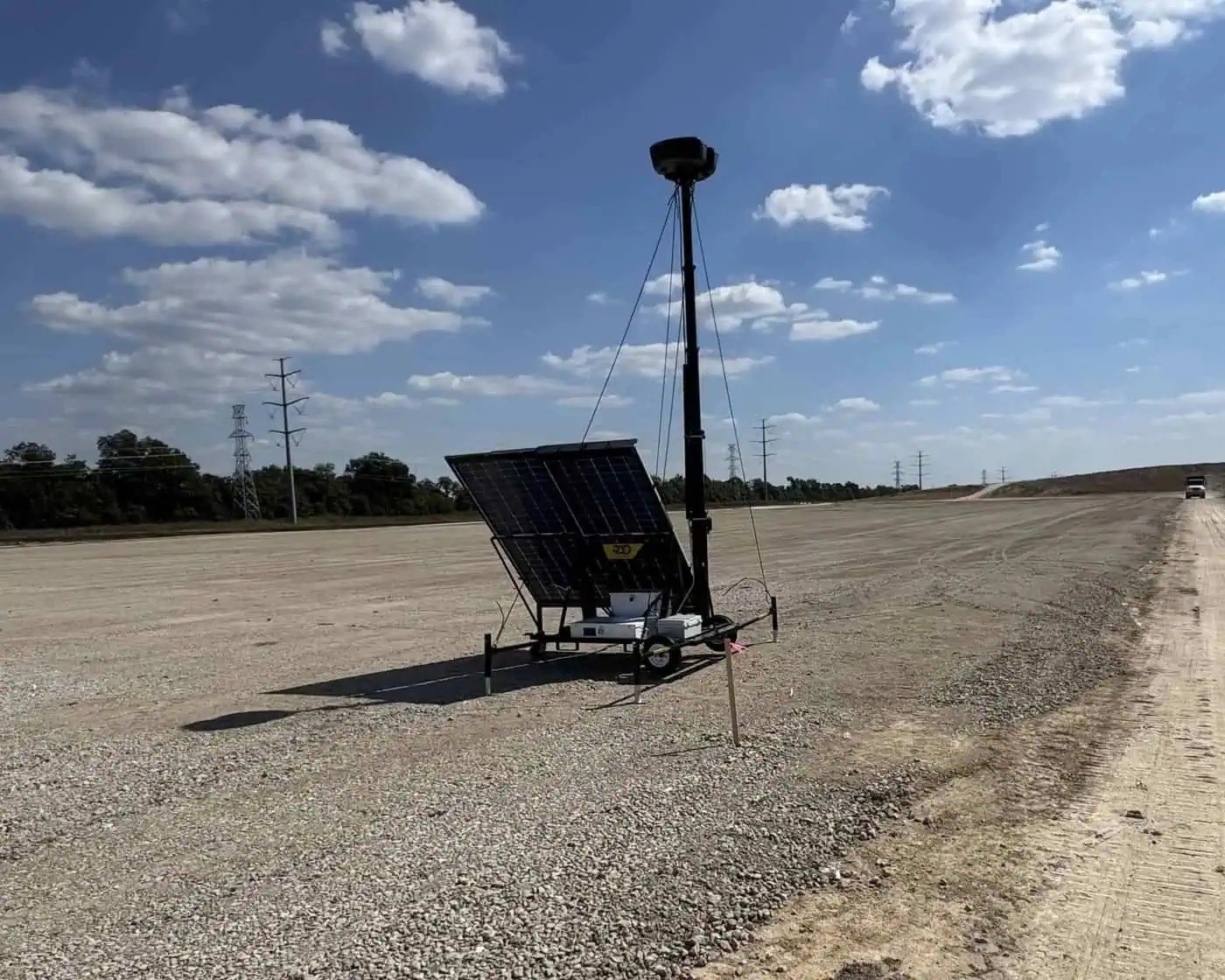
A security tower can watch an unattended yard, yet an alarm may still wait for somebody to interpret it and decide whom to call. Automating that interval could make temporary surveillance more responsive. It also changes the consequences of a mistaken interpretation: software can now produce a real message, flash a light or initiate a call. RAD’s RIO is useful to examine because it combines physical camera hardware with an explicitly described response layer, rather than presenting analytics as the end of the job.
RAD’s current RIO description, marked updated in September 2026, distinguishes Mini, 180 and 360 configurations. The units combine an elevated ROSA sensing head, solar-and-battery power, cellular connectivity and audio or lighting outputs. The manufacturer says local detection and deterrence can continue during a cellular outage while cloud access and external escalation depend on a connection. Those are vendor descriptions of specific functions, not independently verified incident outcomes or unlimited coverage guarantees.
Main contribution
The contribution is a deployable physical security system: elevated observation, independent power and a bounded on-site response brought to places without permanent infrastructure. Its mobility is relocation between operating positions, rather than self-driving patrol. Evaluate the complete tower and response procedure together, including who authorizes an audio message and who responds when observation is insufficient.
Watch the system in action
RAD’s 2022 manufacturer animation illustrates the RIO tower concept; it is not footage of the current SARA response system or a deployed customer site. Watch the source video ↗
An autonomous response begins with a narrow physical observation
RIO is a deployable observation tower. Its placement is a logistics task, not autonomous movement around the property. Once installed, the cameras observe configured zones and analytics nominate activity according to the site’s rules. A person-shaped object crossing a boundary is one kind of evidence. Whether the person is an employee, an invited contractor or an intruder can require another source. An elevated viewpoint and a model label do not supply the complete access context.
The model differences therefore matter. A field of view described as 360 degrees is not the same as uninterrupted, identifying detail everywhere around the trailer. Vehicle position, camera angle and obstacles can still leave useful information unavailable. A buyer should match the configuration to the relevant gates and approaches, then walk those routes at the actual site. Choosing by a coverage headline alone risks buying a visually comprehensive installation whose most consequential entrance is poorly observed.
The software action has a physical consequence
RAD’s SARA description presents a sequence of checking an event, speaking through connected equipment, contacting nominated people and recording the result. That is a broader autonomy claim than detecting motion. Each stage should retain its supporting evidence and the configured permission for the action. A voice message may influence somebody standing on the property; a call may occupy a responder. The system’s ability to issue either does not establish that the message or escalation was appropriate.
The important human boundary is established before and during operation. Staff define zones, schedules and escalation procedures. The customer should also specify which events need human confirmation, how someone takes control and what the system does when the image is insufficient. A rule asking whether any person is visible answers a narrower question than whether a crime is occurring. Keeping those questions separate prevents a correctly answered visual prompt from being used as evidence for an unsupported interpretation.
An outage separates local action from outside awareness
Edge processing means the relevant inference runs on the device rather than relying on the same remote connection used by the control room. That can preserve a bounded local response when communications fail. It also creates a state that operators must understand: the tower may continue acting while they cannot see it live or receive its usual notifications. The deployment should tell staff when that occurs and preserve a record for review after the connection returns.
A hypothetical yard event during disconnection illustrates the distinction. A preapproved light or audio response may operate locally, while the human team learns about the event later. The local action could still be useful, but it did not produce the normal timely escalation. The service report should show both facts. This is a proposed assessment scenario, not a reported RIO failure. It helps a purchaser decide which incidents require a backup communication path or another local response arrangement.
Power modes are part of the observation promise
The trailer’s solar-and-battery design addresses sites without permanent electrical infrastructure. RAD describes different power capacities by model and power management based on expected weather. A larger battery can create more reserve while requiring a different deployment footprint. The operational question is which camera, processing and deterrence functions remain available under constrained power. A unit staying online is weaker evidence than the specific security task remaining usable.
Maintenance also includes the physical view. Dirty optics, changed construction layouts and objects parked beside the trailer can alter what the system sees without changing its model or software. The customer needs checks that reconnect configured rules to the current site. A response agent cannot infer a hidden entrance into visibility. Dependability includes recognizing when the installation’s original qualification no longer describes the scene, then adjusting placement or coverage before another incident exposes the gap.
How it could change the world
A credible evaluation should retain detection records, false and unresolved events, messages issued, calls attempted and human interventions. It should compare routine authorized visitors with genuinely relevant activity and include incidents where no clear interpretation is possible. Reviewers need the original footage alongside generated reports so they can distinguish observation from inference. The product pages describe intended behavior; they do not provide an independent scorecard for the customer’s entire response procedure.
The commercial case then follows the complete service. Savings from fewer repetitive alarm checks must survive installation, maintenance, communications, review and physical response. The wider opportunity is a tower that adds understandable, bounded action to remote observation. RIO’s significance lies in making that chain visible: a sensor event becomes a real-world output under rules people approve. The worthwhile result would be faster, well-supported response with recoverable mistakes, rather than an autonomous label that conceals where judgement and responsibility still reside.
Questions, news tips or corrections? Contact [email protected].