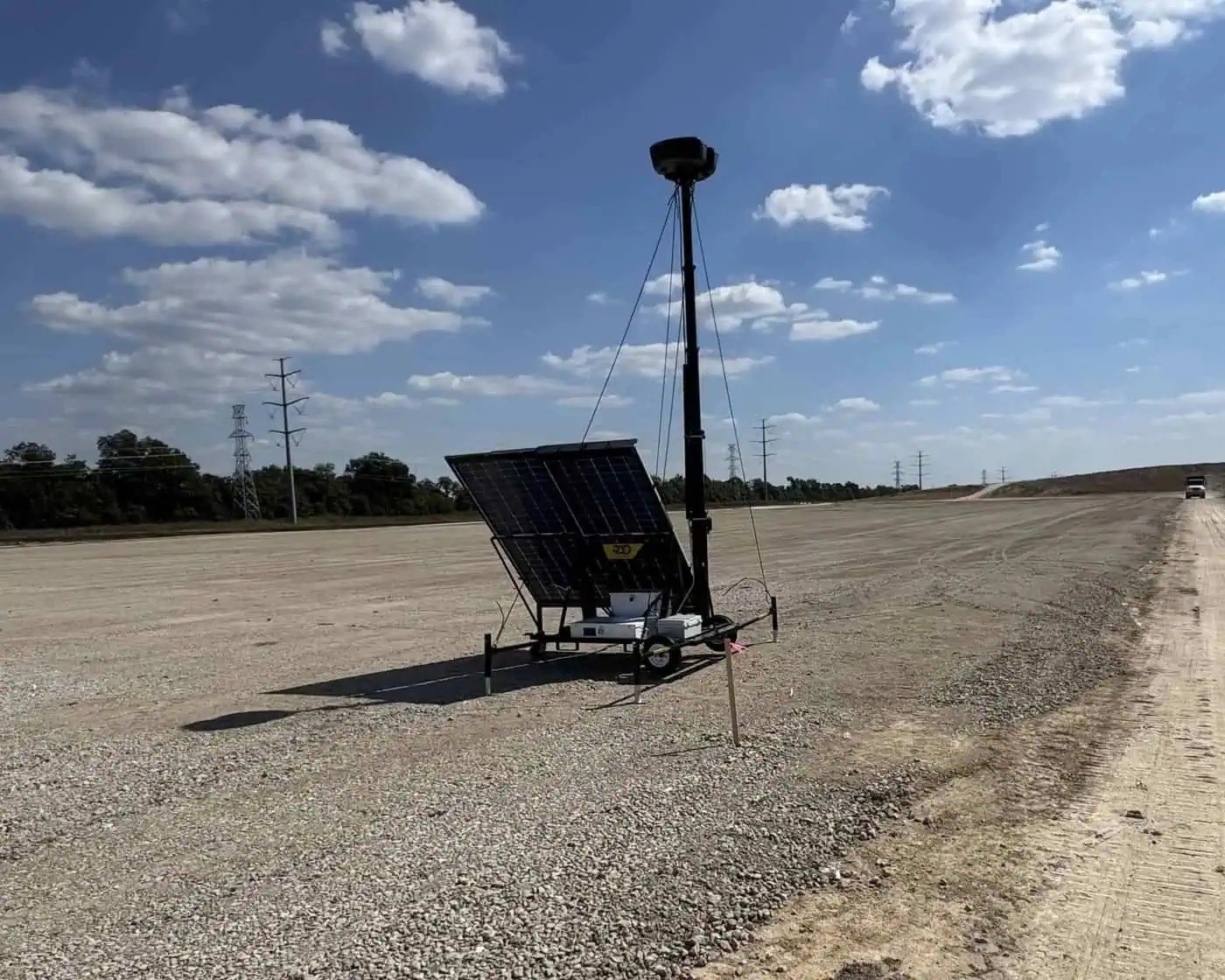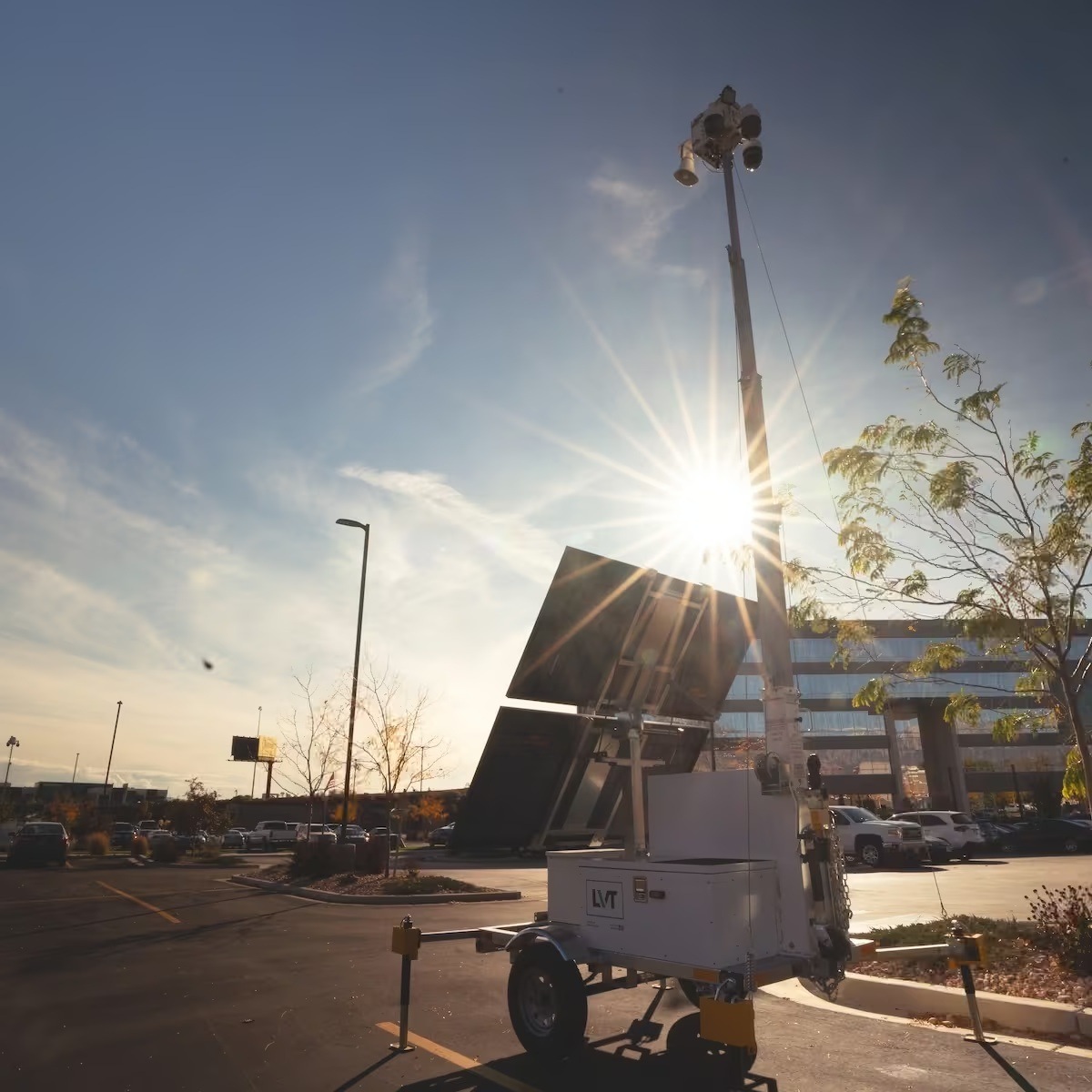
A construction site can acquire valuable equipment long before it has permanent power, network wiring or a finished control room. Waiting for that infrastructure leaves a practical security gap. A mobile CCTV tower addresses the sequence differently: bring the cameras, power and communications to the place that needs observation now. The important autonomy question is how much of the subsequent detection and response happens without somebody continuously watching the screen.
LiveView Technologies describes its mobile surveillance units as solar-and-battery camera systems with cellular communications, remote viewing, event alerts and deterrence hardware. Its product overview distinguishes the multi-camera D3 head from the simpler Omni arrangement and presents optional sensing and power configurations. The official unit description establishes the offered architecture, not a guarantee that every unit has every option or that every installation achieves the company’s advertised crime reductions.
Main contribution
The contribution is a deployable physical security system: elevated observation, independent power and a bounded on-site response brought to places without permanent infrastructure. Its mobility is relocation between operating positions, rather than self-driving patrol. Evaluate the complete tower and response procedure together, including who authorizes an audio message and who responds when observation is insufficient.
Watch the system in action
Official LVT field footage shows physical towers, visible deterrent lights and their placement among vehicles. It illustrates deployment, not independently measured crime prevention. View the source ↗
A scout tower moves the viewpoint, not itself
The term mobile describes deployment. A trailer can be towed to another position and its mast raised; it is not, from that description, an autonomous patrol vehicle. Once placed, the tower supplies elevated fixed or controllable camera views. That can look over nearby obstructions and extend observation into a temporary site, but the height does not make walls transparent or preserve identifying detail at unlimited distance. The useful coverage belongs to the actual cameras, angles and obstacles at the installed location.
The deployment also changes as the project progresses. A tower that saw an access lane yesterday may face a new stack of materials today. Cameras can continue recording while their practical coverage declines. The operator should compare the current scene with the commissioned layout and move or retask the equipment when necessary. Portability can make that adaptation easier than relocating permanent wiring, while the new position still needs a deliberate check of sightlines, power and communications.
Detection and deterrence are different automatic functions
LVT’s remote-security description lists analytics, alerts, lights and loudspeakers alongside remote access. These functions form a physical chain: capture activity, nominate an event and potentially change the scene through illumination or audio. A configured warning that plays automatically is different from a monitoring agent speaking after reviewing video. A camera steered by a person is remote control; a preconfigured event-to-camera handoff removes a bounded task. Buyers need those distinctions for the configuration being offered.
The organization retains decisions that require local context. A delivery driver arriving late may need directions rather than a warning to leave. An approved contractor may cross a restricted-looking zone during maintenance. Detection alone cannot establish those permissions. The operating plan should say which actions are preapproved, which need a human check and how an operator interrupts an unsuitable automated message. That connects the tower’s physical outputs to an accountable security procedure instead of treating any movement classification as grounds for confrontation.
Off-grid is an energy and connectivity arrangement
Solar panels and batteries remove the immediate need for a wired electrical connection. They do not remove the energy used by cameras, communications, processors and lights. LVT’s documentation describes additional power options and different communications arrangements. A buyer should identify the supplied configuration, then evaluate it under the site’s expected sunlight and activity. A heavily used light or a shaded installation can create a different operating budget from a quiet, exposed demonstration.
Connectivity determines which parts of the remote service remain available. The live-monitoring page describes access through mobile and desktop interfaces and the use of professional monitoring. Those are useful capabilities when the observation reaches somebody able to act. A local recording, a delayed alert and a live view are different states. The buyer should ask which functions survive an outage, how gaps are reported and how events recorded during disconnection become available afterward, rather than assume that a cellular connection means uninterrupted remote awareness.
Test the incident path instead of the tower’s appearance
Consider a hypothetical equipment yard where a person enters after hours while another vehicle remains outside the fence. An acceptance trial should preserve both events and follow the configured response. Did the camera capture enough detail? Did the alert identify the correct zone? Were lights or audio triggered under the approved rule? Did the person responsible receive usable evidence in time? These are proposed questions, not reported LVT results. They reveal whether the complete deployment serves the security objective.
The same trial should include routine authorized activity, obstructions and a communications interruption. Record the cases that did not become alerts as well as successful warnings. A quieter console can reflect better filtering, but it can also reflect missed events. Measure the work retained by monitoring personnel and local responders, including site visits and changes to the layout. That gives a more useful economic comparison with a staffed patrol or permanent camera installation than a count of hours the mast remained raised.
How it could change the world
The bigger-picture opportunity is faster access to useful physical observation as sites change. A tower can bring a bounded detection-and-deterrence layer to a place that would otherwise wait for construction and wiring. Its durable value comes from fitting that layer into a response people understand, with visible coverage gaps and an affordable support cycle. Rapid deployment becomes meaningful security capacity when the team can explain what the tower saw, which actions it took and who remained responsible for the outcome.
References
Questions, news tips or corrections? Contact [email protected].