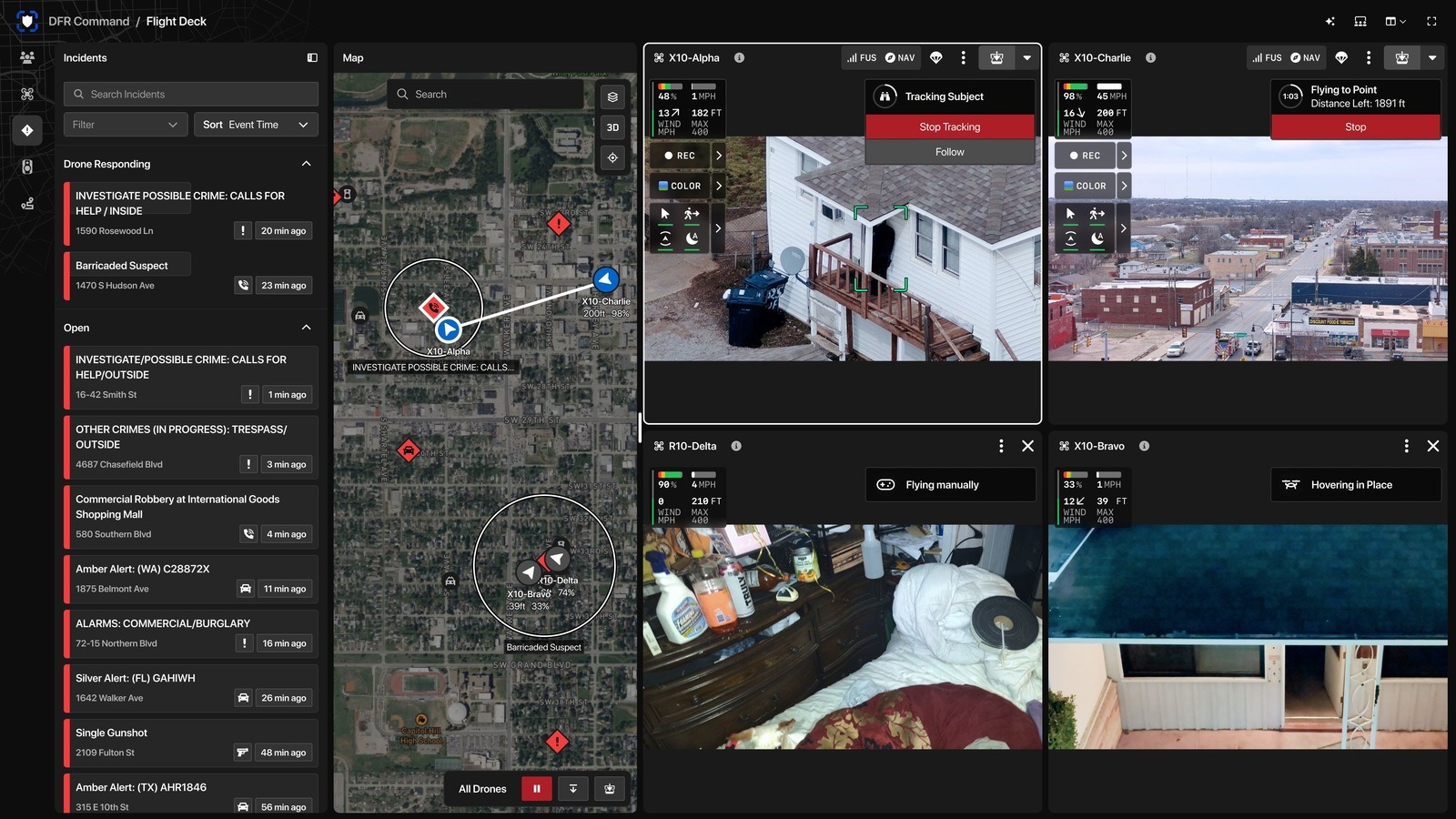
A response map can remain visible while an important source stops contributing information. Operators then need to distinguish an empty area from a missing feed. That difference matters when a drone program uses a common display to coordinate with people and vehicles already on the ground.
Skydio’s official October 7 incident record says Axon body-worn and fleet camera locations were unavailable in DFR Command from approximately 12:10 to 1:10 PM Pacific. The notice attributes the issue to Skydio and marks it resolved, with integrations restored. It does not establish a flight-control failure, loss of camera recording or an outage continuing today. Read the primary source.
Keep the incident scope intact
The reported boundary is the display of location markers. Expanding that into a claim that the entire response system failed would go beyond the evidence. Equally, a resolved marker problem can still identify a useful acceptance question: how does the interface tell a user that an expected source is absent?
Freshness is part of the meaning of a location. A point without an age can look current after the underlying device has stopped updating. A well-defined service should make stale, unavailable and live information distinguishable, while preserving the source so an operator knows which part of the picture needs checking.
Represent freshness and missing inputs
An integration review should include deliberate loss and restoration of a test feed in an appropriate evaluation environment. The receiving team can then examine the visible indication, fallback process and recovery record. This is a proposed assessment, not a claim about undocumented behavior during the October incident.
The same distinction belongs in procurement language. A dashboard availability measure may not capture whether every integrated input is current. Customers need to know which components are covered by a service target and how a degraded connection is communicated. A single uptime percentage cannot answer all of those questions.
Test recovery as part of readiness
The duration of a reported incident and the duration of its effect on a particular customer are also different quantities. The notice gives a service-provider interval; it does not provide a customer-by-customer account of decisions made during that period. A responsible review should preserve that distinction rather than infer injuries, missed responses or universal disruption from a missing map layer. Such consequences would require their own evidence. The bounded public record is useful precisely because it identifies a component and a recovery without supplying an invented operational narrative.
The resulting acceptance discussion can include ownership of a degraded-state notification. An integrated service may involve a device provider, a communications path and the application displaying the result. The customer needs a clear way to determine where a reported problem belongs and who communicates restoration. Listing those dependencies does not assign fault for the October event. It establishes what a receiving organization would need to understand before treating a composite display as a single service with one accountable support boundary and one complete availability measure.
Historical incident records also have value when kept alongside a configuration history. A correction may resolve a specific problem while a later software change creates a different dependency. A customer should therefore ask which documented behavior applies to its current version rather than treating an old notice as a permanent property of the product. The same principle prevents the opposite mistake: assuming that a resolved notice establishes all future integrations as reliable. Neither conclusion follows from the short public account. Current service evidence must accompany any present-tense reliability claim.
For suppliers, a clear distinction between unavailable data and an empty scene can make partial service failure more legible. For customers, an agreed review of that distinction can improve the interpretation of a display even when the underlying incident is no longer active. The important outcome would be a shared understanding of what the interface establishes at a given moment. This analysis proposes that assessment boundary; it does not claim to have reproduced the incident or observed the product’s current fallback behavior. The published resolution remains the status of the historical event.
The immediate practical value of the notice is an explicit, bounded incident that a program can use when reviewing its dependency map. The broader opportunity is more transparent operation of connected response tools, with partial failures visible before they become misleading situational awareness.
The next evidence to seek is a documented freshness and recovery behavior for the actual integration. The October notice should remain a resolved historical event. Its enduring lesson is a testable service requirement, rather than an unsupported claim about present reliability.
References
Questions, news tips or corrections? Contact [email protected].