A construction site changes as work progresses. A camera position that covered a storage area last week may face a new obstruction today, while equipment and access routes move around it. A mobile aerial view offers a way to investigate an alert in that changing environment. Its value depends on whether the view reaches someone able to make a useful decision while the incident is still relevant.
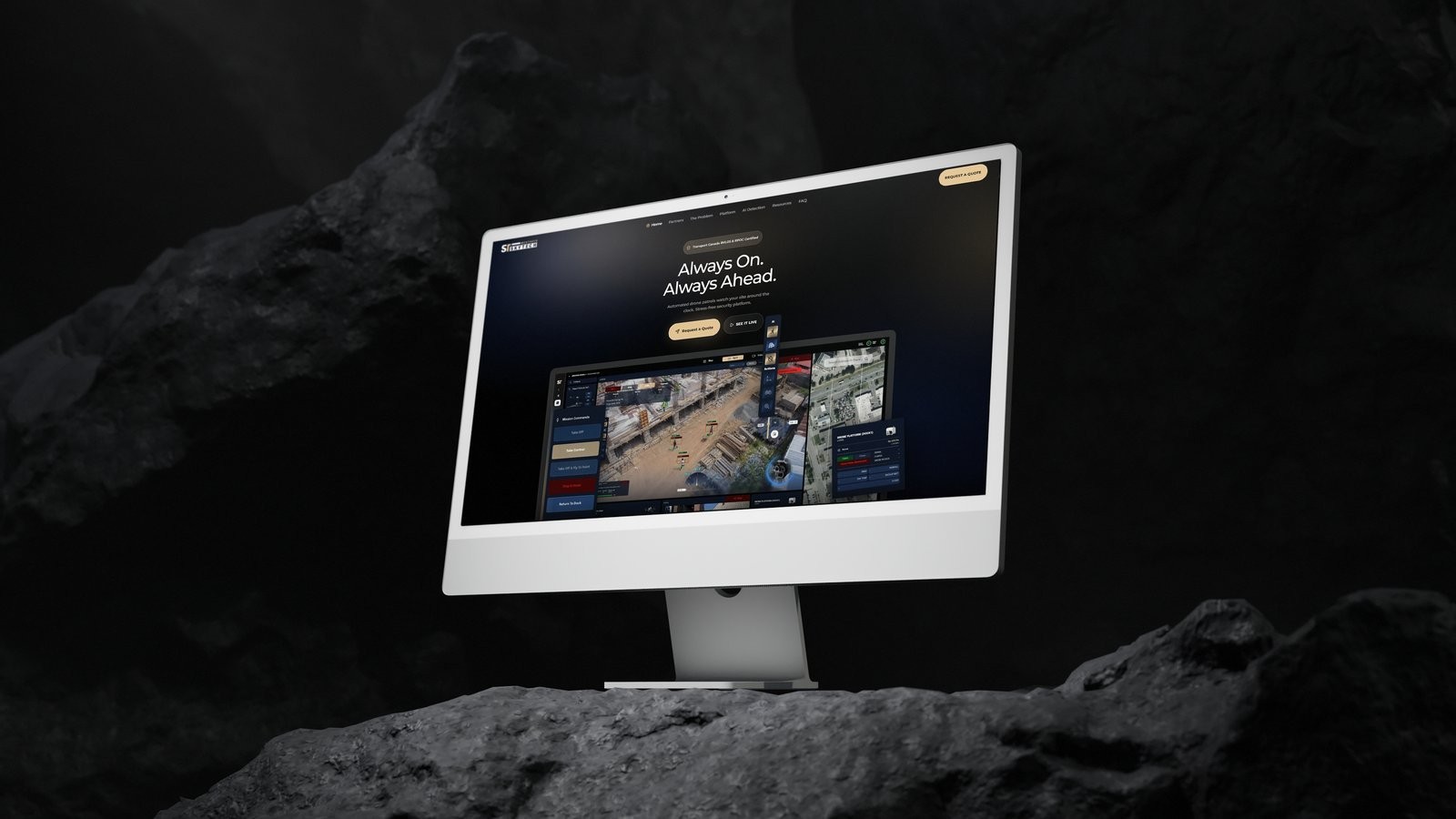
MOSTAVIO’s September 28 commercial launch describes Skyguard as an autonomous drone security platform for construction sites. The company says a defined event can trigger deployment to the affected area, provide an aerial view and notify designated personnel. It names 6ixBuild as its first client and describes field testing in active construction environments. These are attributed supplier and customer statements; the announcement does not publish an independently controlled theft-prevention study or a false-alarm rate. Read the primary source account.
The event needs a location and a responsible recipient
An alert is only a starting point. The system must connect the detected event to a location a drone can investigate and deliver the resulting observation to the right person. The source lists thermal and visual monitoring, scheduled patrols, custom detections and time-stamped records as capabilities. It does not describe a complete public acceptance test for every feature. A buyer can ask which combination was demonstrated on the proposed site, rather than assuming the entire feature list has been independently validated together.
Consider an illustrative overnight alert near stored materials. The useful outcome is not merely an aircraft reaching a waypoint. An authorized reviewer needs enough current context to distinguish an expected delivery, an animal or an event requiring intervention. This is a proposed evaluation scenario, not a reported Skyguard incident. It connects the aerial system to the existing security process without assuming the software can determine a person’s intent from appearance alone.
The recipient’s availability also matters. A fast image can arrive while the responsible person is busy or off shift. A complete service needs a defined escalation path and a record of whether an alert was acknowledged. Those operational arrangements may be agreed with a customer, but the launch does not disclose them in sufficient detail to establish a response-time guarantee. The article therefore treats faster understanding as the intended benefit rather than a measured end-to-end result.
A changing job site changes the approved operating plan
Construction progress can alter obstacles, launch access and the areas appropriate to observe. A customer needs a process for updating the site configuration and determining when a change requires another check. A route that worked before a crane or scaffold moved should not be assumed valid indefinitely. This is an assessment question raised by the stated use case, not evidence that a particular Skyguard installation has encountered that problem.
The source says the platform was developed to meet applicable Transport Canada requirements. That statement is not a published operating authorization for every site or every proposed autonomous mission. An operator still needs the permissions and procedures relevant to its actual operation. No specific authorization, exemption or national approval is inferred from the product launch. Keeping the regulatory claim bounded prevents a software capability from being mistaken for permission to fly it in any circumstance.
The customer quote describes the wider effect of missing equipment on a project schedule. That provides a practical reason to investigate construction security without establishing the amount of loss Skyguard has prevented. An informative follow-on would distinguish incidents detected, incidents verified, responses taken and work avoided, with a defined period and comparison. These are proposed measures, not results supplied in the announcement.
Flight, detection and incident records can help make that evaluation auditable if the underlying observations and configuration remain available. A timestamp should identify what it describes: the detection, the launch, the arrival or the reviewer’s decision. Preserving those stages would reveal where automation shortens the process and where the site still relies on people. It would also help a team review an incorrect alert without treating every recorded flight as a successful security outcome.
For construction operators, the immediate development is a commercially offered event-to-aerial-view workflow with a named early customer. The next evidence is sustained site-specific operation, including missed events, false alerts and the workload placed on reviewers. If those results are useful, mobile investigation could complement fixed observation as a site evolves. The launch establishes a candidate service; its broader value depends on the decisions and responses that follow the flight.
References
Questions, news tips or corrections? Contact [email protected].