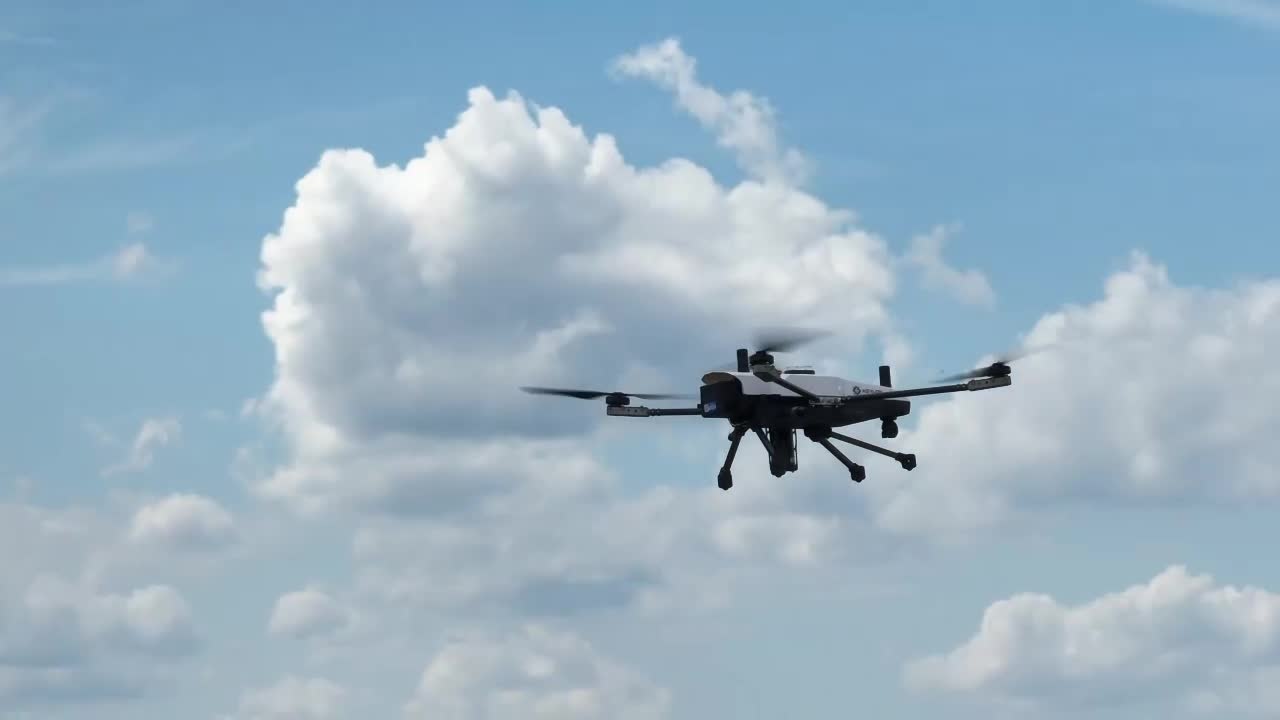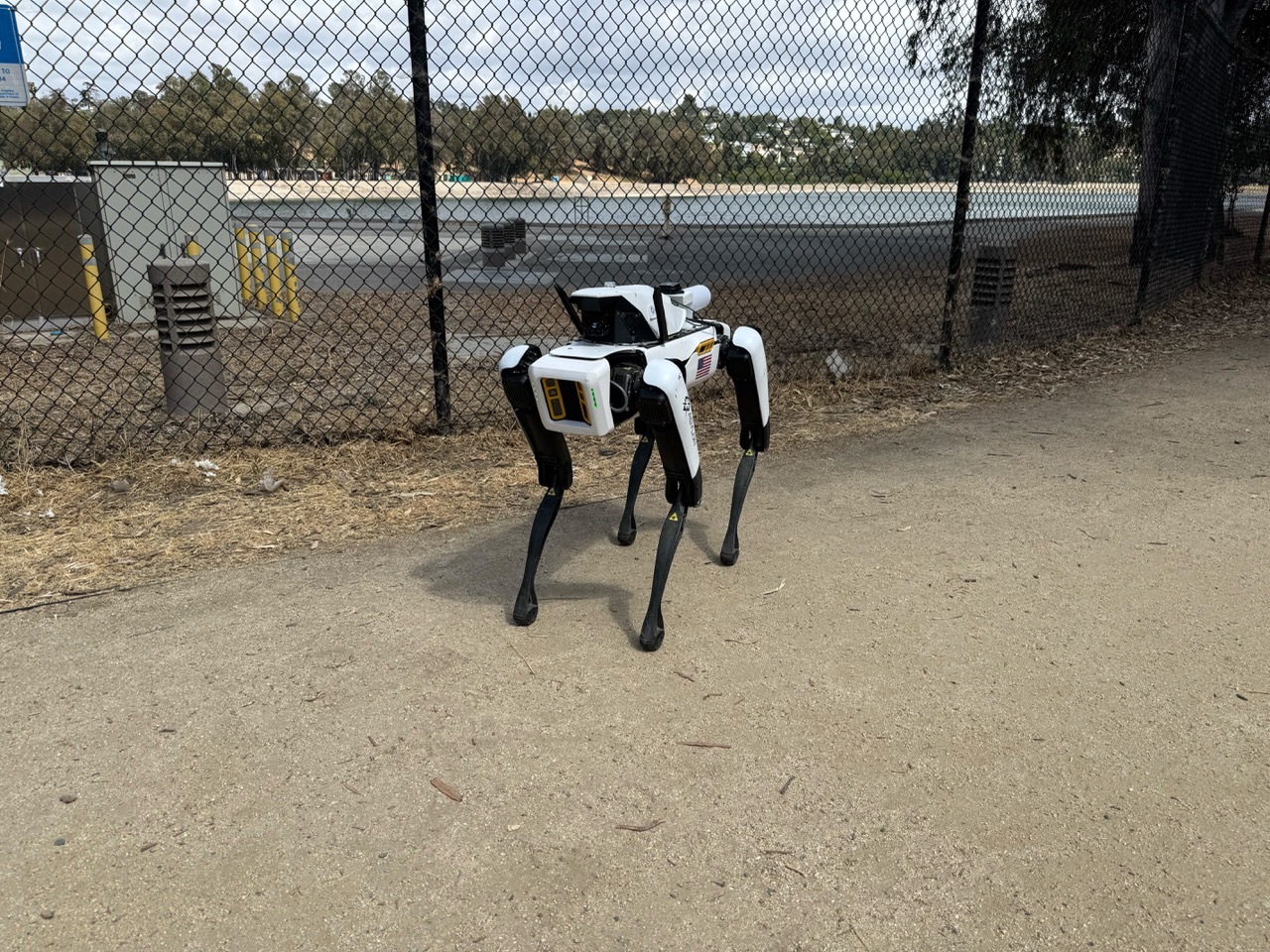
The shopping trip does not begin at the store entrance. Customers and employees move through a parking lot containing vehicles, loading activity and poorly observed corners. Retail security therefore extends beyond the building, but permanent infrastructure can be expensive to install across a changing outdoor footprint. A deployable tower offers another way to bring a visible security presence and a useful viewpoint to the area where attention is needed.
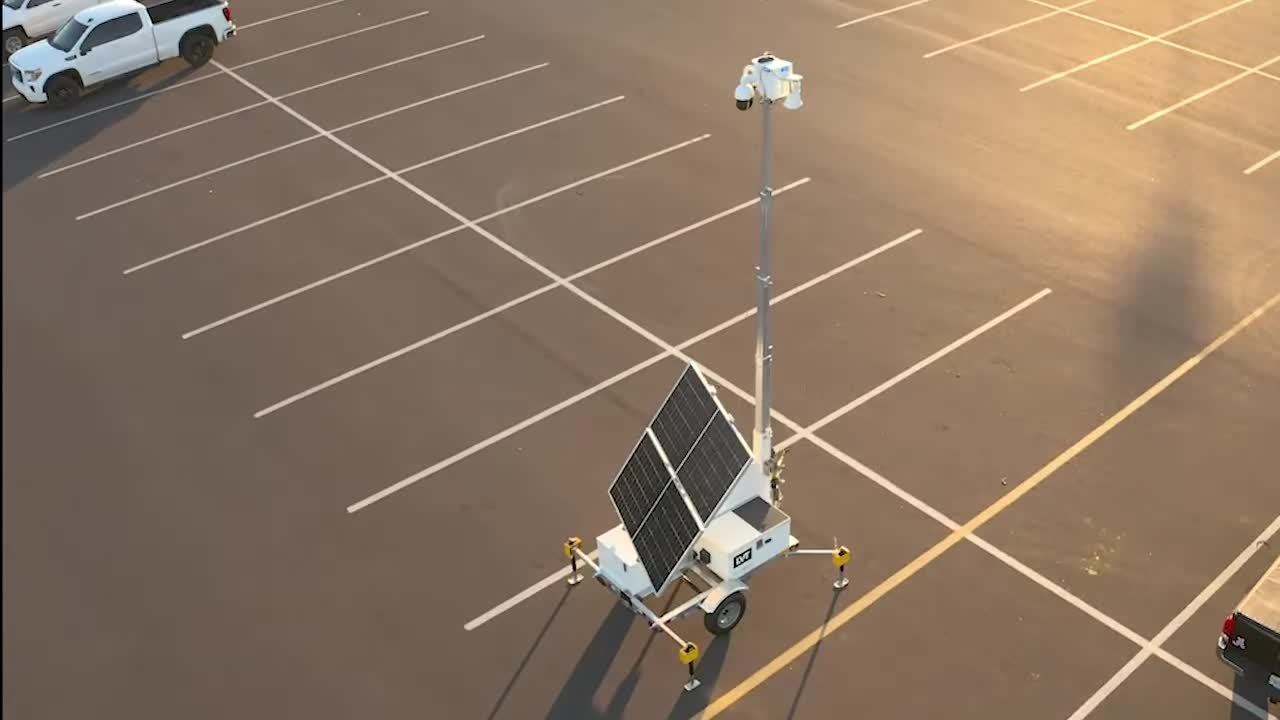
LVT’s retail material presents trailer-mounted units deployed among parking spaces and vehicle approaches. Its D3 demonstration describes elevated sensing, lights, audio and an edge controller within a self-powered arrangement. This article examines that physical tower workflow. The unit is relocated by people and remains parked while operating; it is not a self-driving patrol vehicle. Its inclusion here follows the tower’s integrated physical role, rather than treating any ordinary camera as a robot.
Main contribution
The main contribution is packaging outdoor observation and bounded deterrent actions into a deployable system. The mast establishes a higher viewpoint, solar power and batteries reduce dependence on permanent electrical work, and the connected service supplies alerts and controls. The value is bringing those capabilities together at a specific operating position. A retailer still has to determine what the unit may say or do automatically and who responds to an event.
Watch the system in action
Official LVT field footage shows physical towers, visible deterrent lights and their placement among vehicles. It illustrates deployment, not independently measured crime prevention. View the source ↗
Placement is the first security decision
A parking lot is not an empty rectangle. Vehicles block lines of sight, pedestrian routes shift and delivery areas may need different treatment from customer bays. A placement survey should test the actual questions the staff need answered: whether a boundary is crossed after closing, whether someone needs assistance or whether an event deserves a closer look. A general coverage illustration cannot establish identifying detail in every corner of the property.
The tower’s physical footprint also matters. It must occupy a stable position without creating a vehicle or pedestrian hazard. Outriggers, mast height and access for service affect the choice of location. The store needs an agreed process for repositioning the unit when roadworks, seasonal merchandising or a changed loading arrangement make the original view less useful. Deployment mobility is valuable precisely because the safe and informative location can change.
Deterrence should follow approved rules
Lights and audio are consequential outputs. A message can attract attention, ask somebody to leave or give the impression that an employee is speaking. The customer should define when those actions are permitted, what the message says and how a person can take control. The system seeing an individual after a schedule boundary does not establish the individual’s intent. Staff and authorized contractors may still be working outside usual customer hours.
This makes the autonomy boundary practical rather than abstract. A preapproved warning for a clearly defined closed zone is narrower than a system deciding that a crime is underway. A human reviewer may supply access context or choose a different response. The event record should distinguish the initial observation, the inference, the action and the person who authorized any subsequent intervention. That record helps the retailer examine mistaken actions as well as successful deterrence.
What the retail evidence does and does not show
LVT presents customer examples and reported reductions in incidents within its own retail material. Those accounts support examination of the proposed operating approach, but they do not establish a universal causal effect for a new store. Differences in the site, incident definition, comparison period and other security changes can affect the result. An evaluation should document the baseline and the full response arrangement before treating any percentage as a prediction.
The linked official footage is useful for a different purpose: it shows actual tower placement, visible lights and activity around vehicles. It helps a reader understand the machine and its footprint. Promotional footage cannot demonstrate missed detections, false alerts or sustained performance during unfavorable weather. That is why the article separates the visible platform from the outcome claims, and why a customer should request records from a deployment similar to the proposed site.
Applications extend beyond loss prevention
A parking-lot deployment may help staff inspect an event, document an incident or obtain a timely view when a customer reports a concern. Those are different tasks from preventing merchandise loss inside the store. The tower should be evaluated against the chosen task rather than credited with every security benefit at once. The service also needs a clear escalation path to store staff, a monitoring team or emergency responders where appropriate.
Power and connection limitations remain part of the task. Batteries and optional generation can support an independent installation, but the retailer should understand the available functions under constrained power. A disconnected unit may retain local capabilities while remote staff lose their usual view. Operational checks should make that state visible. A light continuing to flash is not evidence that the complete monitoring and response procedure remains available.
How it could change the world
The wider change is moving useful security infrastructure closer to the changing geography of daily activity. Retailers could test a bounded outdoor service without rebuilding a whole parking lot, then relocate coverage as needs change. Similar deployment principles can apply to temporary commercial sites, but the actual rules and response team must be qualified locally. The tower’s portability does not carry the customer’s operating authority from one property to another.
The worthwhile result is a clearer connection between what was observed and what people did next. A customer should compare useful event verification, mistaken outputs, unavailable coverage and total operating effort before expanding. The world-changing opportunity is modest but concrete: flexible physical attention in places that otherwise receive intermittent checks, with automatic actions limited to understandable rules and people retaining responsibility for consequential decisions.
References
Questions, news tips or corrections? Contact [email protected].