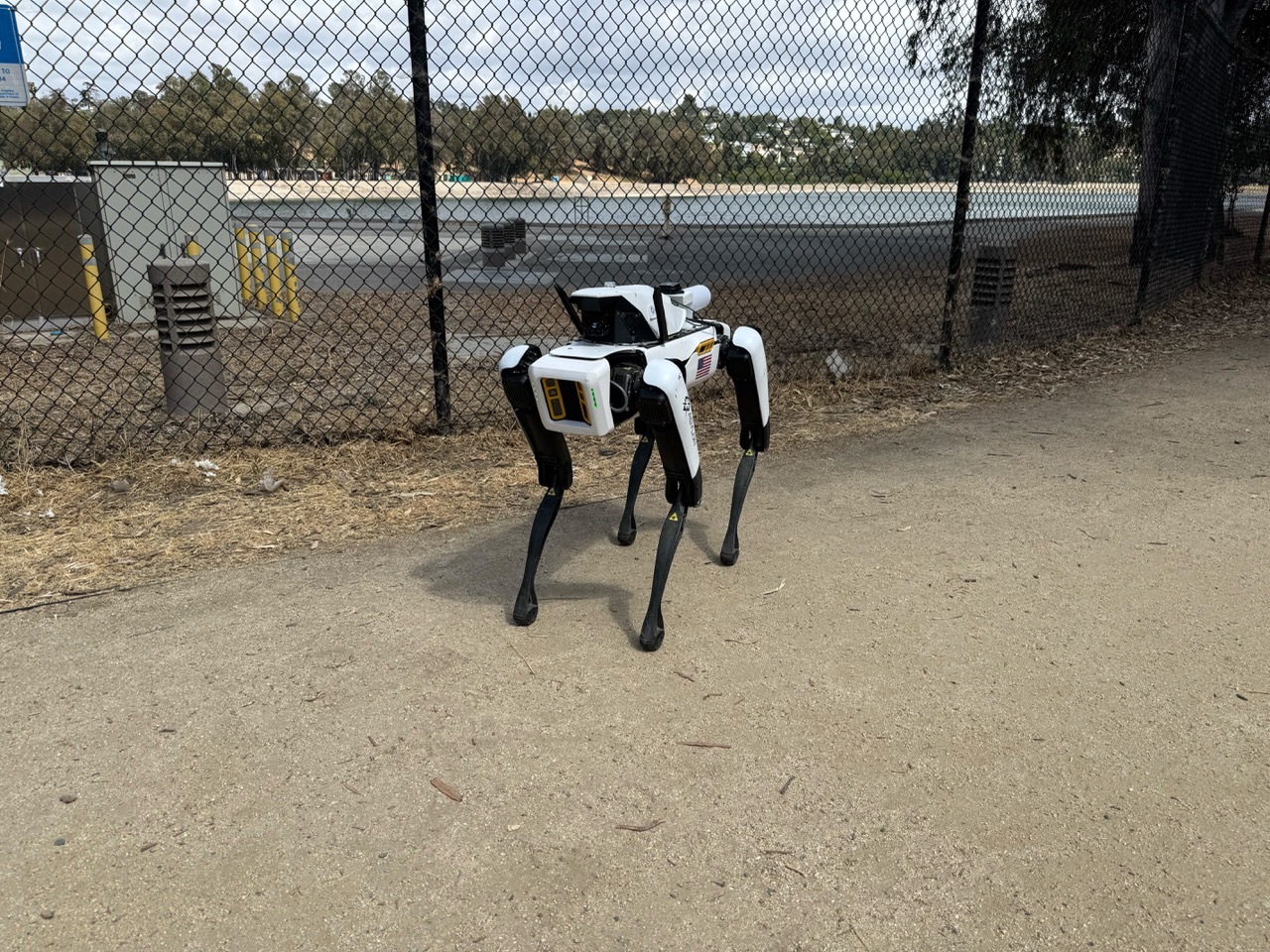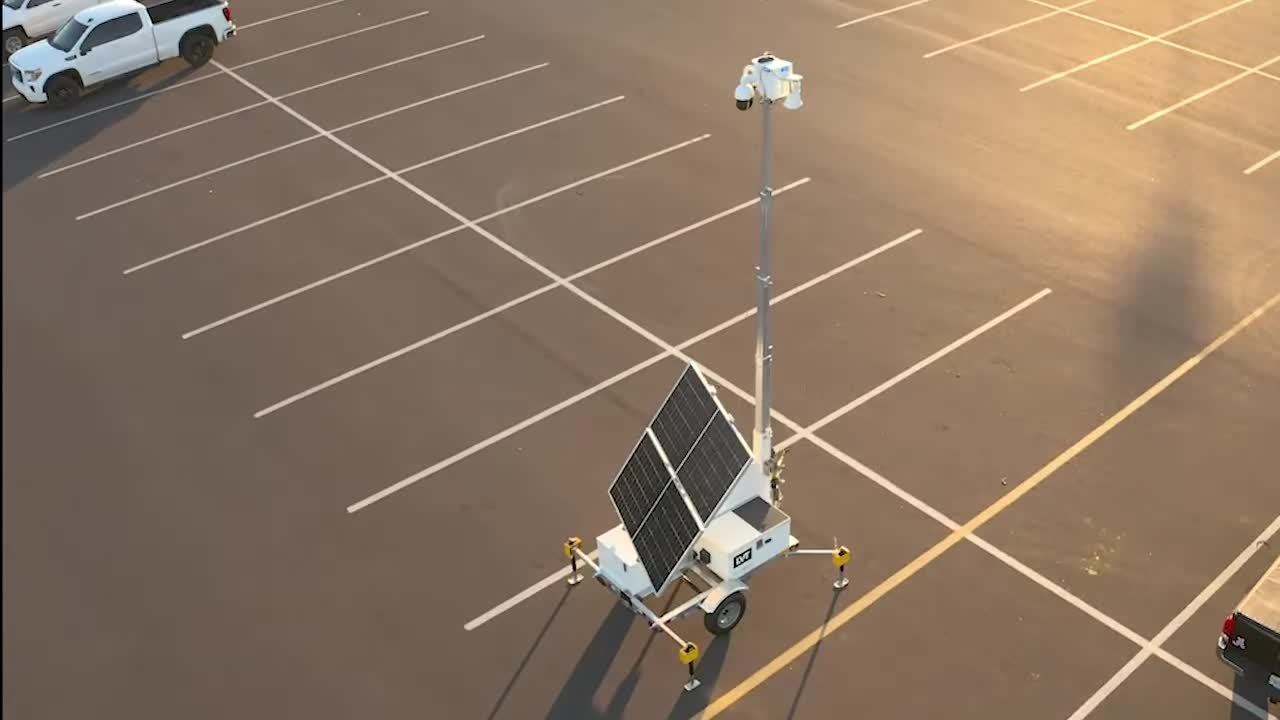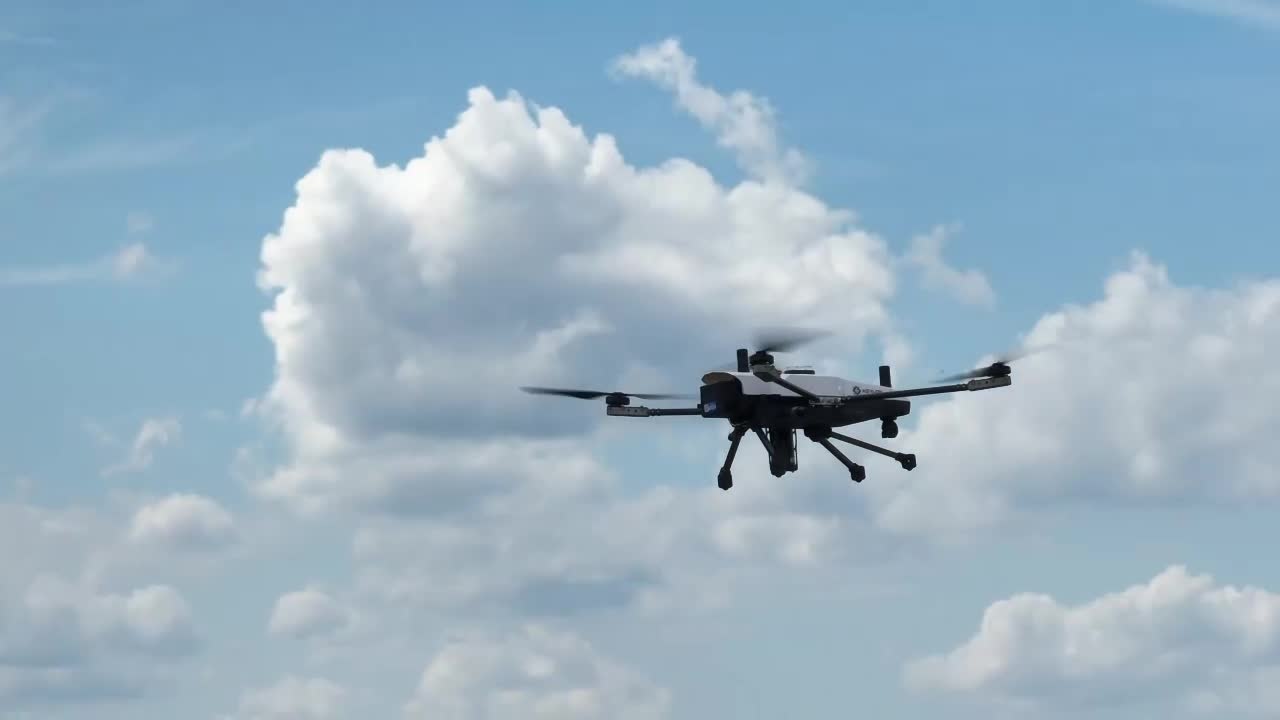
A distribution yard is a moving system. Trucks arrive, trailers change position and people cross between loading areas throughout the day. Security has to distinguish that legitimate activity from a relevant intrusion without turning every movement into a reason to interrupt operations. The bigger opportunity for robotics is therefore a more timely view of the right location. A robot can bring observation to an alarm instead of expecting a fixed viewpoint or an available officer to answer every question.
GXO is a useful real deployment because Asylon describes an integrated arrangement of aerial drones, DroneDog ground robots and a remotely staffed operations center. The named customer makes this more concrete than a generic factory demonstration. The public account is still a supplier case study. Its mission counts and reported outcomes describe the program as presented by Asylon, rather than an independent assessment of every GXO facility.
Main contribution
The main contribution is combining two kinds of physical access within a supervised service. A drone can survey a large open yard quickly; a ground robot can return to a particular fence, doorway or route at a repeatable height. Neither viewpoint answers every question. Shared mission management and a human operations team connect those observations to the site’s response procedures. The product is the whole chain from an event to useful evidence and a responsible handoff.
Watch the system in action
Official Asylon footage illustrates Guardian aerial robots and DroneDog ground patrol. This is a manufacturer demonstration, not footage proving the individual customer outcome. View the source ↗
Why logistics needs different viewpoints
A tall trailer can block an observation at ground level while an overhead view reveals activity behind it. Conversely, a drone looking down may not establish the condition of a door or what happened beneath an overhang. Choosing the robot should follow the question being asked. Operators need to know which viewpoint can supply the missing evidence and which areas remain unavailable. A combined fleet is useful when those differences justify the extra machinery, charging infrastructure and maintenance.
Routes are also dynamic. A path that was clear during commissioning may later contain a delivery vehicle, pallet or temporary barrier. A qualified patrol therefore needs a recovery procedure as much as a planned route. The robot might wait, choose an approved alternative or ask an operator for assistance. Those modes should be recorded separately. A mission completed after remote steering is useful, but it should not be counted as a completely unaided mission when evaluating the autonomy.
What the deployment evidence establishes
Asylon’s GXO case study reports more than 9,500 automated aerial missions, more than 819 alarms cleared, and 288 miles covered by DroneDog during its first 30 days. These figures indicate repeated use within the supplier’s account. They do not by themselves show how many alarms were missed, how often human help was required or how the operating workload compares with an equivalent alternative. Those denominators matter when turning a deployment story into a purchase decision.
The same case reports a 94.8 percent autonomous landing success rate across sites and wind conditions. That figure is particularly important because it separates routine automation from recovery. A customer should ask what happened during the remaining landings, how readiness was restored and what observation was unavailable meanwhile. Averages across sites can also conceal difficult weather or a problematic location. The meaningful service measure is completion of the required observation with its exceptions visible.
The human boundary remains operational
A robot seeing a person does not establish that the person is unauthorized. Employees, visiting drivers and contractors may all be expected at unusual times. The operations team needs the right access context and an approved escalation procedure. Robotics can provide a closer look, but the responsibility for an intervention cannot be inferred from the fact that the machine reached the alarm location automatically. Authorization, identification and safe response remain different tasks.
Air operations add another boundary. The supplier describes operations under a beyond-visual-line-of-sight waiver. A deployment-specific authorization is not permission to repeat the same flights at any other yard. A prospective customer must examine the actual operating area, applicable approval, weather limits and contingencies. For ground routes, comparable discipline means separating people and vehicles where necessary, controlling speed and establishing how a stopped robot is recovered safely.
How it could change the world
The wider change would be making observation responsive to the layout of a working site. Logistics operators could spend less officer time traveling to repetitive checks while retaining people for situations requiring authority and judgement. That opportunity extends to freight yards and distribution campuses with similar geometry, but it does not establish identical results in each sector. The operating arrangement must be qualified against the site’s traffic, risks and recovery needs.
A credible rollout should start with specific patrol and alarm-verification tasks, preserve the evidence gathered, and compare completed tasks with human interventions and unavailable coverage. Costs should include the support center, batteries, maintenance and site preparation. The world-changing part is not a robot replacing every security job. It is a dependable mobile layer of attention that allows people to act with better information, while showing clearly when the machinery did not supply it.
Questions, news tips or corrections? Contact [email protected].