An inspection flight is useful when somebody can act on what it finds. A clear image without the correct asset identity, inspection history or route to a work order may leave a maintenance team with another queue to review. The relevant measure is therefore more than the number of flights completed.
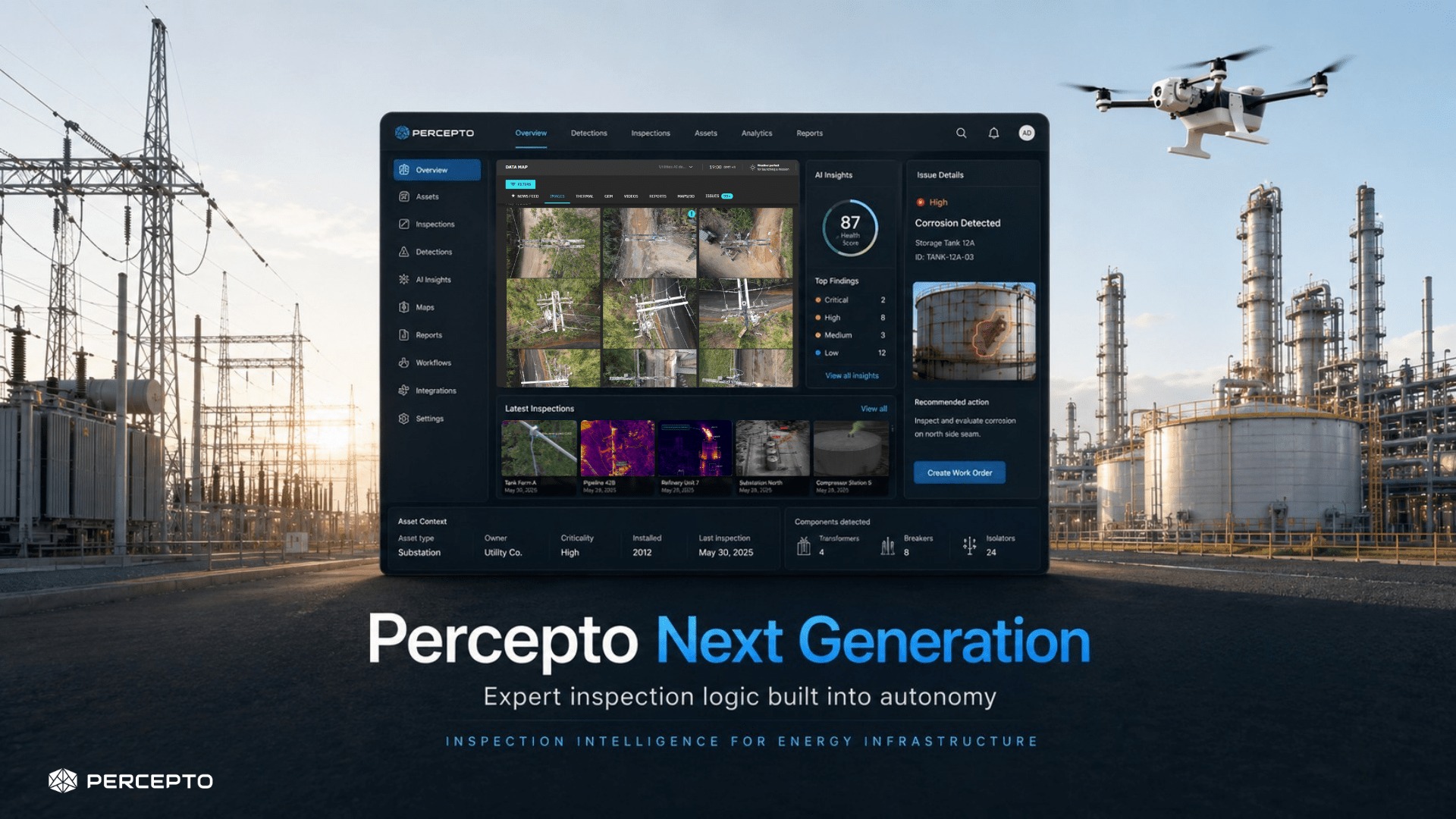
Percepto's June 22 announcement describes a next-generation inspection-intelligence offering for energy infrastructure. It combines autonomous aerial inspection, contextual AI, its AIM platform and managed remote operations. The company presents asset knowledge and expert inspection logic as the means of turning collected observations into usable findings. Primary source.
Connecting a finding to its history
That approach addresses a recognizable workflow problem. A new thermal observation can have different significance depending on operating conditions and the history of the equipment. Repeated observations need enough consistency to support comparison, while an unusual result needs a route to qualified review.
The announcement establishes the company's product direction. It does not independently establish a reduction in equipment failures or prove that automated interpretation can replace every inspection specialist. Those would require evidence about the actual decisions, including missed findings and unnecessary interventions.
Where a deployment should be measured
An operator evaluating the system could begin with a defined asset group and an existing inspection process. Useful comparisons would track whether findings reach the correct owner, how often reviewers disagree, and how much elapsed time separates detection from disposition. A successful flight should not be counted as a completed maintenance action.
The integration burden also deserves an explicit owner. Asset identifiers, operating context and maintenance records must stay aligned as equipment changes. Otherwise, better sensing may simply expose weaknesses in the information system around it.
What a comparison should hold constant
A fair comparison would use the same asset population and distinguish routine rounds from investigations prompted by a suspected problem. Combining those two activities could make a new service appear more productive simply because it was sent to easier work. The record should include operating conditions, missing observations and changes in inspection frequency. That would make it possible to ask whether the service improved the decision process, rather than merely increasing the amount of material available to reviewers.
Thermal and visual findings also need a defined interpretation boundary. A change between two captures may justify another inspection without establishing a fault. A practical workflow could preserve the original observation, the automated interpretation and the specialist's eventual judgment as separate records. That separation would let a maintenance team examine where a conclusion changed, correct an erroneous label and avoid treating the system's initial confidence as a final engineering assessment of equipment condition.
Accountability after an alert
The maintenance handoff needs a clear definition of completion. Creating a ticket, acknowledging it, inspecting the equipment and closing the underlying issue are different milestones. A dashboard that collapses them into one green status could make unresolved work disappear. Buyers can request a demonstration using an ambiguous observation and follow it through escalation, reassignment and closure. The purpose is to establish whether the integration preserves responsibility when the normal automated path cannot finish the job.
Service economics should include the work surrounding the drone. Reviewing uncertain findings, maintaining asset records and handling unavailable flights all consume time. Those costs need not undermine the service, but excluding them would make comparison with an existing process unreliable. A more useful assessment would report the complete cost of delivering an accepted inspection result across the intended asset group, while showing separately which tasks moved between the supplier and the customer.
The strongest deployment evidence would include a period in which conditions changed. An altered maintenance schedule, newly installed equipment or a different operating load could expose assumptions that a stable pilot never tested. Operators could use such changes to evaluate whether the system recognizes missing context and requests review. That is a more demanding and more useful test than showing that the same route can be repeated when nothing important in the environment has changed.
The longer-term opportunity is a repeatable inspection service in which aerial capture and maintenance decisions reinforce one another. The decisive evidence will be a traceable record from observation through verified action, with errors and unresolved cases included alongside successful examples.
Source organization: Percepto. Source statements are attributed; operational implications and suggested evaluation criteria are editorial analysis.
References
Questions, news tips or corrections? Contact [email protected].