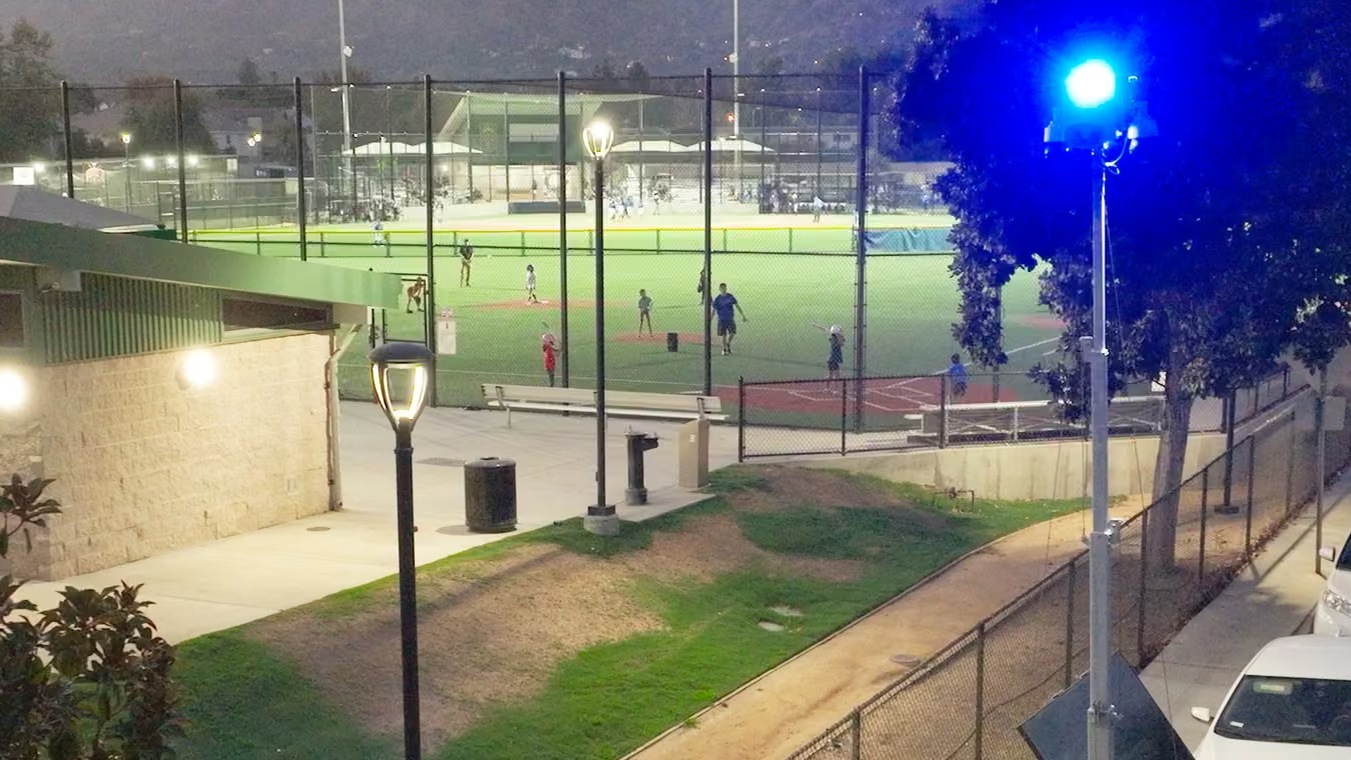
A visible security tower changes the experience of a place before anyone reviews an alert. Shoppers may feel reassured, workers may expect help to arrive sooner and neighbors may ask what is being recorded. These reactions matter because a deployed system needs public legitimacy as well as technical capability. They are also different from evidence that the system prevents crime.
That distinction is central to assessing mobile scout towers. A positive perception can support a useful service, but it cannot substitute for a measured account of what the service does. Conversely, counting incidents alone may miss how people experience an intervention. Operators need to understand both questions without treating one as the answer to the other.
What Detroit respondents said
On October 13, LiveView Technologies released results from an ACCESS Taskforce survey of 198 respondents in Detroit. It included 156 community members and shoppers, 18 retail employees, 20 retail leaders and four law-enforcement respondents. LVT reported that 75.4 percent of community respondents preferred retailers to continue using its units, and about 68 percent perceived improved community safety. Primary source.
The release explicitly says the findings describe the respondents and are not statistically representative of those populations. Recruitment combined social-media advertising and direct outreach. These qualifications are part of the result, not an optional footnote.
Acceptance and effectiveness are separate tests
The contribution is a view of how a particular group experienced a visible intervention. It can help operators identify whether the tower's presence is understood and welcomed by those who answered. It does not show what people who did not answer thought, how opinion changed over time or how the same people would respond without a deployment.
Nor does perceived improvement isolate the tower's effect. People experience the entire environment: staffing, lighting, maintenance, retail activity and broader community conditions. A survey about safety can capture the combined experience without attributing it to the correct cause. Treating that response as a direct measure of automated deterrence would skip an important evidential step.
The small professional subgroups need particular care. Four law-enforcement responses are four responses, not a broad institutional consensus. Percentages can look precise while the underlying group is small. Reporting the denominator alongside a percentage helps readers avoid giving it more weight than the design supports.
The autonomy question remains operational
The survey does not evaluate how accurately a tower detects events, how often an alert requires review or whether an intervention was appropriate. Those functions concern the operational boundary between automated observation and human response. A well-liked tower can still have an inefficient alert workflow, just as an effective workflow can still raise community concerns.
An operator assessing autonomy should therefore ask for separate evidence about the machine, the service and the people affected. Detection quality should be evaluated under relevant conditions. Response should be evaluated through records of verification and disposition. Public experience should be examined using methods that can capture disagreement as well as support. No single metric covers all three.
What changes for deployments now
The immediate implication is that community feedback belongs in deployment review. It should inform questions about placement, notice, assistance and the way concerns are handled. Operators can ask whether the people most exposed to a unit have an accessible way to understand its purpose and challenge an inappropriate use.
Survey design also needs to fit the decision. A small descriptive exercise can reveal concerns worth investigating even when it cannot estimate population opinion. If a buyer wants to make a broader claim, the next study needs a sampling approach and comparison suitable for that claim. Better evidence starts by deciding what question actually needs answering.
The same restraint applies to marketing. It is possible to describe favorable respondent feedback accurately without promising a demonstrated fall in crime. Keeping those statements separate makes later evaluation easier and protects the credibility of findings that may be useful within their real limits.
What would strengthen the case
Over time, mobile towers could become more accountable interventions if operators publish technical performance, response outcomes and public feedback together. That would allow a deployment to change when any one of the three exposes a problem. It would also make it harder to use a favorable number to conceal a weak part of the service.
The next evidence to watch is a broader evaluation with clear denominators, time periods, comparison conditions and an account of the response process. The Detroit survey is a useful descriptive signal. The larger question is whether scout towers can deliver a service that is both effective and acceptable, and those propositions still need to be demonstrated separately.
Primary source: LiveView Technologies official reporting.
References
Questions, news tips or corrections? Contact [email protected].