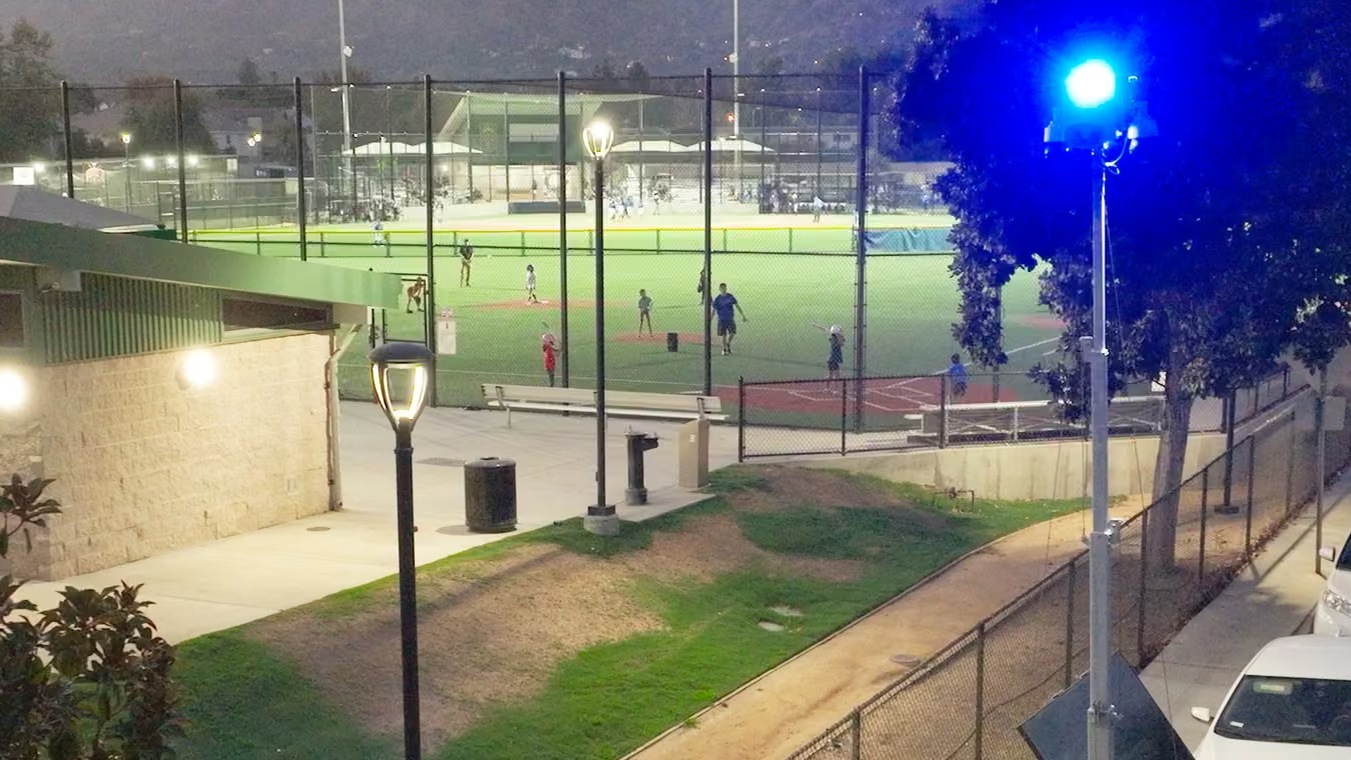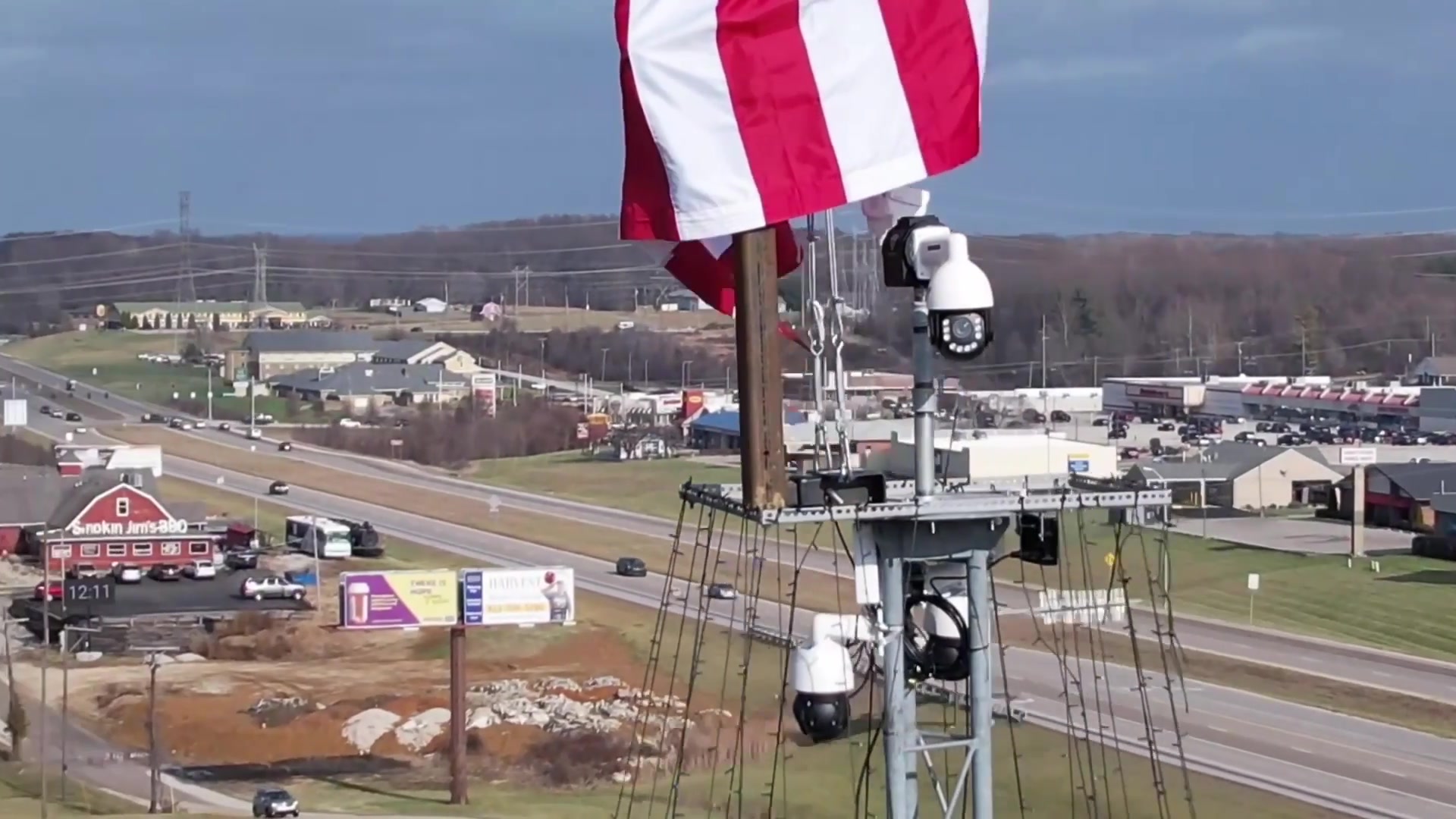
A large site can be difficult to supervise even when every individual camera works. An elevated viewpoint may reveal activity across a broader area, yet someone still has to decide whether the activity matters and how to respond. That separation between seeing and acting is especially important for a security tower, whose physical visibility can make it look more autonomous than the service behind it actually is.
For property operators, a tower is an infrastructure decision. It affects coverage, power, communications, placement and the experience of people using the space. It should be judged as part of a response workflow rather than as an isolated collection of sensors mounted above the ground.
What Knightscope is proposing
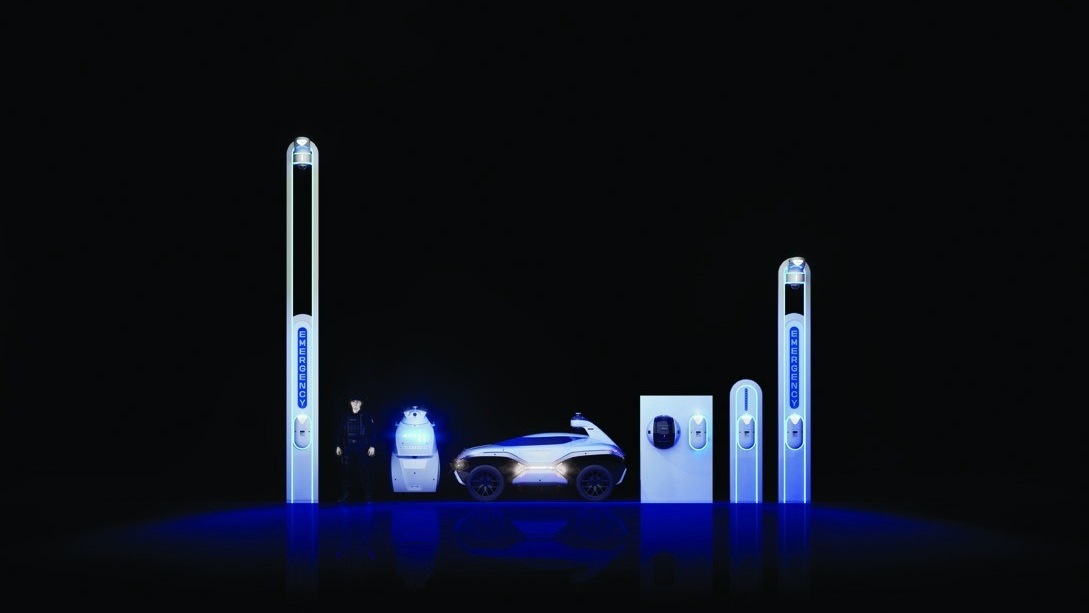
Knightscope’s September 2026 media kit describes K1 Super Towers as elevated platforms at seven, fourteen and twenty-one feet, with lighting, observation and public-address functions. It explicitly lists the product as in development. The supplied product-lineup image includes the tower alongside other equipment; it is promotional product context, not evidence that a particular site has installed a finished system. Primary source.
The proposed contribution is a larger fixed observation and communication point within the company’s broader security service. Unlike a patrol robot, it does not need to travel a route to reach its viewpoint. That changes the trade-off among continuous observation, mobility and installation requirements.
Why elevation changes the problem
Height can change what is visible, but it does not eliminate occlusion, weather effects or the need to understand events. A wider field can include more legitimate activity as well as more of the boundary an operator wants to monitor. The harder question may become how to select useful information without imposing unnecessary observation on nearby people.
Placement also constrains future flexibility. A mobile scout tower can follow a changing worksite; a platform with a permanent footing represents a different commitment. A buyer should understand which configuration is being offered and what relocation entails. Product families can contain very different deployment models even when their names suggest a common capability.
Communication introduces another boundary. A public-address function can connect a remote operator with somebody on the ground, but that person may not know who is speaking or how to request help. The service needs intelligible procedures and an appropriate human decision behind any consequential interaction. More reach is not the same as more authority.
Development status sets the evidential limit
Because the product is described as in development, the available material should be read as a design and commercialization proposition. It does not establish achieved reliability, installed coverage or customer outcomes. Specifications can explain intent without proving that a system is ready for every environment listed as a potential application.
An evaluation would need to distinguish component performance from the performance of the whole service. A sensor can produce a technically valid image while an operator receives it too late to act. A communication link can work in a demonstration while a deployed site's ordinary activity produces difficult conditions. These are issues to test, not failures documented here.
What buyers can assess before availability
The immediate opportunity is to define the security task before choosing the tower. Is the site missing an elevated view, a reliable communication point or a staffed response process? A tower addresses those gaps differently. If the real problem is an unowned escalation, adding height may simply produce more observations waiting for attention.
Site planning should also account for maintenance access and the relationship to existing equipment. Consolidating information can be useful, but a buyer should avoid assuming that every legacy device can join a new service without additional work. An installation proposal should explain what remains available when a connection or remote service is interrupted.
For workers and visitors, predictable use matters. Clear notice, proportionate observation and a way to ask questions can make deployment easier to understand. Such governance is part of the physical design decision, not a separate concern that begins only after a tower has been installed.
The longer-term question
If elevated observation becomes reliably connected to verification and assistance, towers could serve as durable nodes in a mixed network of mobile robots and human teams. Each component could be selected for the task it performs best, rather than forced to cover every part of a property.
That outcome depends on more than completing the product. It requires evidence that the combination produces useful coverage with manageable workload and appropriate oversight. The alternative is a taller version of a familiar problem: more data without a better response.
Watch for a clear availability milestone, installation requirements and field reporting that connects observation to completed action. Those will make the proposal assessable as an operating service. The current contribution is a design direction whose practical value still depends on what happens below the tower.
Primary source: Knightscope official reporting.
References
Questions, news tips or corrections? Contact [email protected].