Industrial robots increasingly sit between software decisions and physical equipment. That connection makes it important to define which actions a system may request, which actions it may actually execute and who can change those boundaries. A useful autonomy architecture needs more than an instruction telling a model to behave cautiously; it needs controls that remain effective when a request is mistaken or unexpected.
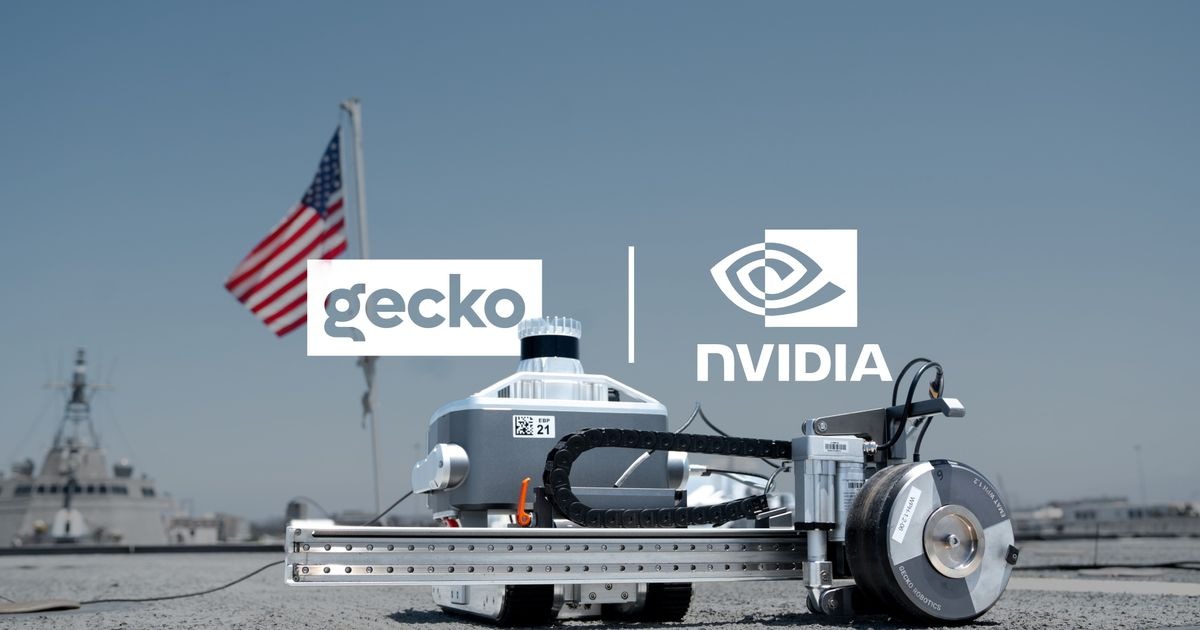
Gecko Robotics’ September 28 announcement describes collaboration involving NVIDIA’s Open Agent Safety Platform and OpenShell. The company presents work exploring human-defined, enforceable boundaries for robotic operation. The announcement is a direction of development, not evidence that a complete physical safety case has been certified or that every robot in a deployed fleet already uses the proposed controls. Publicly described intentions should remain separate from measured field results. Primary source.
Separate a proposed action from permission to execute
A model may be useful for interpreting a task or proposing a sequence of steps. Permission to perform those steps should be evaluated against an explicit operating context. The same command can have different consequences depending on the asset, robot state and surrounding work. A general instruction such as “inspect this area” does not by itself define every permitted movement or equipment interaction.
Consider a hypothetical inspection task in which a software agent requests access to a new data source while planning a route. The operator may permit the data query without permitting a change to the physical inspection boundary. Keeping those permissions distinct would make the decision easier to review. This example illustrates an architectural question; it is not a description of a demonstrated Gecko deployment.
The authority to change policy also needs definition. A system that enforces a narrow rule but allows an ordinary task request to rewrite that rule has not preserved a useful boundary. Reviewers should understand where policy lives, how changes are approved and whether the enforcement component is independent of the model producing the request.
Software controls and physical safeguards answer different questions
A runtime can constrain access to software resources or actions, but a permitted operation can still encounter a physical problem. A changed surface, an obstruction or equipment degradation may matter even when the command was authorized. Physical sensing, mechanical limits, protective behavior and operating procedures therefore remain part of the evaluation.
This distinction should shape demonstrations. Showing that an unauthorized request is blocked is valuable evidence about that particular control. It does not establish that every authorized operation is safe in every environment. An honest test report should identify the boundary being tested and avoid allowing a successful software test to stand in for broader operational assurance.
When a requested action is denied, the operator needs enough information to understand what happened without exposing unnecessary sensitive detail. A silent refusal can look like a malfunction; an automatic workaround can defeat the purpose of the restriction. The workflow should define whether the task stops, returns for review or continues within a narrower scope.
Test policy changes as carefully as model changes
Updating an autonomy system can change the actions it proposes even when its external interface appears unchanged. A policy update can likewise alter what an otherwise identical model is allowed to do. Evaluation should preserve the versions of both components so that a result can be reproduced and an unexpected behavior can be traced to a specific change.
Useful tests would include ordinary authorized work, deliberately disallowed requests and ambiguous situations requiring human judgment. The record should include false denials as well as successful blocks. Excessively broad restrictions could make the system unusable and encourage informal workarounds, while broad permissions could leave operators with only an appearance of control.
For an industrial customer, the practical question is how these controls fit existing responsibility. Someone must own the policy, approve changes and review exceptions. A vendor dashboard may make those tasks easier, but it does not decide who is accountable within the facility. That organizational work should be included in deployment planning and ongoing support estimates.
Gecko’s announcement points toward an important engineering conversation: making the authority of an autonomous system explicit and testable. The stronger evidence will be documented boundaries, representative tests and clear behavior when those boundaries are reached. Until that evidence is available, the appropriate conclusion is that enforceable permissions are a promising component of industrial autonomy, with physical safeguards and human responsibility still essential.
References
Questions, news tips or corrections? Contact [email protected].