A logistics yard changes throughout the day. Vehicles arrive, parking patterns move and people need to keep cargo flowing rather than act as an improvised monitoring team. Permanent infrastructure may take longer to install than the operator can tolerate, while a new camera feed can create more work without clarifying who should respond. This is the practical setting in which deployable scout towers are being offered as a service.
For a network operator, the bigger problem is consistency across properties. A solution that works at one yard may depend on local staff, connectivity or an unusually favorable layout. Scaling it means making the security function repeatable while leaving room for genuine differences among locations. Counting units is only the beginning of that assessment.
What the partnership establishes
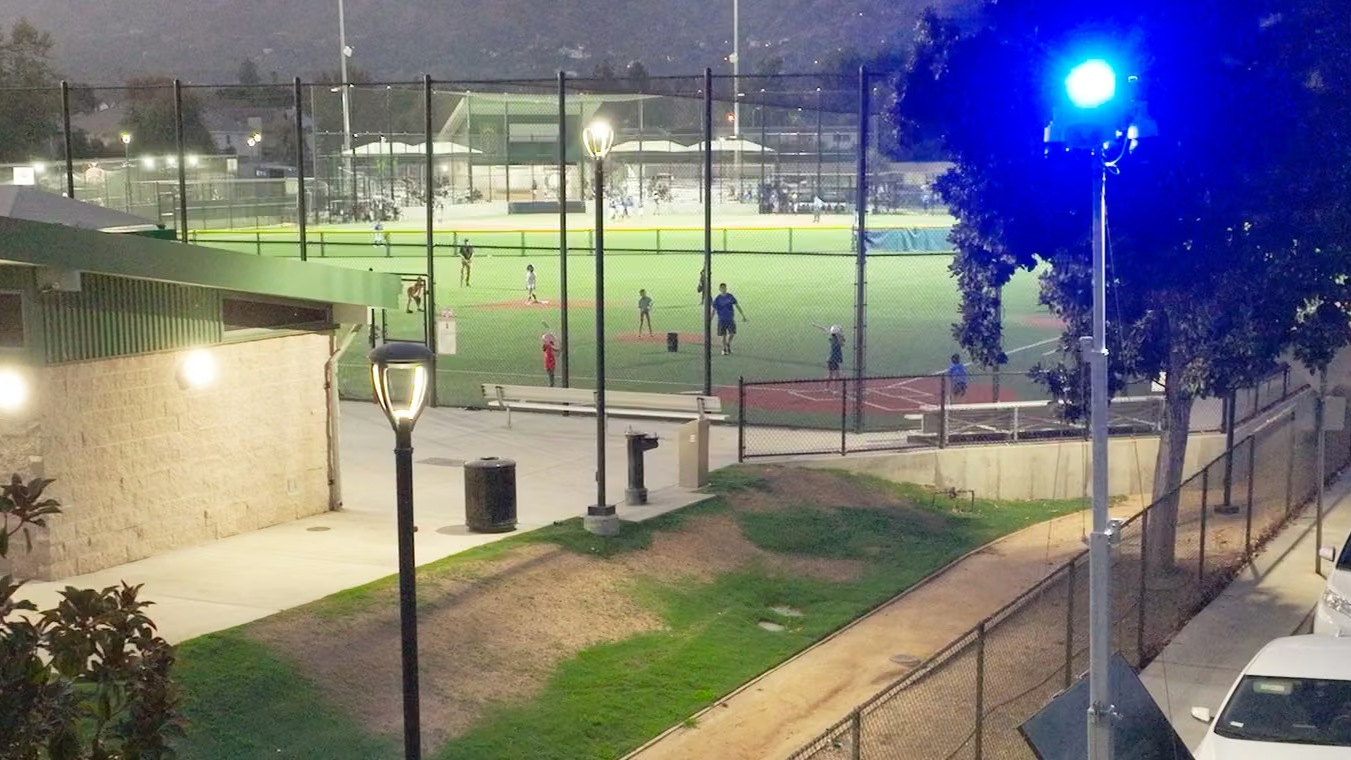
On June 10, Freight Ninja and LiveView Technologies announced a partnership beginning with 28 mobile security units installed across a network then described as more than 65 yards. The release sets full-network coverage as a goal, not a completed deployment. It describes solar power, cellular connectivity, video observation, lighting and two-way audio. Primary source.
The announcement is therefore more substantial than a plan to evaluate an unnamed product: it reports active installations. It does not establish that every yard is covered or that every function operates autonomously. A deployable unit and a complete response service should not be counted as the same thing.
Mobility changes the installation decision
A mobile tower can bring observation and communication to a location without the same construction commitment as a permanent installation. That can matter when a lease changes, an outdoor storage area expands or traffic is reorganized. The useful contribution is the ability to position a security function around a changing physical workflow.
The trade-off is that power, communications and siting remain live operating concerns. A unit does not become infrastructure-free because it is movable. Someone still needs to know whether it is connected, whether the view remains useful and whether an issue requires attendance. A service model should make those responsibilities explicit rather than leaving them to yard personnel by default.
Autonomy also needs a precise boundary. Observing activity, identifying an event, initiating a message and dispatching a person are different actions. Buyers should ask which steps are automated and which require review. The partnership release does not provide enough detail to infer an unrestricted automated response capability, and this analysis makes no such claim.
The outcome numbers need context
The release includes a claim of a 70 percent reduction in parking-lot incidents. It does not give a sufficiently detailed denominator, comparison period or evaluation method to establish a causal result across the announced network. The percentage should remain an attributed company claim, not a general performance expectation.
Sites can change for reasons unrelated to the tower: occupancy, staffing, reporting practices and surrounding activity may all change. A useful evaluation would show the relevant periods, comparable locations and the types of incidents counted. It would also distinguish a reduction in recorded incidents from a reduction in harm, because reporting can change when observation becomes more systematic.
What changes in network operations now
For the operator, the immediate decision is how to standardize the service without assuming every yard is identical. A common contract can specify availability reporting, verification responsibilities, escalation and maintenance. Local configuration can then reflect the actual site rather than an abstract network average.
The human handoff deserves particular attention. Drivers and site managers should understand how to request help and what to expect after a remote observation. A unit that can transmit video is not necessarily providing somebody with assistance. Measuring the time and quality of the handoff would make the value of the deployment clearer than counting video hours alone.
The commercial extension to other property clients also introduces an accountability question. A buyer should know which organization maintains the equipment, reviews events and owns the response. Reselling access to a technology should not obscure those responsibilities behind additional contractual layers.
What would make the model convincing
If the rollout produces consistent availability and documented responses across varied yards, deployable towers could become a flexible way to extend site security as logistics networks change. The benefit would be a repeatable service with less installation friction, not an assumption that movement or automation eliminates human responsibility.
Watch for an updated deployment count separated from the full-network ambition, and for outcome reporting with transparent denominators. That would show whether the partnership is progressing from installed hardware toward a dependable network service. The larger question is whether security can move with the operation while remaining clear, auditable and useful to the people who rely on it.
Primary source: LiveView Technologies official reporting.
References
Questions, news tips or corrections? Contact [email protected].