A security team monitoring airspace needs to distinguish what its sensors can observe from what they cannot. A shared display can make several sources easier to use, but it can also create false confidence if the limits of each layer disappear. Cooperative identification is particularly useful when its presence is informative and its absence is not mistaken for proof that the sky is empty.
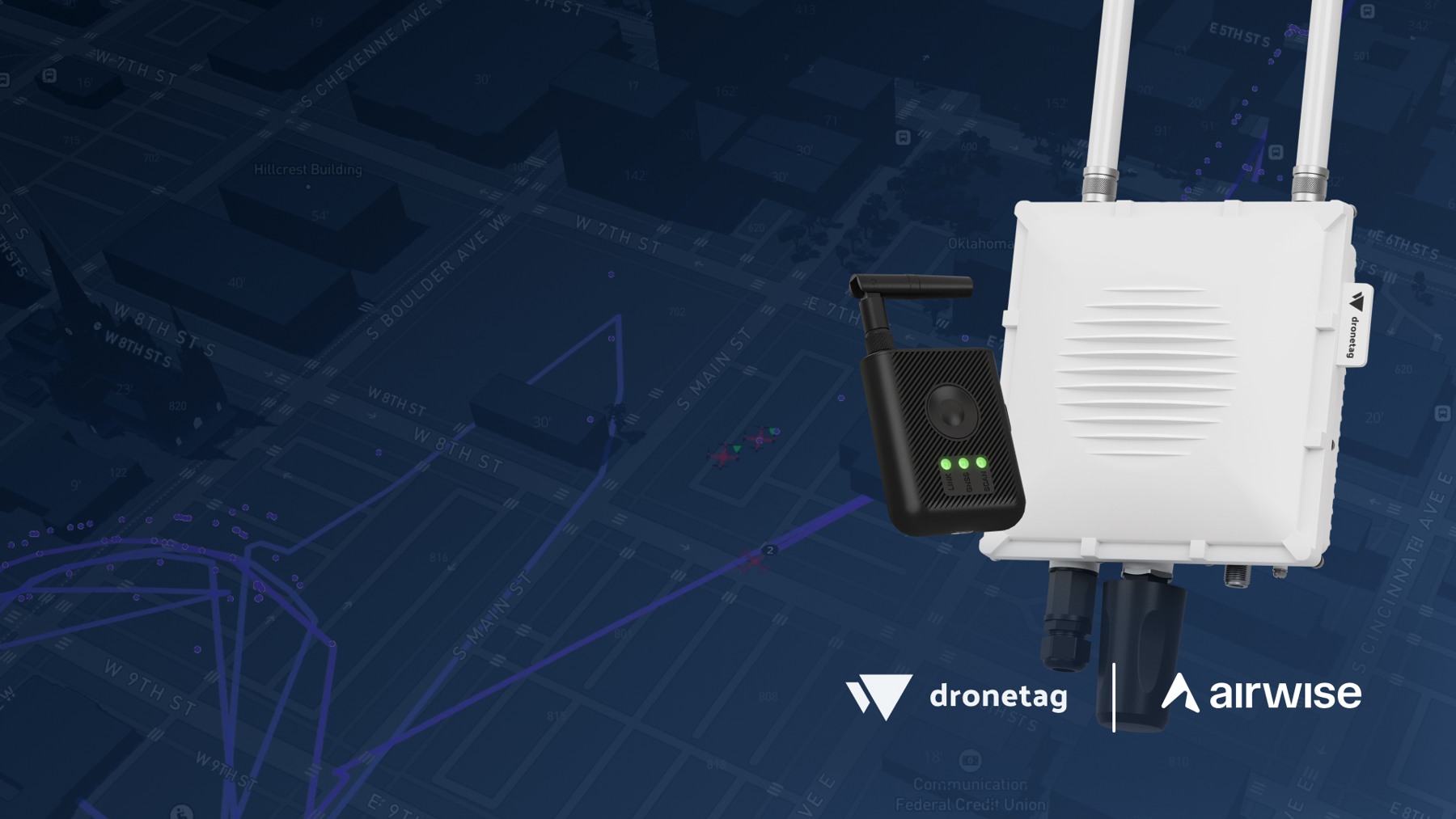
Dronetag’s current AirWise integration page says Scout and RIDER detections feed the Nexus common operating picture alongside sources such as radar, RF and ADS-B. It describes Scout as a fixed receiver and RIDER as portable, and explicitly states that the Remote ID layer does not detect aircraft that are not broadcasting it. The page does not provide a clear announcement date or an independent comparative field trial. This analysis reviews the available integration description as accessed on October 21. Primary source.
A fixed receiver adds a particular kind of evidence
For a site with a permanent monitoring position, a fixed receiver can provide a continuing record of compatible broadcasts. That record may help staff understand recurring activity or examine an observation after an incident. Its usefulness depends on the reception conditions and the information actually received. A manufacturer’s maximum range should not be treated as a guaranteed coverage radius around every installation.
The distinction matters in a simple hypothetical case. A receiver reports a broadcasting aircraft near a facility, while another sensor shows an additional object. The correct response is to preserve the disagreement and investigate it, not force both observations into one apparently complete track. The shared display should help a reviewer understand which source supports each conclusion and where evidence is missing.
An identification message also needs careful interpretation. A transmitted identifier is a data field, not by itself proof of a person’s intent or permission to operate. The monitoring process should avoid turning a technical observation into an unsupported conclusion about wrongdoing. Relevant authorization and site context may need to be checked separately by the responsible team.
Fusion should preserve the source and age of information
Combining several feeds can reduce interface switching, but it introduces questions about time and provenance. Two observations may refer to different moments or may have different uncertainty. A useful display should make those distinctions available to the reviewer. Otherwise, a clean map can conceal a mismatch that would have been apparent when the feeds were viewed separately.
Interrupted connectivity is another practical test. A previously received position should not look indistinguishable from a current one. The interface should expose freshness and the absence of updates so that operators do not act on an outdated picture. The source page does not describe all of these behaviors, so they remain evaluation questions rather than verified features of the combined system.
Portable and fixed receivers can also create overlapping observations. That overlap may improve confidence, but it should not inflate counts if the same aircraft is seen by both. A site evaluating the integration should examine how repeated observations are represented and how unresolved associations are shown. Counting messages is not the same as counting distinct aircraft.
Evaluate the monitoring workflow at the intended site
A practical trial would compare the received record with known, authorized activity under the conditions relevant to the installation. It would document periods without usable data and observations that could not be resolved. The purpose would be to understand the contribution of this identification layer, rather than claim universal drone detection from a test involving only cooperative aircraft.
The trial should also include the people who will review alerts. They need to know which questions the feed can answer, when another source is necessary and what information should be retained for an incident record. A technically correct integration can still be operationally confusing if the user does not understand the meaning of a missing or conflicting observation.
An operator display should preserve uncertainty when identification information is incomplete. That distinction helps staff avoid interpreting the absence of a cooperative signal as evidence that the airspace is empty.
Dronetag’s explicit description of the cooperative boundary is useful. The integration’s wider value will depend on preserving that boundary within the combined operating picture. Fixed receivers can add an economical source of identification information, but dependable site awareness requires the team to understand the gaps as well as the detections.
References
Questions, news tips or corrections? Contact [email protected].