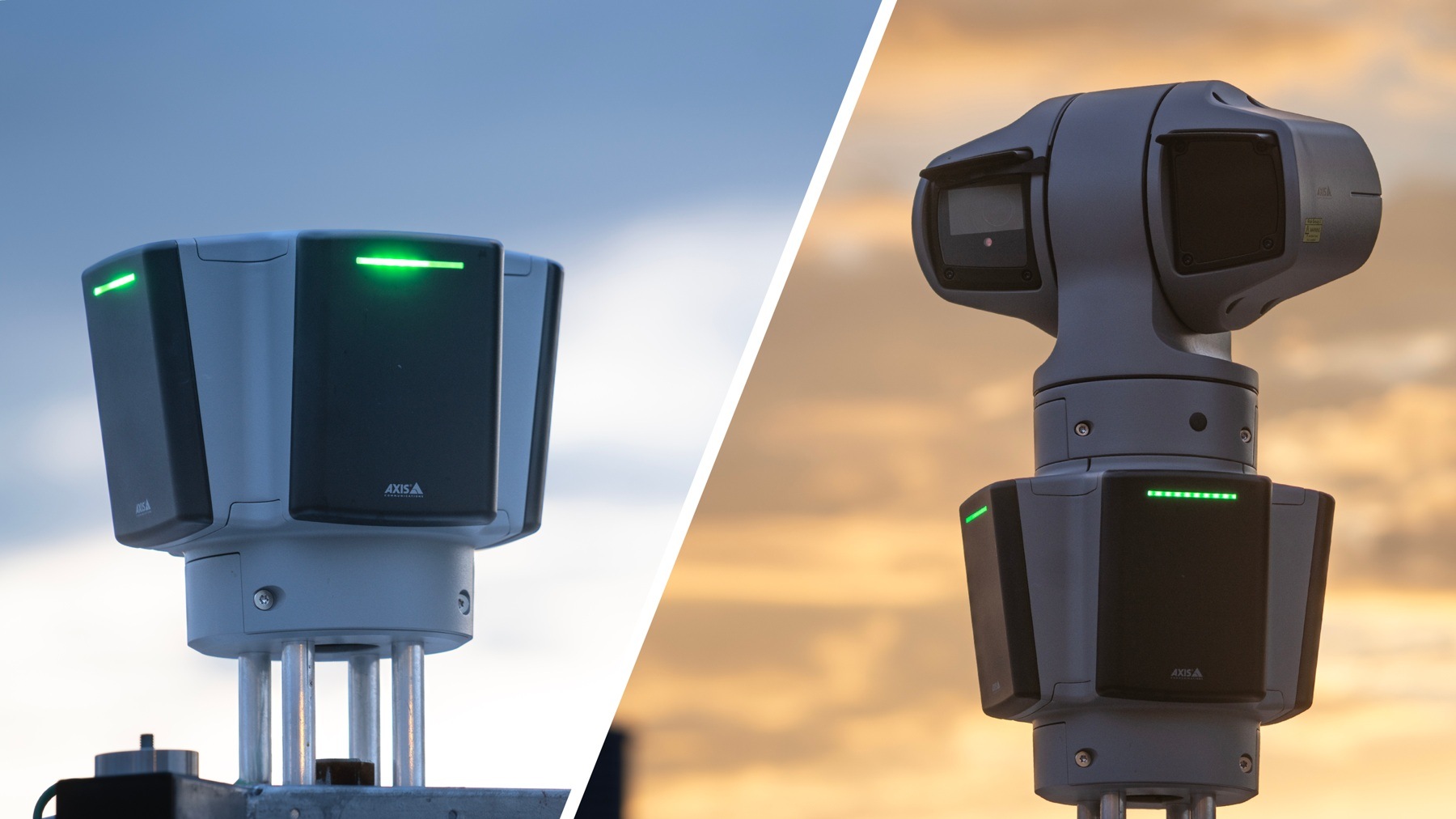
A perimeter sensor has to do more than notice movement. The security team needs an alarm it can interpret and a response process that can cope with the volume of events. Adding another sensing method can help, but only when the two methods are combined around a clear decision.
Axis Communications’ November 3 announcement describes the forthcoming D2124-VE radar, designed for poles, mobile surveillance trailers and rooftops. Axis specifies 360-degree coverage, object detection up to 200 meters and a human-recognition zone of 40,000 square meters, subject to its datasheet. With Q6225-LE and Radar Autotracking for PTZ, the system can add video classification and an optional double-knock requirement for visual confirmation before an event. Availability is planned for Q4 2026; these are product claims rather than independently measured site results. Read the primary source account.
Confirmation changes which errors matter
A second check can suppress some unwanted alarms, but it can also reject an event that the first sensor detected correctly. The relevant evaluation therefore includes missed events and the time needed for confirmation, alongside reductions in false alarms. An installation should make those tradeoffs visible to its operators.
Camera coverage is also a separate constraint from radar coverage. A radar can register a target in an area where the camera’s view is blocked or its image is insufficient for classification. A site review should distinguish the area that can be detected from the area that can be visually verified.
Installation belongs in the performance claim
Axis describes image stabilization for vibration and box-shaped zones for planning. These features address practical deployment concerns, especially on poles and mobile installations. Their value still depends on the actual mounting arrangement, sight lines and environmental conditions.
For an operator, the important output is an intelligible event history: what the radar detected, what the camera saw, which rule fired and what action followed. That record helps teams tune a deployment and investigate recurring exceptions without treating every alert as equally reliable.
Tune the rule to the protected site
A double-knock rule changes the decision threshold for an alarm. It can be appropriate where visual confirmation is dependable and unwanted alarms consume substantial attention. It can be less useful where a target often passes behind an obstruction before the camera obtains a suitable view. Evaluation should therefore preserve the site geometry and target behavior behind any reported alarm reduction.
Operators also need to understand what happens when the second sensor is unavailable. A policy might retain an unconfirmed detection for review, use a different alert level or escalate through another process. The correct choice depends on the protected site and its response arrangements. It should be explicit rather than an accidental consequence of a lost connection or a camera being busy elsewhere.
Mobile deployments add a commissioning burden. Moving a trailer changes the viewing angles and the areas that matter, so a previously useful configuration may need to be checked again. A practical deployment procedure would test representative movements and confirm the associated camera views before relying on the system for routine protection. The product announcement does not replace that site-specific work.
The strongest evidence for the combined approach would connect alerts to the work they create. That includes time spent reviewing them, events that require dispatch and instances where a meaningful detection was missed. Such a record would show whether sensor fusion improves the operating service. It would also prevent a favorable reduction in one alarm category from obscuring a more consequential loss elsewhere.
Another useful comparison is the effect of concurrent targets. A camera may need to choose which radar track to inspect, and the quality of confirmation can depend on that choice. A site assessment should therefore include ordinary overlapping activity, rather than only a single target moving through an otherwise empty scene. Recording which tracks received confirmation and which did not would expose a practical capacity limit. The announcement’s coverage specifications do not answer that scheduling question. It is a separate system behavior that becomes relevant when the sensor is installed in a busy perimeter environment.
The planned release offers a concrete way to connect broad-area sensing with automated confirmation. The larger service benefit would be a manageable flow of well-supported alarms. Demonstrating that benefit will require site-level evidence showing detection, confirmation, missed events and response workload together, rather than comparing coverage specifications alone.
Source organizations: Axis Communications.
References
Questions, news tips or corrections? Contact [email protected].