A surveillance tower watches from a fixed viewpoint. If an event moves out of that view, a security team may need another observation method to understand what happened next. Connecting a tower to a drone addresses that continuity problem, while creating a handoff that needs its own evidence. The system must preserve the meaning of the original alert as information moves between equipment, operators and local authorities.
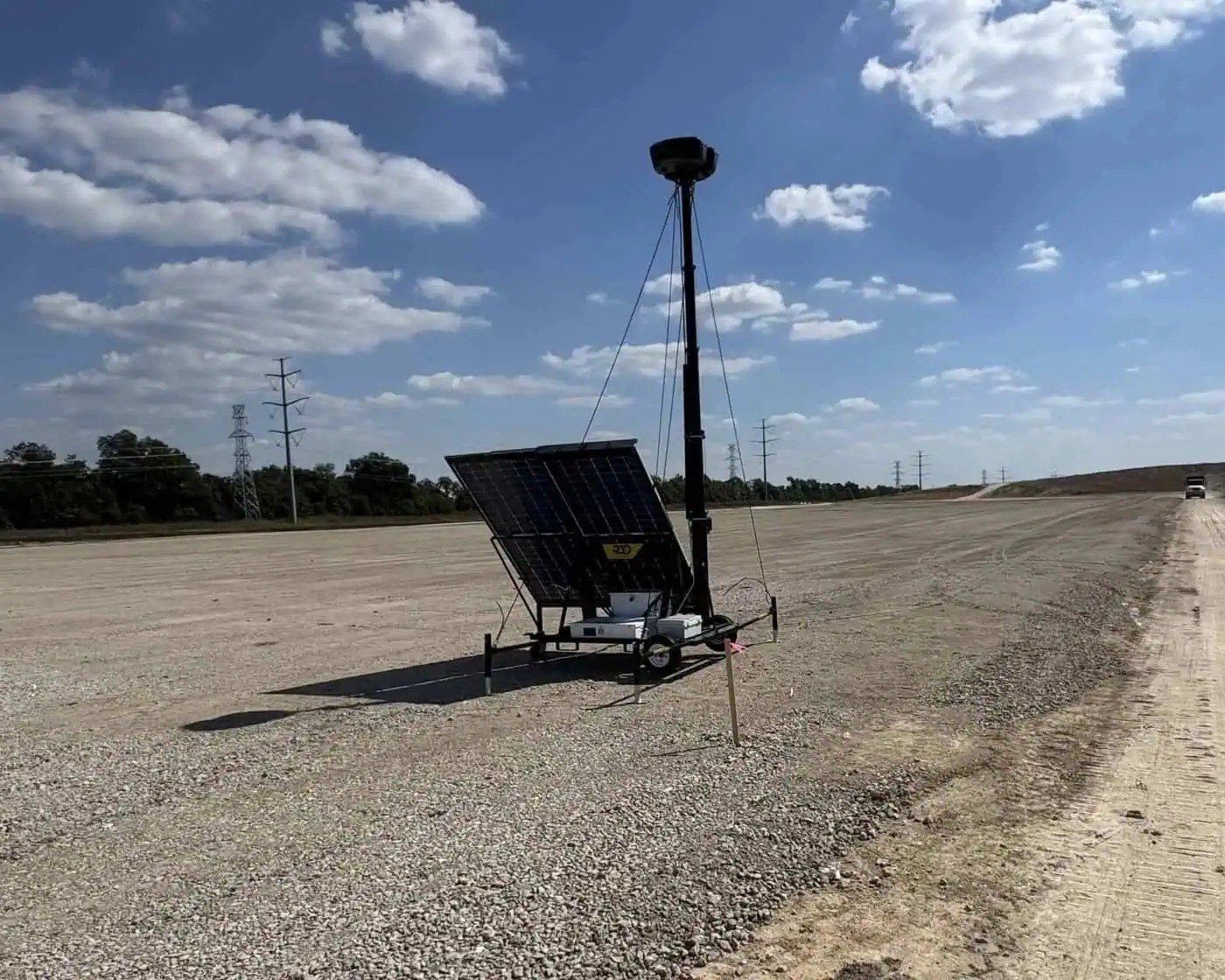
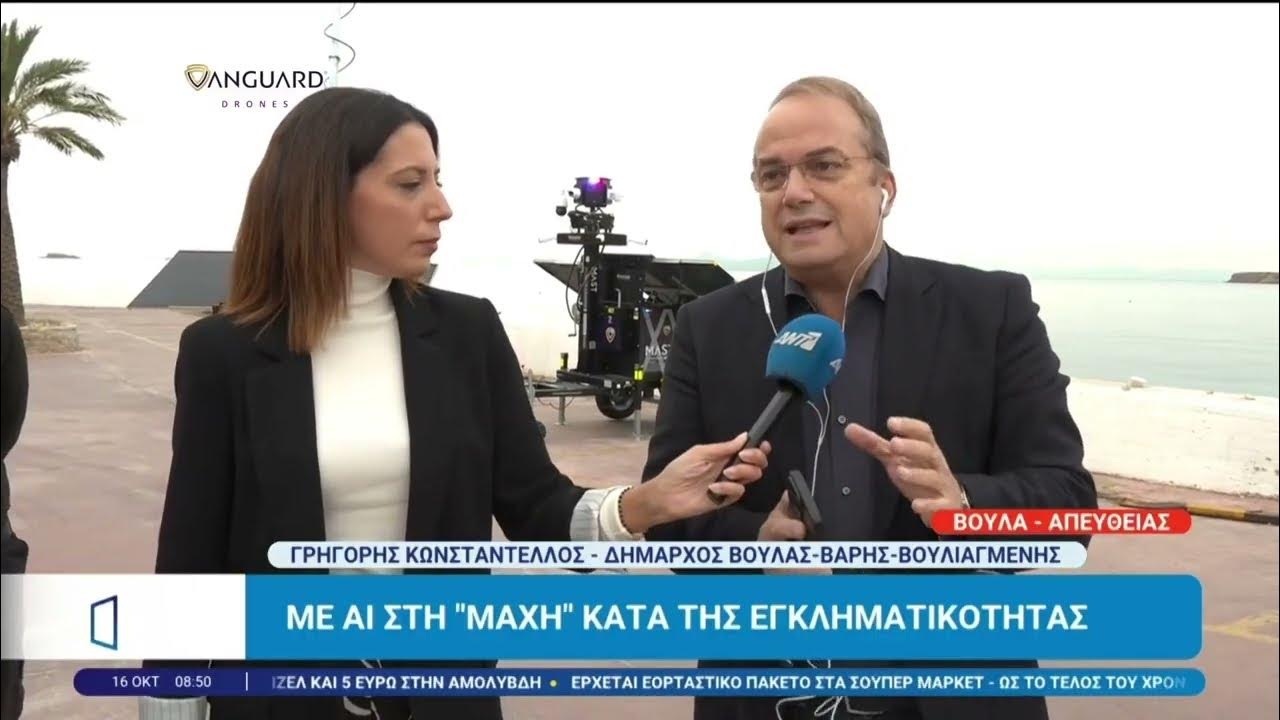
Avante’s October 28 account describes a pilot with Vanguard Risk Management and the Greek municipality of Vari-Voula-Vouliagmeni. The company says two MAST units have operated for approximately two months, in trailer-mounted and fixed configurations. HALO video analytics can issue an alert and audible warning, with a Vanguard drone providing aerial follow-up. These are supplier-reported pilot operations, rather than an independently measured finding about accuracy or a completed national rollout. Read the primary source account.
A staged demonstration has a specific evidential role
The source describes a television segment in which a person simulated an armed threat and the system demonstrated detection, warning and drone tracking. That sequence can illustrate the intended workflow. It should not be presented as a real incident or as a test of how often the system identifies an unexpected threat correctly. The difference between a planned demonstration and routine operation is material to any assessment of reliability.
The announcement also identifies use at a municipal concert for both security support and staff training. Combining those purposes is understandable in a pilot, while leaving the result dependent on what was actually observed. A useful follow-up would distinguish training exercises from unscripted events and record the interventions needed. That would help readers assess which parts of the sequence have been repeated under representative conditions.
The tower and aircraft have different responsibilities
A fixed installation and a trailer-mounted unit provide different deployment arrangements. A mobile tower can be moved to an event, but its camera view still depends on local placement. A drone can change viewpoint, while introducing another operating cycle and a responsible flight team. The complete system should therefore be assessed as a coordinated service, rather than as one device with unlimited coverage.
The handoff also needs a clear account of authorization. An alert can identify a condition for review without determining that an individual has committed an offence. The source’s demonstration should not be generalized into a claim that an automated classification settles that question. In public spaces, the operating record needs to preserve the difference between a model-generated alert, human verification and a subsequent response.
Expansion remains a commercial possibility
Avante says it is discussing further deployments with the municipality and other prospective customers. Those discussions are distinct from signed agreements and accepted installations. The pilot’s reported operating history provides more substance than a product concept, while it does not establish the scale of any future service. A later report should identify which commercial milestone occurred rather than treating interest as completed adoption.
The release does not publish a controlled comparison of response time, false alerts or total operating cost. Those remain important evaluation questions because an extra observation channel can add work as well as information. A team needs to know whether the aerial follow-up resolves uncertainty efficiently or transfers it to another operator. Counting alerts or launches alone would not settle the value of the combined arrangement.
The release’s account of a drone being dispatched also leaves a human-workflow question that a pilot report should make explicit. The reader needs to know who reviews an alert, who authorizes a flight and which organization is responsible for maintaining observation. A selected demonstration can make the sequence appear seamless while omitting those decisions from view. Recording the actual roles would help a customer assess staffing and accountability, and prevent automation terminology from suggesting that the entire response occurs without supervision. Those details are more useful than simply calling the combined arrangement continuous.
The immediate contribution is a concrete pilot connecting stationary surveillance and drone-based observation across two configurations. The wider possibility is more continuous situational awareness when an event leaves a tower’s view. That depends on useful alerts, lawful and proportionate operation, and dependable handoffs between the participating organizations. The next persuasive evidence is a transparent pilot assessment with routine results and limitations, rather than additional demonstrations of a sequence designed in advance.
Source organizations: Avante.
Source television demonstration
ANT1 segment supplied by AVANTE SECURITY, uploaded October 21, 2026. The source describes a staged demonstration, not a real armed incident. The full Greek-language segment is optional supporting context.
Watch the system in action
ANT1 television segment supplied by AVANTE SECURITY showing the municipal MAST pilot and a staged demonstration; not a real armed incident. Watch the source video ↗
References
Questions, news tips or corrections? Contact [email protected].