An early fire observation has value when it becomes a timely, understandable response. A thermal camera can extend visibility across vegetation, while the service also needs a location, an alert pathway and a team able to judge what the signal means. Tower coverage therefore describes only one part of a fire-detection network. The more useful operational question is how reliably that network turns observations into appropriate action.
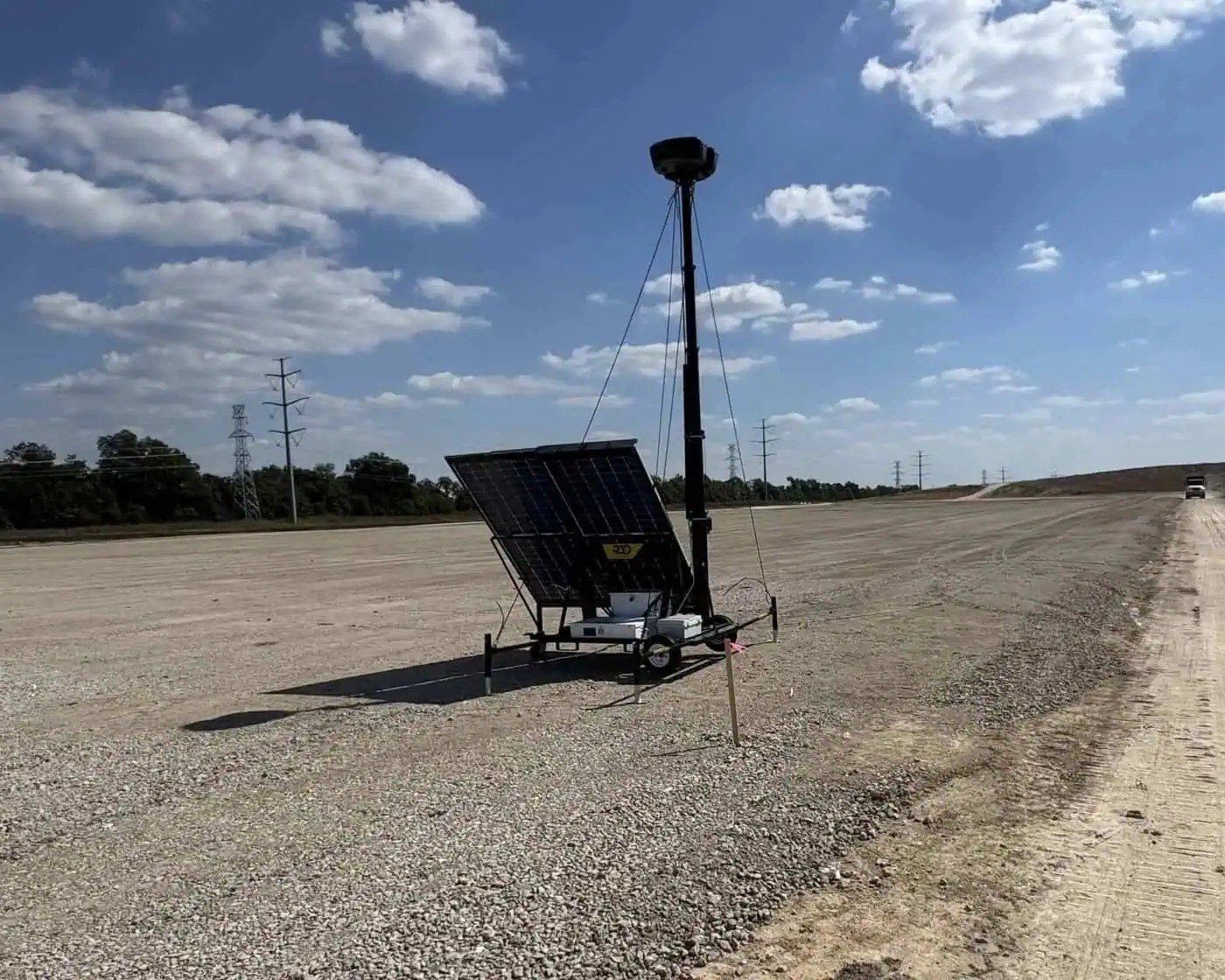
An October 19 Saudi Press Agency account reports twenty thermal surveillance towers operating in Al-Baha and linked to a central hub. The regional National Center for Vegetation Cover Development and Combating Desertification describes twenty-metre solar-powered towers combining smoke, heat and hotspot detection with geographic information systems. The official account claims full coverage of the region’s forests and vegetation. That is an agency-reported coverage statement, not an independently published measurement of perfect detection. Read the primary source account.
A coverage claim needs its definition
Coverage can refer to the planned area served by a network without specifying the probability that every event will be detected. Camera sightlines, observation conditions and the size or character of an event can affect the actual sensing task. The public account does not disclose a detailed coverage methodology or a complete detection study. Readers should therefore retain the agency’s attribution rather than convert the claim into a universal technical guarantee.
A map of covered territory can be useful while leaving local uncertainty. The receiving team needs to know where an observation originated and what confidence it supports. Geographic information systems can help organize that context, but the presence of a map does not establish the quality of every location estimate. A practical acceptance record would connect representative observations to the location information and decisions delivered to the central hub.
The hub is part of the capability
Linking towers to a common centre can give operators a more coordinated view than isolated cameras. Its value depends on how alerts are presented and reviewed, especially when several signals arrive together. The announcement identifies the connected arrangement while not publishing an operator-workload assessment. It should not be read as evidence that every alert is resolved immediately or without human judgment.
Smoke, heat and hotspot observations also need careful interpretation. A sensor can identify a condition requiring review without establishing the final cause or severity. Combining information may help the team assess it, while a response process still needs to handle ambiguity. That distinction is important when evaluating false alarms and missed events together, rather than rewarding a high alert count or a quiet display in isolation.
Solar power supports deployment without settling availability
A solar-powered tower can reduce dependence on a permanent utility connection at a particular location. It still needs an operating arrangement that accounts for storage, communications, maintenance and periods of interruption. The official report does not provide a network-wide availability figure. A useful follow-up would show when the planned observation was available and what procedure applied when one part of the network could not contribute.
The Al-Baha deployment is described as part of a wider initiative for one hundred towers across several regions. That larger plan should remain distinct from the twenty reported operating units. A program’s target is useful context for understanding intended expansion, but it should not be counted as installed capacity. Reporting each region’s actual milestone would make progress easier to assess than repeating the overall target with every update.
A later evaluation could also distinguish the first sensor indication from confirmation at the hub and the decision to send a response. Those intervals reveal different constraints, and an improvement in one does not guarantee an equal improvement in the whole sequence. Retaining uncertain alerts would help assess the workload required to obtain a useful warning. This is particularly relevant to a network advertised for early detection: the operational contribution depends on when the team receives enough reliable information to act, rather than when a camera first produces an unusual pixel pattern.
The immediate development is a reported operating network with a defined number of towers and a centralized information pathway. Its longer-term contribution depends on whether earlier, well-located observations produce useful response decisions and better outcomes. The next persuasive evidence would connect detection records, availability and response timing under stated conditions. That would strengthen the case for the network without asking a broad coverage claim to prove results it was not designed to measure.
Source organizations: National Center for Vegetation Cover Development and Combating Desertification.
References
Questions, news tips or corrections? Contact [email protected].