Some industrial inspection routes expose workers to conditions that require tightly controlled equipment and procedures. A robot can be valuable there only if it is permitted to enter the relevant environment and can return measurements that a receiving team trusts. Entry and useful inspection are related requirements, but they are not the same milestone.
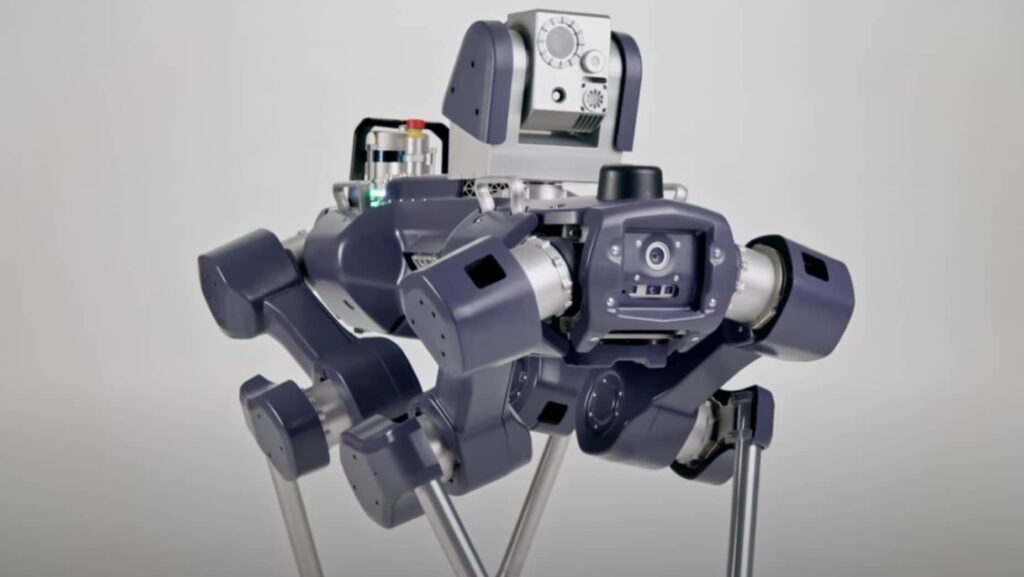
ANYbotics’ October 27 announcement says ANYmal X is shipping to customers including Equinor and DSM-Firmenich. The company describes an integrated inspection system connected to its Shift platform. The delivery announcement is a concrete commercial milestone; it does not publish a complete acceptance record for every customer route. Read the primary source.
Certification defines a boundary
A certification identifies an assessed equipment envelope. The intended site still has to match that envelope, and its operator needs a supported configuration and operating process. Treating a certification label as unrestricted permission would erase the conditions that make the label meaningful.
The inspection chain extends beyond mobility. The robot has to associate a reading with the right asset, retain the measurement context and deliver an understandable result. A missed reading, an inaccessible route and a detected anomaly require different responses. A useful record should preserve those distinctions instead of reducing every mission to a completed checkbox.
Accept the inspection chain
Integration with maintenance software can shorten the distance between collection and review, but a generated work order is not evidence that a problem was fixed. The receiving organization needs ownership of the finding, a way to reject or clarify it and a record of the eventual physical response.
The announcement also gives broader inspection-system activity as context. Such fleet-level statements should not be read as an equivalent number of completed ANYmal X customer inspections. Product-specific delivery, early-access experience and wider platform activity answer different questions and need their own denominators.
Separate fleet context from product results
A useful customer account would identify which inspection tasks moved to the delivered equipment and which remained with another process. A robot can complete a route while a particular reading still needs human interpretation or a separate instrument. Reporting those boundaries does not diminish a delivery; it explains what was purchased and accepted. Without that task-level account, a general statement about automated inspection can hide different levels of autonomy and different responsibilities at the receiving facility. Those distinctions become particularly important when comparing early access with routine supported operation.
The evidence should also retain unsuccessful or incomplete missions. A mission count can grow while difficult routes are deferred, and a successful return to the starting point does not establish that every required observation was collected. Customers could ask for the proportion of required readings obtained under the accepted configuration, with reasons for omissions kept visible. Such a record would connect mobility to the inspection purpose without inventing a universal success threshold. It would also make the limits of any comparison between sites explicit rather than relying on a common product name.
Service life introduces a different transfer problem. A configuration accepted at delivery may later receive software, sensor or maintenance changes. The receiving organization needs to know which changes preserve the accepted equipment envelope and which require further review by responsible specialists. That is a governance question rather than an instruction for operating in a hazardous environment. The source announcement does not establish how each customer manages that process. A more complete account would connect the supplier’s support commitments to the customer’s own authorization and inspection responsibilities over time.
The resulting business case should distinguish avoided exposure from displaced work. An inspection robot may reduce the need for a person to traverse a difficult route while creating new work in supervision, result review and equipment support. The useful comparison includes those tasks rather than assigning every automated mission an identical labor saving. A customer-supported record could then show where the service changes the inspection program and where existing practice remains necessary. That would provide stronger evidence of durable value than either shipment volume or a broad platform-level inspection statistic by itself.
The immediate change is the reported move from development and early access toward customer deliveries. The longer-term opportunity is routine inspection with less human exposure to difficult routes. That benefit depends on dependable mission completion, useful measurements and support throughout the equipment’s service life.
The next evidence is a customer-supported account of accepted routes and findings under stated conditions. Shipment confirms that hardware is moving; repeatable inspection outcomes would establish how that hardware changes the work at the receiving facility.
Questions, news tips or corrections? Contact [email protected].