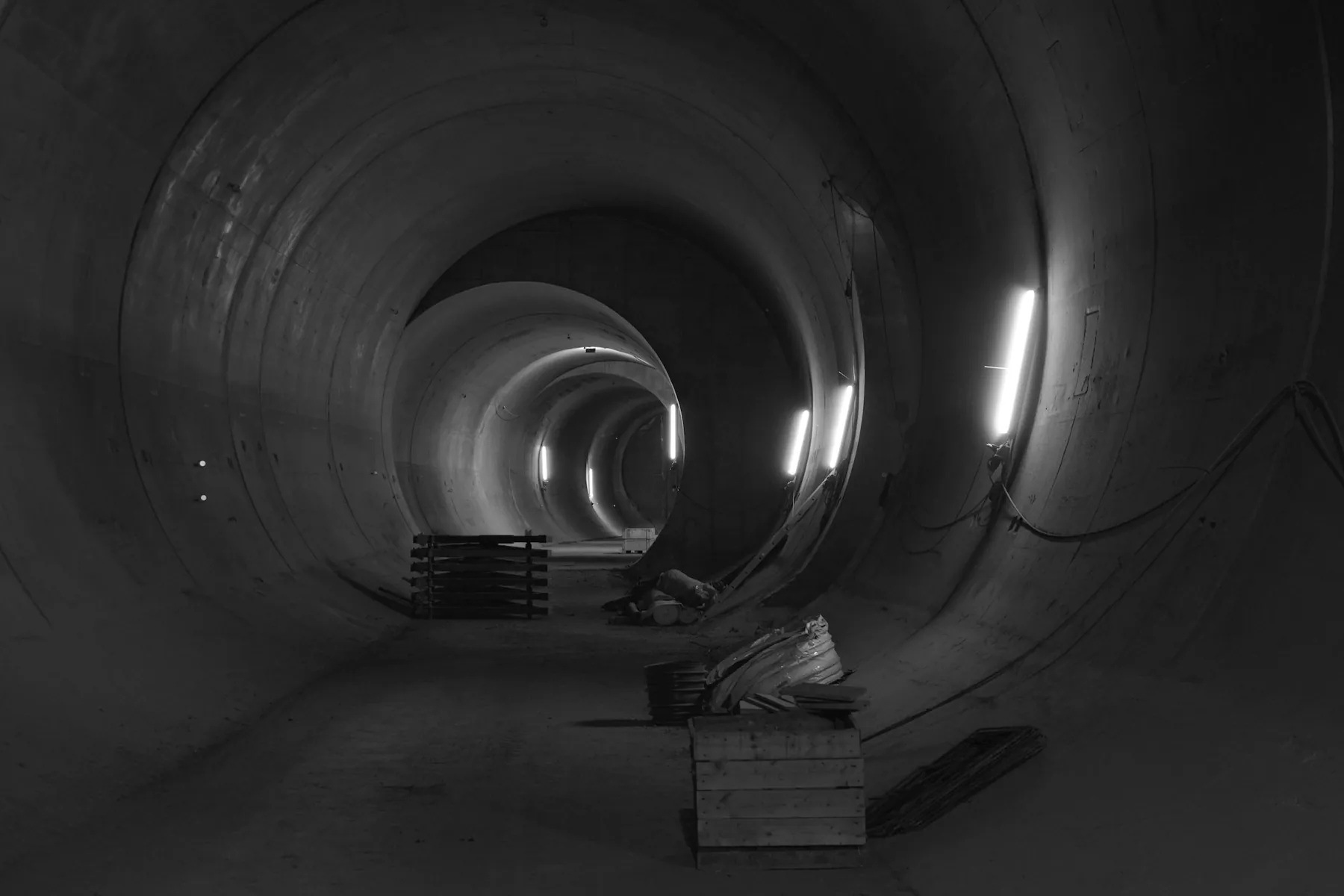
Inspecting the interior of a bridge creates a different robotics problem from flying around its exterior. Access is tight, positioning is difficult and the useful result is evidence about the structure. A drone that enters the space still has to return observations that an inspector can locate and interpret.
STABLY’s official site describes an October 12 demonstration of its confined-space inspection drone during Seoul’s review of unmanned bridge-inspection technology. The company says it was selected for a municipal validation program and is testing through December inside Seongsan Bridge box girders measuring approximately one meter wide and 1.2 meters high. The account establishes an ongoing field-validation setting. It does not publish a defect-detection accuracy study or establish that the drone can make a bridge-safety decision independently. Read the primary source account.
Access and inspection quality are different milestones
Being able to traverse a narrow space can reduce the difficulty of acquiring observations. Inspection quality also depends on lighting, image detail, coverage and repeatability. A flight that returns safely can still leave an area unobserved or produce imagery that is unsuitable for a particular assessment.
A useful validation record would connect each observation to its location in the structure and distinguish complete coverage from selected examples. That would make it easier for engineers to review findings, request a closer look and compare later visits with an earlier baseline.
Recovery should be planned before entry
Confined-space operations make a lost connection or disabled aircraft consequential. Recovery can require the same difficult access the drone was intended to avoid. The test program’s operational value would therefore be clearer with evidence about communication loss, aborted flights and retrieval arrangements, in addition to successful navigation.
The company describes an integrated hardware, software and firmware approach. That can give its engineers control over the behavior of the complete system, but it does not by itself establish reliability. Field conditions are what expose whether the design choices work together under the intended operating constraints.
Make the inspection record reproducible
For a structural engineer, the useful output is an observation that can be reviewed and compared. That requires more than a successful flight path. The inspection record should make it possible to distinguish an area that was examined and found unremarkable from an area that was never adequately observed. Both can look like an absence of reported defects if coverage is not documented.
Lighting and viewing angle can also affect whether a surface feature is visible. A repeat visit may produce a different-looking image without the underlying structure having changed. A useful workflow would preserve acquisition conditions and provide a way to revisit an ambiguous location. These are general inspection considerations, not claims that the current validation program has already solved every source of variation.
The deployment’s narrow geometry makes the relationship between flight and evidence particularly important. A route that is feasible for the aircraft may not provide every view an inspector needs. Planning can therefore start with the required inspection output and work backward to the positions and movements needed to obtain it. That keeps navigation performance connected to the engineering task.
An eventual account of the validation would be more useful if it reported incomplete coverage and unusable imagery as well as selected successful findings. Inspectors could then assess how much supplementary work remains and whether the drone changes the time or access burden of the overall inspection. The program offers a concrete setting for collecting that evidence, while the public source currently establishes the validation activity rather than its final outcome.
Human review remains central to the distinction between an inspection image and an engineering finding. A feature visible in a photograph may need another view, a measurement or a different inspection method before a conclusion is justified. The value of drone access can therefore be assessed by how effectively it supports that review, including the ability to request and obtain follow-up evidence. This avoids making the platform responsible for a diagnostic capability that the source has not established. It also identifies a practical beneficiary: inspectors who can obtain usable observations with a clearer record of what still requires attention.
The immediate opportunity is to improve inspection access in a specific, demanding environment. If validation shows repeatable coverage and usable records with a manageable recovery burden, the approach could make periodic inspections easier to plan. The next meaningful evidence is an account of inspection outputs and operating limits from the program, rather than a broader claim that autonomous flight has solved structural assessment.
Source organizations: STABLY.
Source demonstration
STABLY’s official technology demonstration provides platform context. It is not a complete record of the Seongsan validation program.
References
Questions, news tips or corrections? Contact [email protected].