The most useful aerial observation is not always a close view of the person being followed. It may be a view of the surrounding environment that helps responders decide where to go next. A vendor account from O'Fallon illustrates this information handoff, while also showing why a selected successful incident cannot establish the performance of an entire drone programme.
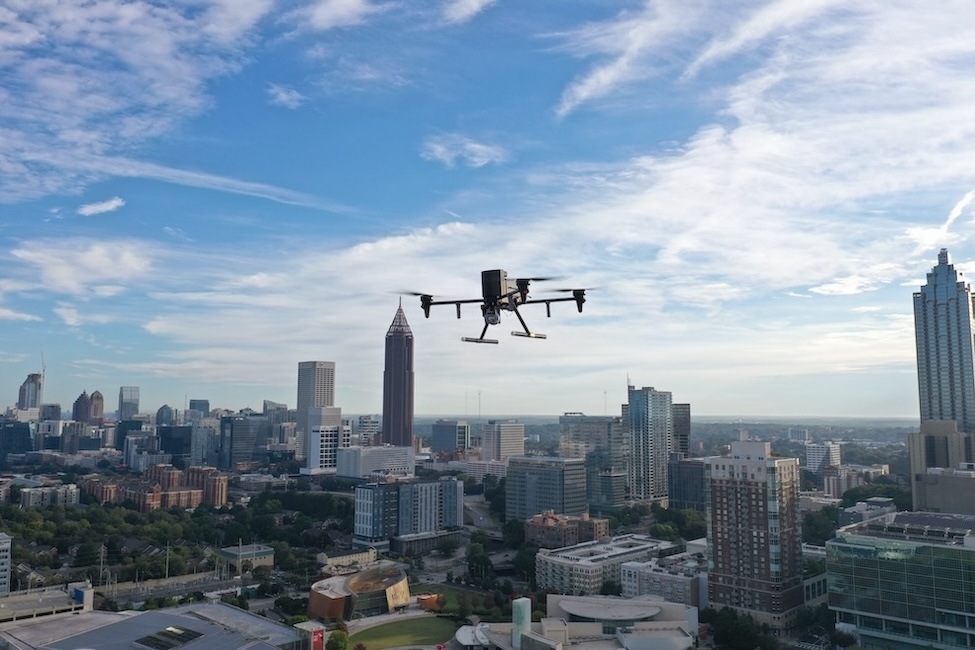
Flock Safety published an October 30 account of O'Fallon police responding to an alleged protective-order violation. The company says a remotely operated drone followed a fleeing suspect until he entered a storm sewer, then helped identify the downstream exit. Ground officers and a K-9 team were directed to that location and made an arrest in under fifteen minutes. The source gives the publication date but does not establish the incident's exact date. Its timing claim concerns this one case. Read the primary source account.
The operator changed the question
Following someone from above and identifying a drainage exit are different observation tasks. According to the account, the operator widened the view after direct tracking was interrupted. The value of the aircraft then came from relating the surrounding terrain to the ground team's problem. The report does not say the drone saw underground, autonomously predicted the suspect's route or completed an arrest without people.
The Real Time Information Center operated the aircraft and relayed information to the responders. That puts communication at the centre of the reported outcome. An image can be available in a control room without automatically being useful to a moving team. The account describes a successful handoff, but does not publish the full communications record from which its precision or timing could be independently reconstructed.
The ground response remained essential. Officers and the K-9 team acted on the information and took the suspect into custody. Describing the result as a drone apprehension alone would assign the aircraft work performed by people and other resources. Keeping that division visible makes the example more useful to teams assessing where aerial information fits within their existing response arrangements.
One duration is not a programme statistic
The under-fifteen-minute figure is a supplier-reported incident outcome. The source does not provide a comparison incident, a complete sample of similar calls or a distribution of unsuccessful deployments. It therefore cannot establish how much faster this programme is on average or isolate the time saved specifically by the aircraft. The reported sequence can still illustrate a useful mechanism without supporting those broader numerical conclusions.
A stronger evaluation would first define the clock. Time from a call, dispatch, launch, arrival and useful observation are different measures. An overall resolution time can include work outside the aerial system. Preserving those events separately would help explain where a service contributes, while avoiding an attractive duration whose meaning changes between case studies.
Selection also matters. A published success story does not tell a reader how often tree cover, weather, workload or an unsuitable viewing angle prevents useful assistance. This article does not infer that any of those conditions occurred here. They identify the missing denominator needed to translate one account into a claim about routine service performance.
Product features and demonstrated case facts differ
Flock's page lists broader DFR features, including dispatch options, imaging capabilities, generated records and public reporting. Those general descriptions should not all be assigned to the O'Fallon incident. The narrative establishes remote operation, an aerial observation and a handoff to ground responders. It does not document that every listed sensor mode or dispatch trigger was used in this particular case.
That distinction helps a prospective customer frame a meaningful demonstration. Showing a camera's available modes is different from showing that personnel can obtain and communicate the information they need during an unfolding call. A representative assessment would attach the selected equipment, operator process and receiving team's task to the same record, rather than combine unrelated product specifications into an apparent incident result.
Public accountability follows the same principle. Flight logs can establish that an aircraft operated, while an incident account explains what it contributed. Neither alone settles questions about access to retained video, the appropriateness of a deployment or the outcome of the underlying allegation. The source describes an arrest; it is not a judicial finding about a private person's guilt.
The immediate contribution is a concrete account of an aerial view helping personnel choose a safer, more informed position. The wider possibility is a DFR service that improves decisions even when direct tracking is lost. Demonstrating that value beyond a selected case requires comparable incident records, clear timing definitions and human responsibilities that remain visible. That is the evidence to seek before turning this example into a general performance promise.
Source organizations: Flock Safety, O’Fallon Police Department.
References
Questions, news tips or corrections? Contact [email protected].