Large outdoor sites create a basic security mismatch: the perimeter is long, while the people available to inspect it are limited. A moving robot can carry sensors between checkpoints instead of requiring a guard to make every routine trip. The promise is not merely another camera. It is a repeatable physical inspection that can reach several viewpoints and deliver evidence to somebody who can decide what happens next.
Main contribution
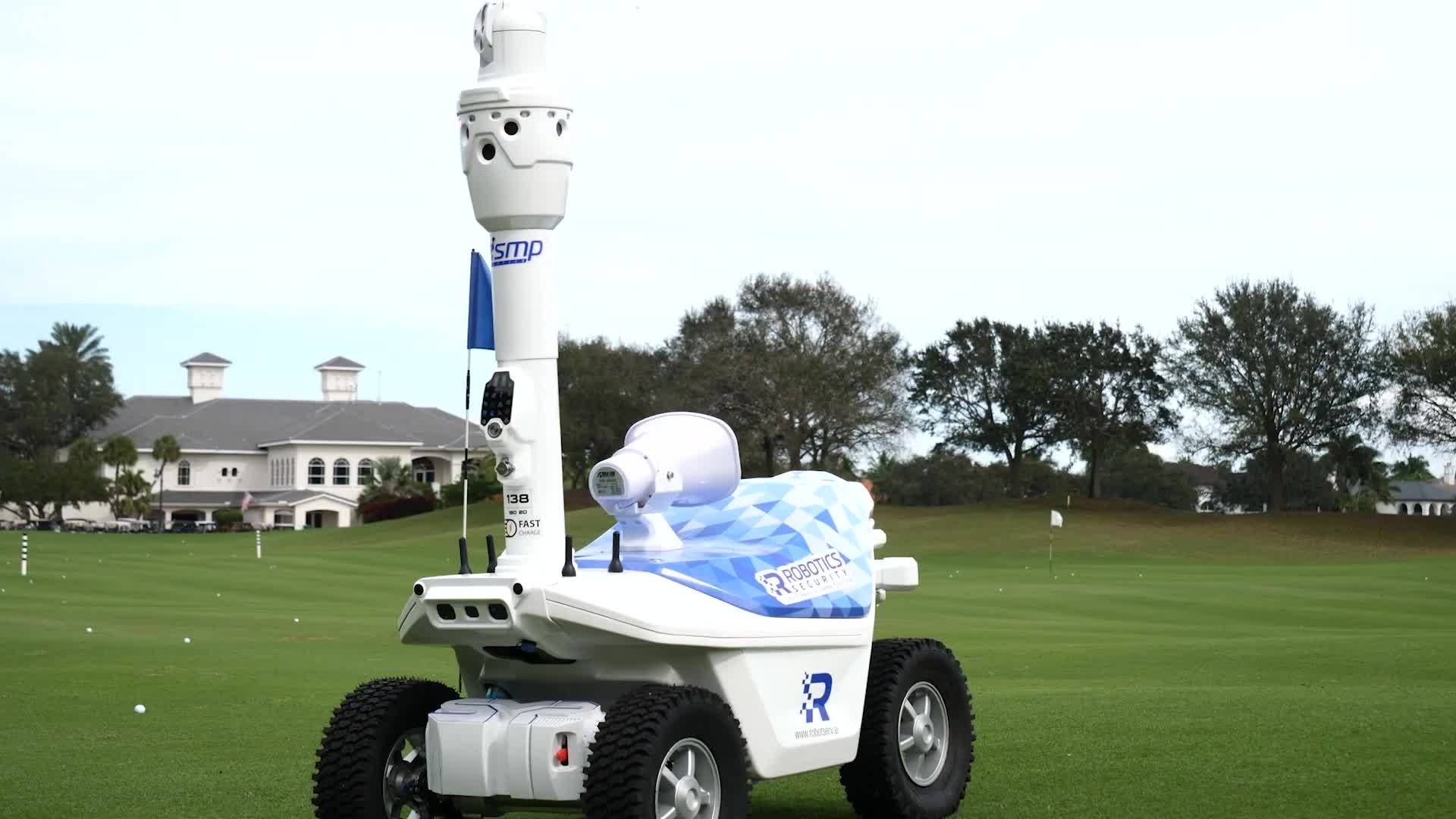
SMP Robotics' Argus platform joins autonomous outdoor navigation, panoramic observation, a steerable inspection camera and charging into a patrol system. The current supplier page identifies industrial, commercial and infrastructure uses and describes sending events to operators. Its official video below shows a supplier demonstration of the S5 platform family. The article analyzes the mobile-patrol approach; it does not treat footage of an earlier model as proof of every feature listed for the current S5.3.
Watch the system in action
Official supplier demonstration of the moving security platform; footage illustrates operation rather than independently measured security outcomes. Watch the source video ↗
Why checkpoints matter more than miles
A robot may travel a long distance while contributing little to the important security questions. The useful mission begins with the locations that need inspection and the evidence required at each. A checkpoint beside a gate might need a clear view of whether it is secured. A perimeter checkpoint could require a view along the fence. The robot has to position itself, obtain the observation and associate it with a time and location.
The supplier describes both panoramic coverage and optical and thermal inspection. Those sensing functions answer different questions. A thermal indication may help locate activity in low visible light, while another view is needed to understand details. That does not justify treating every detection as identification. A site qualification should use the actual target and conditions relevant to the customer, including distance, obstructions and changing weather, instead of copying a maximum range into an operating promise.
Navigation must survive the ordinary site
Outdoor facilities change throughout a shift. A delivery can block a route; maintenance can introduce barriers; a gate can be locked when the commissioning route expected it open. Autonomous movement is valuable when the system handles those ordinary variations predictably. The security question is which checkpoints remain completed after the interruption, not simply whether the robot avoided a collision or returned an overall successful mission status.
A useful operating plan states when the robot waits, takes another qualified path or asks for assistance. It should also make an unavailable inspection visible to the operator. Where a checkpoint cannot be reached, the organization needs an alternate way to obtain the observation. Recording the exception prevents a route map from being mistaken for continuous protection of every space inside it.
Applications across sectors
SMP identifies energy infrastructure, industrial sites, logistics, commercial facilities and campuses as applications. These are supplier-defined intended settings, rather than a list of independently verified customer results. Their requirements differ. A solar site may value inspection along large separated areas. A logistics facility has frequent vehicle movement. An industrial property may need checks around equipment and restricted access. The mission and collision-avoidance qualification must follow the actual site.
An illustrative warehouse yard shows the distinction. A robot that moves comfortably around parked trailers may still lack a useful view behind them. Planning another checkpoint could improve observation but extend the revisit time elsewhere. That is a service tradeoff, not a defect established by the example. Buyers should compare the proposed route with their highest-priority questions and decide which gaps need another patrol or response arrangement.
The operator and charging base remain essential
Automatic charging can reduce a repetitive support task, but time at a charger affects mobile coverage. The customer needs to understand whether the robot can still observe a relevant location while docked and what protects remote checkpoints during that period. Charging success and security availability are separate measures. A managed service can provide recovery and supervision; a purchased system needs a named organization to own those functions.
The page describes integration with video management infrastructure. That can help operators review mobile observations through existing tools, but receiving a stream does not create a complete response process. Events should preserve the robot's location, relevant recording and mission state. A person deciding whether to dispatch somebody needs to know if the observation was current, whether the platform remains nearby and whether communication or navigation has been interrupted.
What a buyer should count
Evaluate completed observation tasks, interventions and evidence quality across representative shifts. Count missed checkpoints and the time until a location is revisited. Include maintenance and access changes rather than running only a clean demonstration route. The same measurements should apply to the existing patrol so any claimed improvement concerns a comparable job. The robot can reduce repetitive travel while leaving judgement and physical intervention with authorized staff.
How it could change the world
Mobile security could make large properties easier to inspect systematically, with a record of what was actually observed rather than just a schedule of planned rounds. Argus represents that shift toward a route that produces repeatable evidence. If the system proves dependable on real sites, organizations could direct human attention toward exceptions and response. The wider benefit would come from more reliable observation at the places that matter, not from the number of kilometers a machine can travel.
References
Questions, news tips or corrections? Contact [email protected].