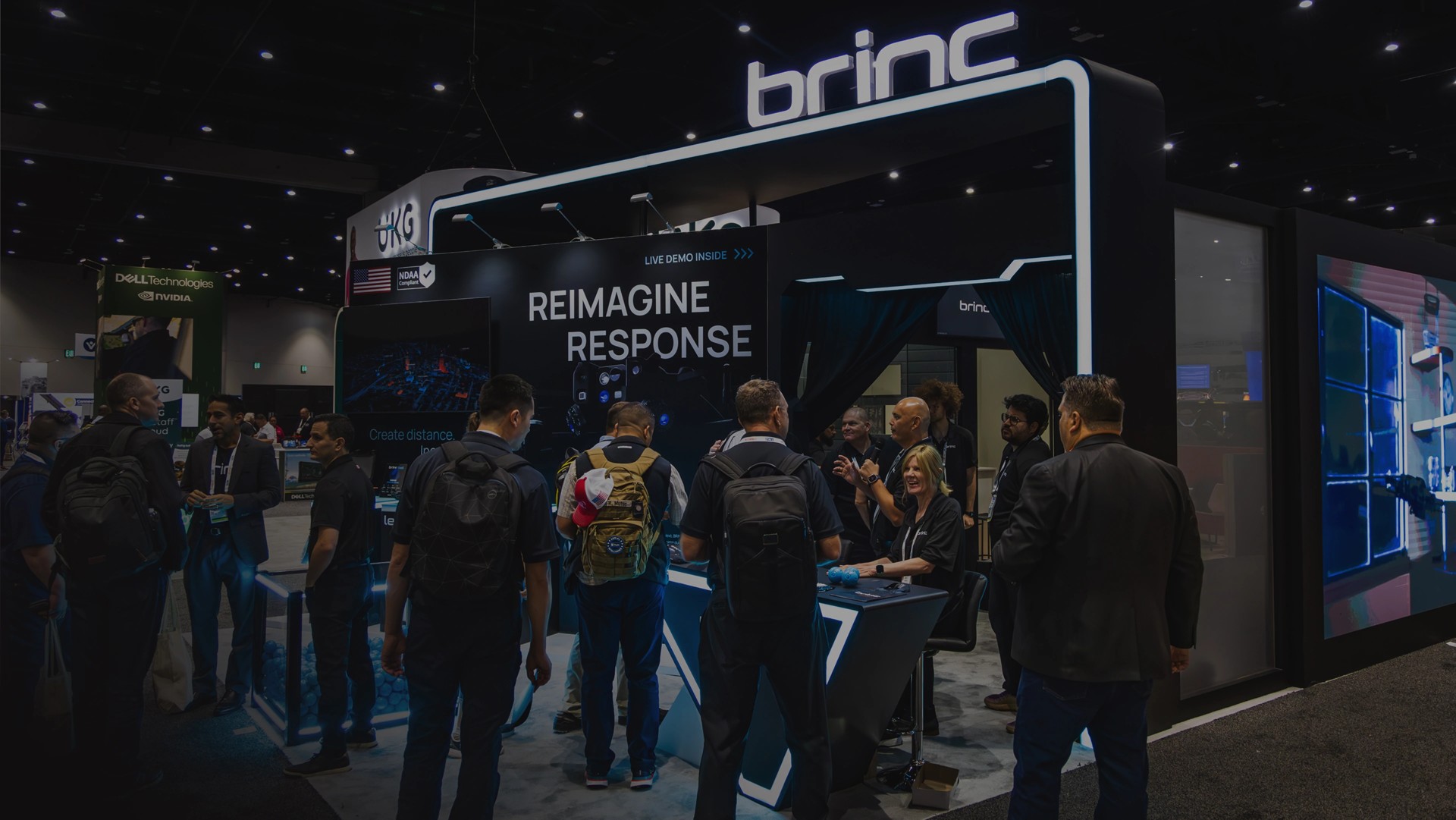
A remote drone demonstration can make a proposed operating model easier to understand. A visitor can see how a command reaches an aircraft and how the resulting view returns to an operator. The useful question is what that experience reveals about the complete service, including the people, permissions and local support that keep a selected demonstration running.
BRINC’s IACP 2026 event material offers visitors a supervised Drone as First Responder mission from its Orlando booth using an aircraft at the company’s Seattle headquarters. The page describes a pilot beside the visitor, a simulated call and a session of about 20 minutes. It also advertises robotic battery-swapping equipment and program-design discussions. These are plans for an October 25–27 exhibition experience, not evidence that an Orlando agency has deployed the demonstrated system. Read the primary source account.
The distance is real; the operating conditions still matter
Controlling an aircraft from another city demonstrates a communications and interface arrangement under the conditions used for the session. It does not show that every agency can use the same arrangement at every proposed site. The public event page does not disclose a complete flight authorization, safety case or degraded-network test. This article does not infer those details or treat the booth experience as a general permission to conduct remote operations.
An informative visitor could ask which tasks are performed in Seattle before and after the remote session. Launch preparation, site management, maintenance and recovery remain part of the service even when a visitor issues commands from Orlando. This is a proposed evaluation question, not a claim that the event conceals those tasks. Making them explicit helps distinguish remote control of one mission from the staffing needed to sustain a response program over time.
The simulated call should also remain attached to any description of the result. A selected demonstration may provide a clear destination and predictable environment. A live emergency can involve changing locations, incomplete information and competing calls. The demonstration can still show useful interface behavior without establishing how the same system performs across that wider range. A report should identify which parts were simulated and which aircraft actions actually occurred.
A battery swap is one stage of readiness
The announced battery-swapping equipment addresses a concrete part of the operating cycle: restoring energy between flights. A successful swap would not by itself establish that an aircraft is ready for the next mission. Health checks, communications, weather and the actual launch decision remain separate. The event material does not publish a sustained duty-cycle study combining all those stages, so no continuous-availability guarantee is inferred here.
A useful program-design discussion could translate the demonstration into an agency’s proposed coverage area and staffing model. Distance, terrain, suitable launch locations and the likely pattern of calls can change the arrangement. This is why the source’s offer to discuss program design is substantively different from merely displaying hardware. The agency needs a configured service it can evaluate, rather than a collection of maximum product specifications assumed to work together everywhere.
For verification, a demonstration log could preserve the simulated call, command times, aircraft state and human interventions. Such a record would let a team identify what it learned and what remains untested. This is a suggested evidence package, not a record supplied on the booking page. It would make a short hands-on session more useful without claiming that the session is a statistically representative operational trial.
The event page states that visitors will fly with a BRINC pilot alongside them. That supervision is part of the demonstrated configuration and should not disappear from a later account. A visitor’s ability to operate the interface without prior flight experience can show accessibility under guidance; it does not establish that an untrained person may independently run an agency program. Training and accountability need their own explicit arrangement.
The next evidence is what BRINC actually demonstrates and, separately, what customers validate in their own operating environments. The IACP plan offers a concrete opportunity to inspect remote tasking, supervision and turnaround equipment. Its value will be clearest when reports preserve the boundaries of the experience and use it to identify the next operational questions, rather than converting an exhibition session into a claim of deployed public-safety coverage.
References
Questions, news tips or corrections? Contact [email protected].