The difficult part of an outdoor security patrol is often the space between the places a camera can easily see. Industrial properties have long routes, changing surfaces and activity that does not pause when a machine needs attention. A robot designed for a paved walkway cannot simply be assumed to provide the same service around a larger perimeter. Expanding the terrain envelope therefore changes the operating problem, not just the vehicle shape.
For workers and security teams, the useful outcome is a dependable observation followed by an appropriate response. Getting farther from a charging base or moving across uneven ground only matters if the system can still complete that chain. A more mobile robot needs a clearer account of where it can work and what happens when it cannot.
What K7 adds to the proposal
Knightscope’s current product material describes K7 as a larger outdoor autonomous security robot intended for expansive sites, with light-duty off-road capability, thermal and pan-tilt-zoom observation, and live audio communication. The company’s September media kit describes limited release, while its Force page places K7 under development. These official descriptions support an assessment of intended capability, not a claim of general availability or widespread deployment. Primary source.
The distinct contribution is an attempt to extend mobile patrol beyond the structured pedestrian environments associated with the existing K5. That shift could address a real coverage problem, but the product’s stage makes field evidence central to the next decision.
Terrain affects the whole service
A route is more than a distance. Surface changes can alter motion, visibility and the effort needed to recover a stopped machine. An outdoor service also has to account for ordinary site changes: parked equipment, maintenance work, delivery traffic and areas that should temporarily become unavailable. None of these issues can be resolved merely by listing a maximum speed.
The relevant mechanism is repeatable movement that preserves the quality and availability of observation. A robot might reach a viewpoint successfully yet provide a poor view because the subject is obscured or conditions differ from the demonstration. Conversely, a slower, more restricted route may still be valuable if it reliably supports an identified security task.
Buyers should therefore assess the relationship among route completion, useful coverage and human attention. If every unusual surface requires intervention, the nominally larger patrol area may create more work than it saves. This is an analytical test for the service, not a reported K7 failure rate.
A photograph is not a qualification record
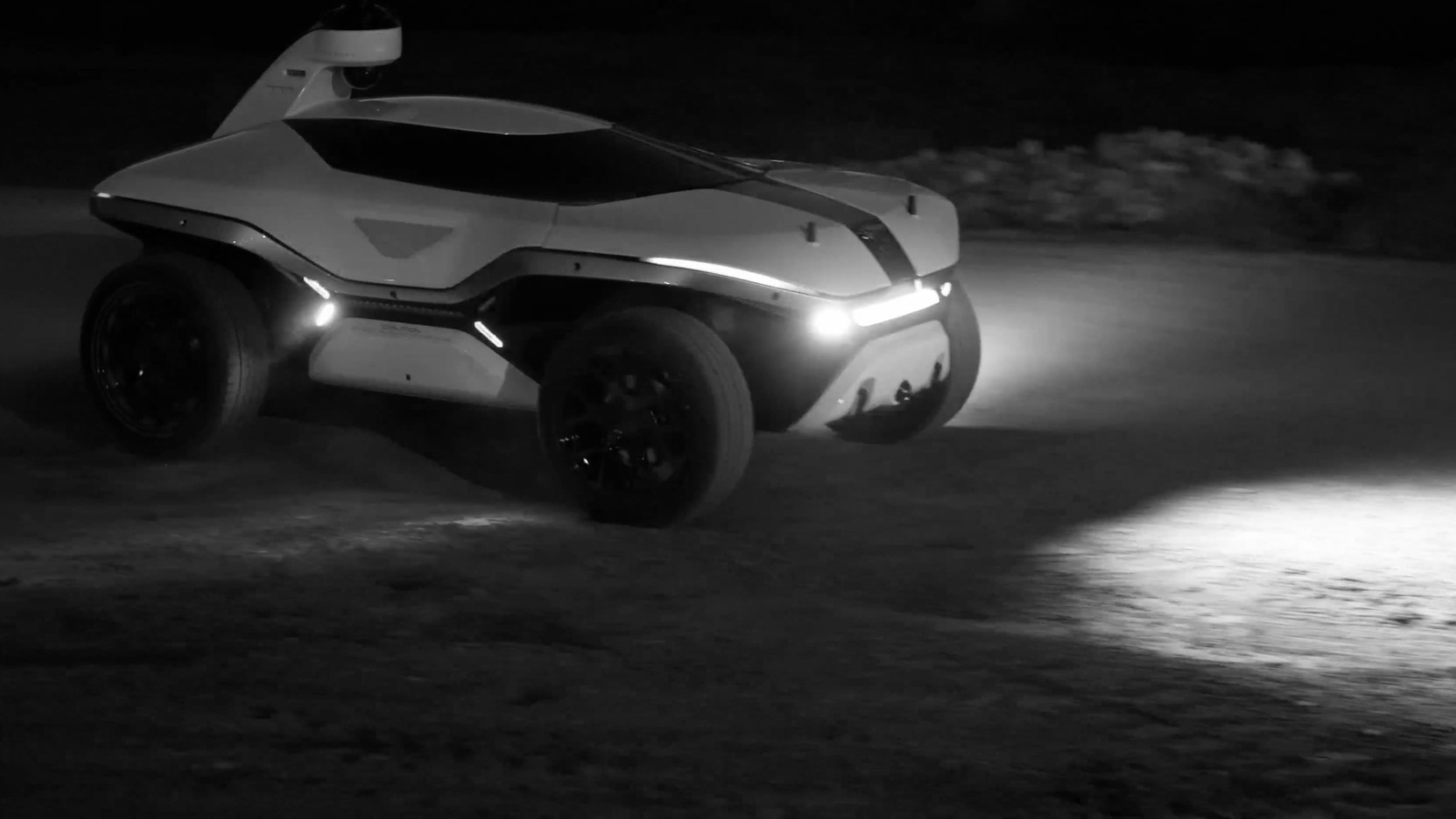
Knightscope supplies a credited image of K7 on rough ground at night. It helps readers understand the physical product, but it cannot establish the full operating envelope. A successful photographed moment says little about sustained availability, recovery requirements or performance across different weather and ground conditions.
The current material does not provide the independent, site-level comparison needed to establish those outcomes. Development and limited-release descriptions also need reconciliation before an organization relies on a particular delivery assumption. A buyer should confirm current status directly rather than infer readiness from a public launch image.
What changes in a procurement decision
In the immediate term, K7 broadens the kinds of sites that can reasonably ask for a mobile-robot evaluation. It does not remove the need for a site survey or a response plan. The right comparison may include a tower, a human patrol or a combination, depending on where observation is needed and what personnel can do with it.
A meaningful evaluation would specify coverage obligations, downtime accounting, maintenance responsibility and the process for an obstructed route. It should also consider workers who share the property with the machine. Clear movement rules and predictable behavior can matter as much as the number of sensors when introducing autonomy to an active industrial site.
Costs should be tied to a completed service rather than a vehicle’s presence. A subscription can make expenses easier to anticipate, but the contract still needs to explain intervention and support. A robot that spends less time moving may be useful if it provides the required observation; a busier robot may not be useful if its output rarely changes a decision.
The larger implication is conditional
If K7 can sustain a broader set of qualified routes with manageable oversight, outdoor robotic security could become relevant to properties that previously required separate solutions for walkways and perimeter areas. If recovery or supervision rises with terrain complexity, the practical boundary may remain narrower than the visual impression suggests.
Watch for consistent release information and published field evidence that connects terrain, patrol completion and response quality. The important advance would be a larger dependable service envelope. A larger machine alone is not that evidence.
Primary source: Knightscope official reporting.
References
Questions, news tips or corrections? Contact [email protected].