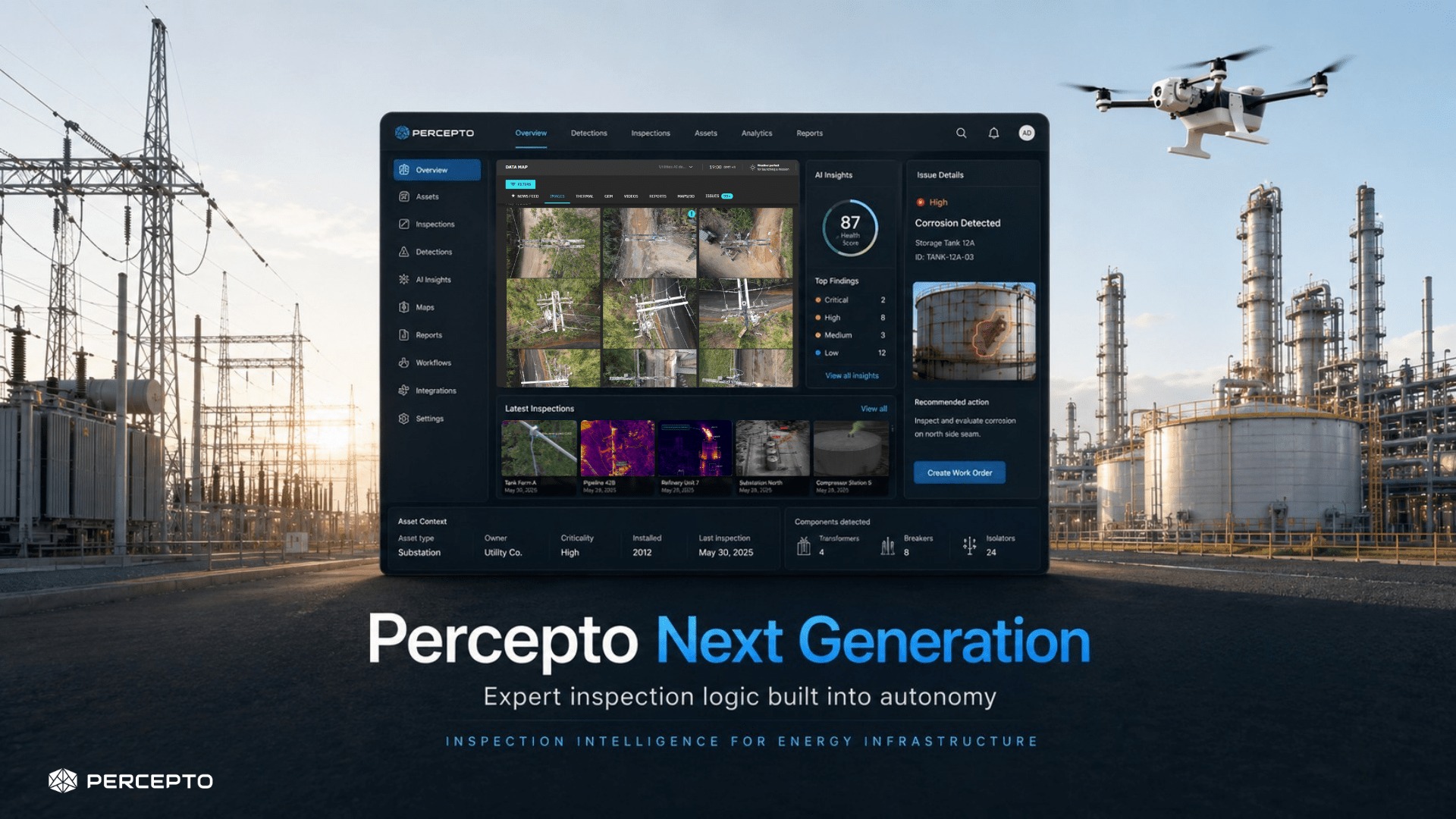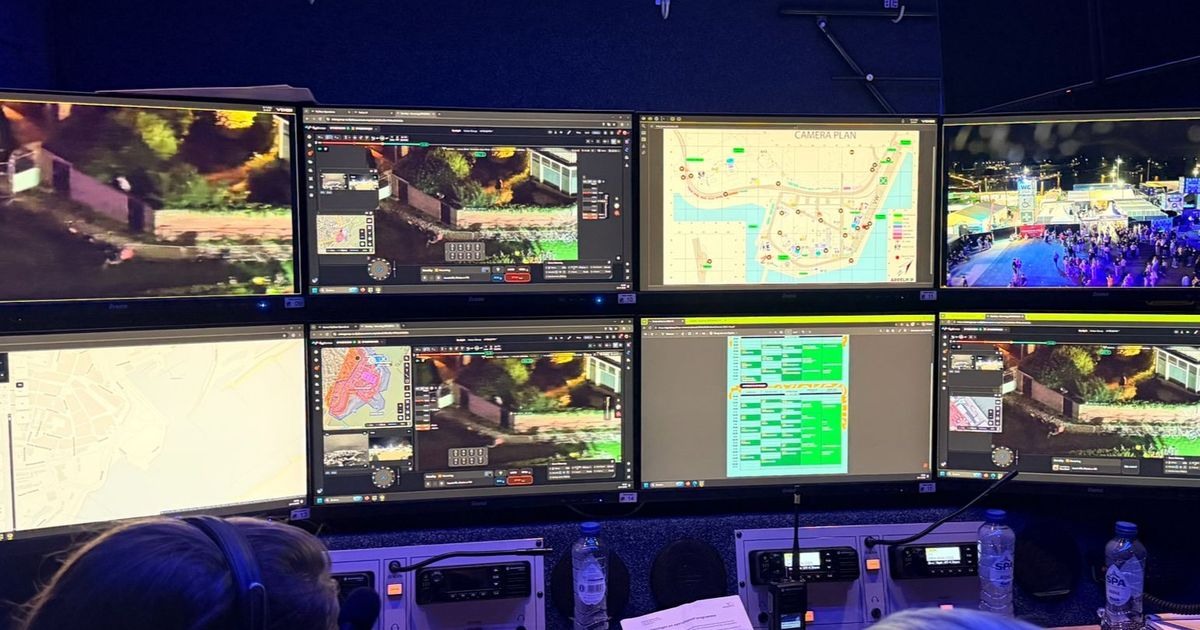
A crowd-management team needs information while movement patterns can still be changed. An aerial camera can provide a useful perspective, but the camera is only one part of the service. The organization also needs a permitted operation, a reliable feed and people who can interpret what they see and coordinate a response without creating confusion elsewhere in the event.
FlytBase’s September 16 case study describes Antea Group’s two-day proof of concept at Appelpop, delivered with Geodirect and Aerial Intelligence. The company reports dock-based automated missions feeding a command center for crowd, traffic and security monitoring, with thermal imagery tested alongside the standard feed. It explicitly describes the project as a proof of concept. The account does not publish a controlled comparison of incident outcomes or establish a general authorization to fly similar missions at other events. Primary source.
The useful product is a decision made in time
Consider a hypothetical queue beginning to spill into a vehicle route. Aerial imagery might reveal the pattern earlier than a fixed camera, but someone must recognize the issue and contact the team able to change the flow. If that handoff takes longer than the development of the queue, the extra perspective may arrive without producing a practical benefit. Evaluation should therefore follow the whole decision, rather than counting flights or minutes of footage.
The command center needs clear responsibilities for interpreting an observation. The person monitoring a feed may not have the authority to change an entrance or redirect traffic. A workable process should identify who decides, who acts and how completion is communicated. Those responsibilities should be rehearsed before an event, because a technically successful aerial service can still add another information channel to an already busy team.
The imagery should also be presented with its limitations. A view can show movement without explaining why it is happening. A thermal observation may help locate activity without establishing identity or intent. Staff need enough context to avoid turning an uncertain visual pattern into an unwarranted conclusion about an individual. This is a general requirement for responsible event monitoring, not evidence of an error in the reported trial.
A repeatable operation needs more than repeated flights
A two-day trial can expose integration problems and demonstrate that several organizations can work together. It cannot, by itself, establish reliability across different venues, weather conditions or crowd arrangements. The next deployment may have different obstructions, permissions and communications coverage. Reuse should therefore begin with a review of what actually transfers, rather than assuming that a successful workflow can be copied unchanged.
An informative evaluation would record requested missions, completed missions and periods when useful imagery was unavailable. It would also capture the time between an event team’s request and receipt of an interpretable view. Those measures distinguish aircraft availability from service availability. A drone can be technically ready while its feed is not reaching the people who need it, or while the relevant observation cannot be obtained safely.
There is an equally important staffing question. Automation may reduce some direct flight-control work while increasing the need to review and coordinate incoming information. A fair comparison should include those duties. Counting only the person at the controls would miss the operational effort in the command center and the supporting organizations. The source does not provide enough workload data to quantify that tradeoff.
Preserve evidence without collecting everything indefinitely
Live situational awareness and later incident review have different information needs. An event operator should define which material is retained, who can access it and how a particular observation is associated with a decision. That can make a review more useful while avoiding an assumption that all captured footage must become a permanent archive. The exact arrangements depend on the event’s responsibilities and applicable rules.
Before scaling, the team could review a sample of decisions supported by the feed, including observations that did not justify action. That would help distinguish useful awareness from simply producing more video. It would also reveal whether the aerial view changes decisions or mainly confirms information already available elsewhere.
The case study’s significance is the combination of aircraft operation, integration and command-center use in a live event. The next evidence should show how consistently that combination delivers timely, proportionate decisions. That is a stronger basis for expansion than treating autonomous takeoff and landing as the complete public-safety outcome.
References
Questions, news tips or corrections? Contact [email protected].