A perimeter operator needs to know what a sensor can detect before deciding how to use its alerts. A single range figure is an incomplete answer because a person, a vehicle and a small aircraft present different observation problems. For counter-drone systems, the more useful question is how a detection reaches an operator with enough context for an authorized response. The radar specification is one input to that workflow, rather than a complete measure of protection.
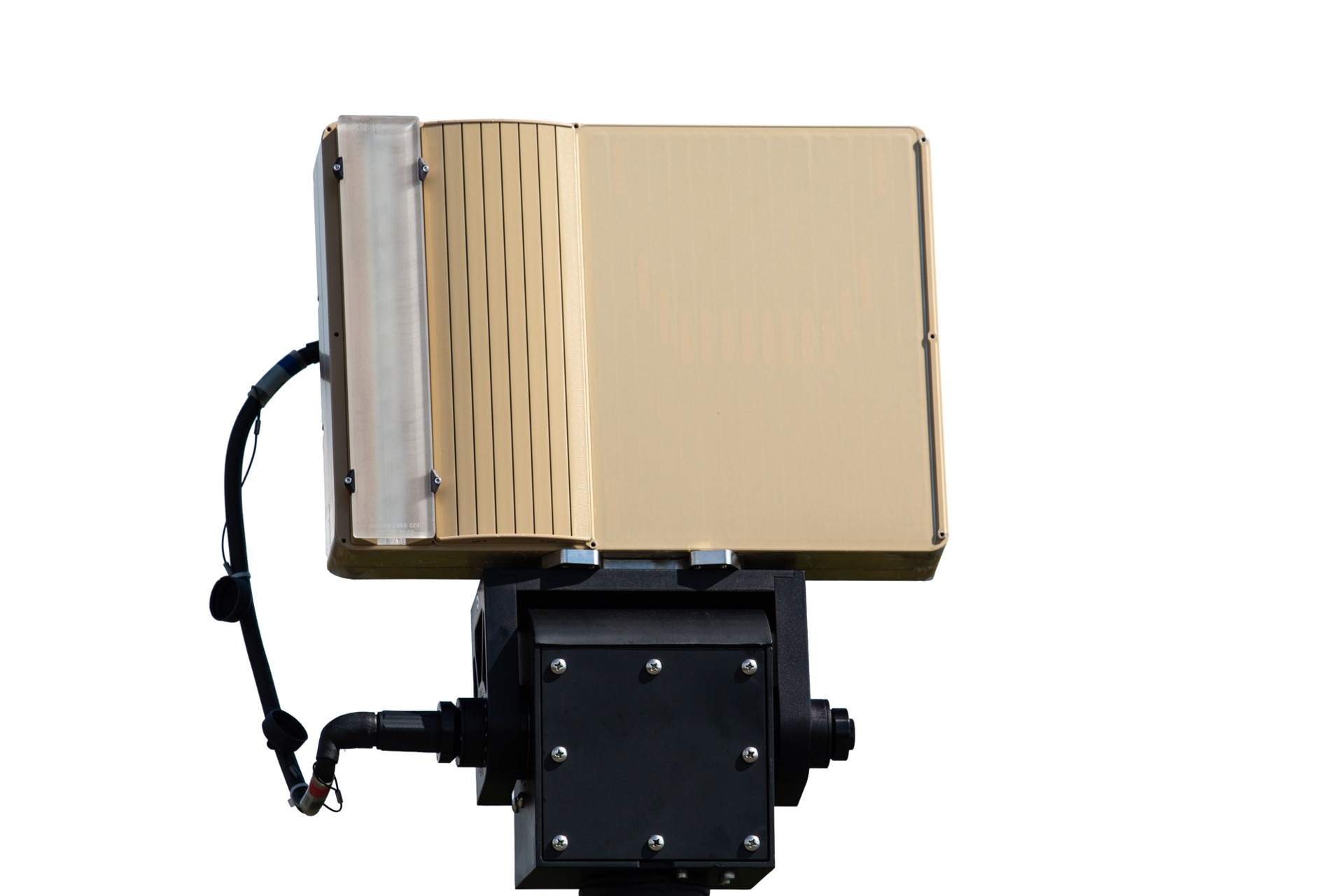
Teledyne FLIR Defense introduced Ranger R10-3DX at AUSA in an October 13 release. The company describes a compact radar for security, airports and critical infrastructure as well as defense. It reports detection of micro-UAS beyond three kilometres, people beyond six kilometres and light vehicles beyond twelve kilometres. These are supplier claims for different target categories. They should not be collapsed into a single assertion that the radar detects every relevant object at its longest advertised distance. Read the original source account.
Coverage depends on the configuration
The release describes a ninety-degree azimuth field for one panel and a four-panel arrangement for full-circle surveillance. That distinction matters when a buyer compares cost, placement and coverage. A photograph of one panel does not establish the coverage of a complete installation. Nor does a full-circle arrangement establish that every location around a facility has equal visibility. The proposed installation needs its own coverage assessment, with the selected hardware and local obstructions retained in the record.
A site survey should begin with the assets and approaches that require observation. That is a more useful starting point than selecting a headline range and drawing a perfect circle around a mounting point. Buildings, traffic and the sensor’s position can change the practical task. The source release does not publish an independent result for every such environment. Describing those dependencies keeps the product’s announced scope clear without inventing failures that have not been reported.
An alert must remain understandable
Detection, classification and tracking contribute different information. An operator receiving an alert needs to understand which part of that sequence has occurred and how certain the system is about the object. A track can help organize attention without establishing intent. For a security team, the relevant acceptance task is therefore not simply whether a demonstration produces a visible marker, but whether the marker supports a correct and timely next step under representative conditions.
False alerts and missed observations should be assessed together. A system that generates many plausible detections can transfer substantial work to the receiving team. Conversely, a quiet display does not prove that the environment contains no relevant objects. The public introduction does not provide a universal sensitivity or false-alarm rate. A local comparison should preserve target class, observation conditions and the operator workload associated with the selected settings, so that apparent improvements can be interpreted fairly.
Availability is still a future milestone
FLIR’s release schedules availability for the first quarter of 2027. That is a supplier plan rather than a claim that every proposed customer installation is operational now. Prospective buyers can use the announcement to define questions for evaluation, while distinguishing a product introduction from delivery and acceptance. The difference also matters to partners building a wider system around the radar: integration work and support arrangements need to match the hardware that actually becomes available.
The sensor also does not by itself authorize action against an aircraft. Detection and mitigation are different functions, with different responsibilities. A security organization should define its notification and escalation process before interpreting a new detection capability as permission to interfere with a flight. This article assesses the announced sensing arrangement; it does not establish the legal authority of a particular operator or describe an independently verified protection outcome.
Installation changes should remain visible in later performance reviews. Adding a panel or moving the mounting point can alter the observation geometry even when the product name stays the same. A receiving team should therefore compare configurations rather than assume that results from one arrangement automatically apply to another. This would help separate genuine sensing improvements from changes in what the radar was positioned to observe.
The immediate contribution is a more specific radar option with clearly separable target and coverage claims. Its longer-term significance depends on the installed system’s ability to deliver useful observations at a manageable workload. Evidence connecting the selected panel arrangement, representative targets and actual operator decisions would provide a stronger basis for adoption than the longest range figure alone. Until then, the announced specifications and the complete security outcome should remain distinct.
Source organizations: Teledyne FLIR Defense.
References
Questions, news tips or corrections? Contact [email protected].