A security patrol only becomes useful when an observation reaches someone who can decide what to do. Replacing part of the route with a robot does not remove that decision. It changes the arrangement through which the team sees an event, checks its context and directs a response. A managed robotic service should therefore be assessed as a combination of hardware, communications and people, rather than as an isolated machine moving around a facility.
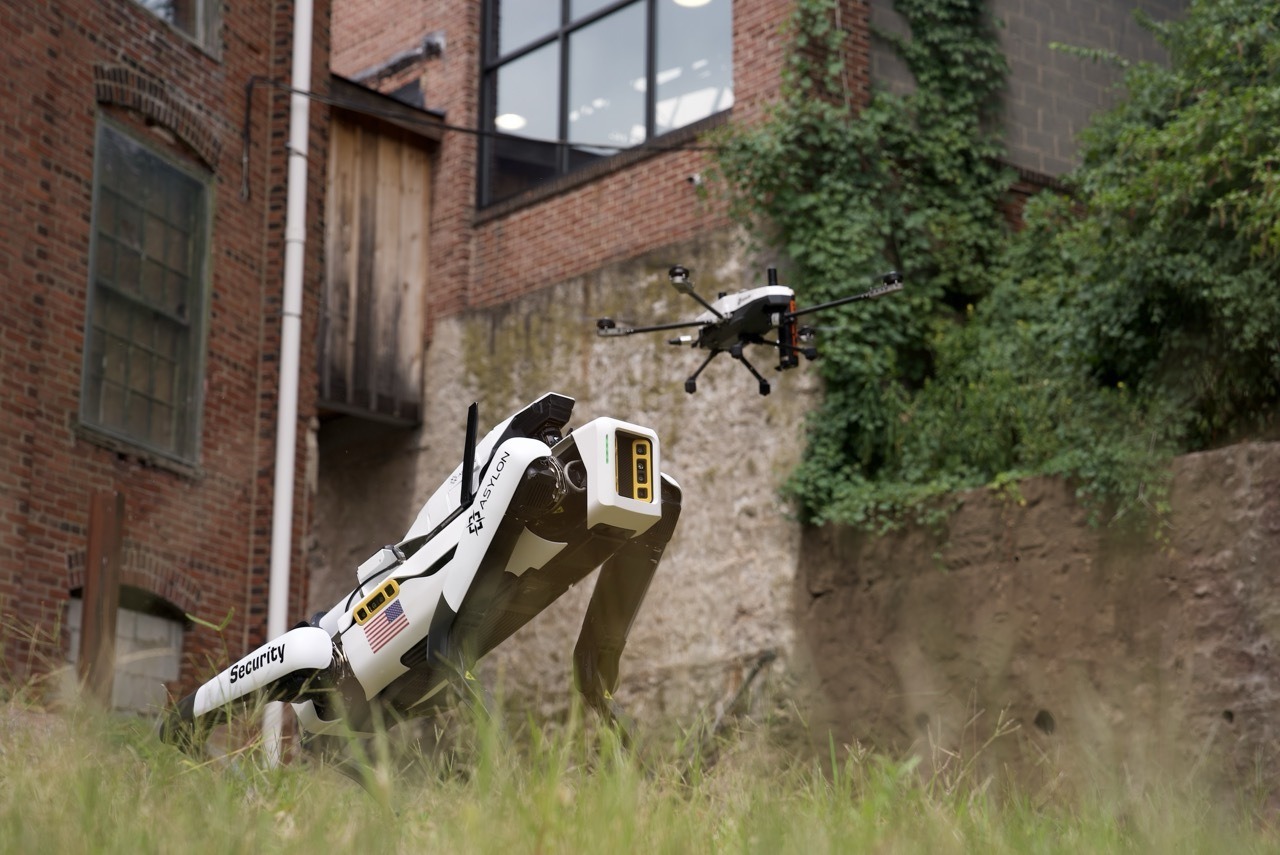
Alert 360’s DroneDog service, announced on October 1, combines Asylon technology and the Boston Dynamics Spot platform. Its product account describes scheduled or alarm-triggered patrols, thermal and high-definition video, remote human monitoring through Asylon’s operations centre and automatic charging at a DogHouse station. The offered service includes connectivity, maintenance and monthly patrol reporting, with quotations depending on the site and patrol frequency. This is an October service development, rather than a new October 29 launch. Read the original source account.
The subscription needs a defined unit of work
A service description can simplify procurement, but the receiving organization still needs to define what it is buying. A scheduled route, an alarm response and a request for a closer observation are different tasks. Each can involve a different delay, human decision and return to charging. The phrase continuous service should not be interpreted as continuous movement of one robot. Coverage needs to be described in terms of the actual operating pattern and the supported response arrangement.
The route should be connected to the site’s security priorities. A robot may pass a location regularly while an event occurs between visits. That does not make the route useless, but it changes the claim a buyer can support. A practical acceptance discussion should retain patrol frequency, the locations observed and the procedure for an unscheduled request. This is more informative than a general assertion that a robot covers an entire property without specifying when or how.
Remote observation still needs local context
Thermal and visible video can provide complementary information, while leaving the receiving person responsible for interpreting what is shown. The operator may need to distinguish a routine activity from a condition requiring another look. That assessment depends on site context as well as image quality. The product account does not publish an independently measured Alert 360 service-wide detection rate. It should not be read as evidence that every event will be recognized correctly in every customer environment.
A useful handoff preserves where the robot is, when the observation was made and what the operator requested next. Otherwise, a clear image can still lead to confusion about the relevant location or response. Local responders also need to know what information the remote team has already checked. The purpose is to avoid passing an unexplained alert between organizations while each assumes the other has resolved the uncertainty. That coordination belongs in the service assessment alongside the robot’s route.
Support is part of availability
Including maintenance and connectivity in the offered service makes those responsibilities visible in the commercial arrangement. It does not establish the recovery time for every possible interruption. A buyer should understand how an unavailable robot changes the patrol plan, who receives notice and what alternative process applies. These questions examine the service’s resilience without assuming a particular failure has occurred. They are especially relevant when the patrol becomes part of an established security routine.
Monthly reporting can help make the service inspectable if it connects activity to useful outcomes. Counts of routes and alerts show work performed, but they do not alone show whether the work improved decisions. The report should distinguish completed observations, requests requiring follow-up and periods when the planned coverage was unavailable. Keeping that detail allows the customer to compare the service against its actual objective, rather than rewarding motion or alert volume regardless of their practical value.
An alarm-triggered patrol also needs a defined relationship to routine rounds. If the robot diverts to examine one event, the customer should understand which planned observations are delayed. Recording that tradeoff makes the service easier to assess honestly. A successful investigation can be valuable while still changing coverage elsewhere; both outcomes belong in the record rather than being compressed into a single count of completed patrols.
The near-term change is a managed procurement route for robotic patrol with human monitoring and support included. Its longer-term value depends on whether that complete arrangement delivers understandable observations and dependable handoffs at the customer’s site. The public launch establishes the offered service, not independently measured customer results. A well-defined trial can bridge that gap by retaining both routine performance and the work required when the planned sequence is interrupted.
Source organizations: Alert 360, Asylon, Boston Dynamics.
References
Questions, news tips or corrections? Contact [email protected].