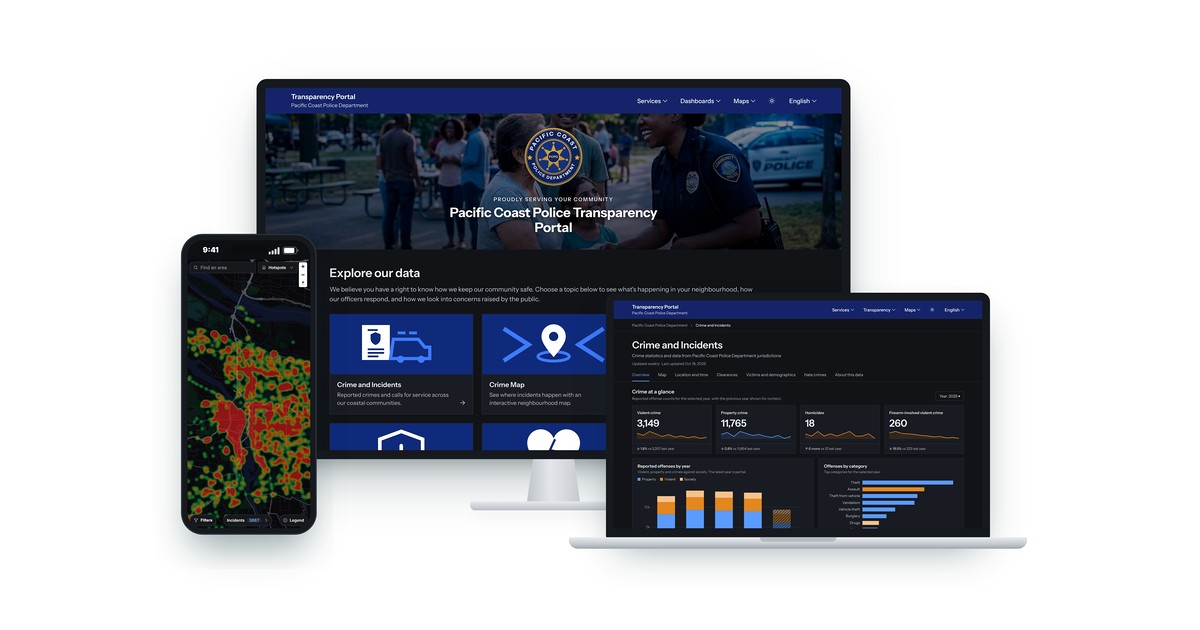
A public-safety system can retain detailed operational records while still leaving residents without a clear account of how the technology is used. Turning those records into understandable information requires definitions, context and a decision about what can be disclosed. Automating publication can reduce repetitive work, but it must preserve the distinction between an internal event record and a defensible public explanation.
Versaterm’s CommunityTrust material describes an upcoming transparency layer within its product environment, with agency-branded pages, ready-made topics and review controls. The current page says rollout will extend across products during 2026 and 2027 and identifies DroneSense among the intended data sources. This is a product plan, not evidence that every listed integration is already deployed. The page does not publish an independent study showing improved public trust or a quantified reduction in reporting workload. Read the primary source account.
A public metric needs a stable definition
Operational software records events for particular purposes. A dispatch, authorization request, launch and completed drone mission are different events, even when they relate to the same incident. A transparency layer should not combine them into an ambiguous count. This is an analytical requirement raised by the proposed connection to drone records, not a description of an undisclosed CommunityTrust metric or a claim that the product currently miscounts flights.
Consider an illustrative public question about how often a department uses drones. A useful answer would state what constitutes a flight, the period covered and how canceled or training activity is treated. The record may also need context about the task and outcome. This is a proposed reporting example, not a statistic from a customer. It shows why automatically updating a page is only useful when the definition behind the displayed measure remains understandable.
The source says agencies retain control over publication and can tailor pages, with data sources able to update automatically or wait for review. That control is an important part of the proposal, but the actual configuration still matters. A customer needs to identify which changes require approval and how reviewers recognize an unexpected shift. The public material does not supply a complete implementation audit of every approval and correction path.
Connected records should preserve privacy and corrections
Transparency does not require publishing every operational detail. A system can provide useful aggregate information while protecting sensitive records and explaining exclusions. The appropriate boundary depends on the data and the agency’s obligations. This article does not infer that a vendor’s default controls settle every disclosure question. The technical point is that the publication process should preserve a reviewable relationship between the public measure and the underlying records.
Corrections also need a visible process. An operational record may be amended after an investigation or a data-quality check. If a public page updates automatically, readers need a way to understand a consequential change to a previously reported figure. This is a proposed evaluation criterion, not an announced CommunityTrust feature. A useful system would help the agency preserve definitions and revision history rather than treating every latest value as if it had always been the same.
The current rollout language should be kept separate from older or more specific promotional timelines. The page now describes availability across a range of products during 2026 and 2027 and directs agencies to discuss timing with their representative. This article does not assert that a particular DroneSense release is generally available in December or that the whole product family shares one confirmed launch date. Planned integration remains a stage to verify.
An informative customer evaluation could compare a defined reporting cycle before and after implementation, including preparation, review, correction and response to questions. These are suggested measures, not published results. Faster production of a page can reduce work while still leaving interpretation and accountability with people. The evaluation should therefore consider the clarity and traceability of the answer, not only the time needed to generate it.
The next evidence is a deployed agency example with the exact data source, metric definitions and approval process preserved. CommunityTrust’s proposition is relevant to drone programs because public understanding depends on more than flight logs remaining inside an operational platform. Its value will depend on making a clear, correctable account available without obscuring the people responsible for deciding what the records mean and what should be published.
References
Questions, news tips or corrections? Contact [email protected].