The dates on a surveillance notice describe when a power may be used, while the actual use can vary within that period. Confusing those two things can turn a conditional operating decision into an unsupported claim of continuous monitoring. A useful public account needs to preserve the location, purpose and limits stated by the authority, so residents can distinguish what has been announced from what subsequent operating records would have to establish.
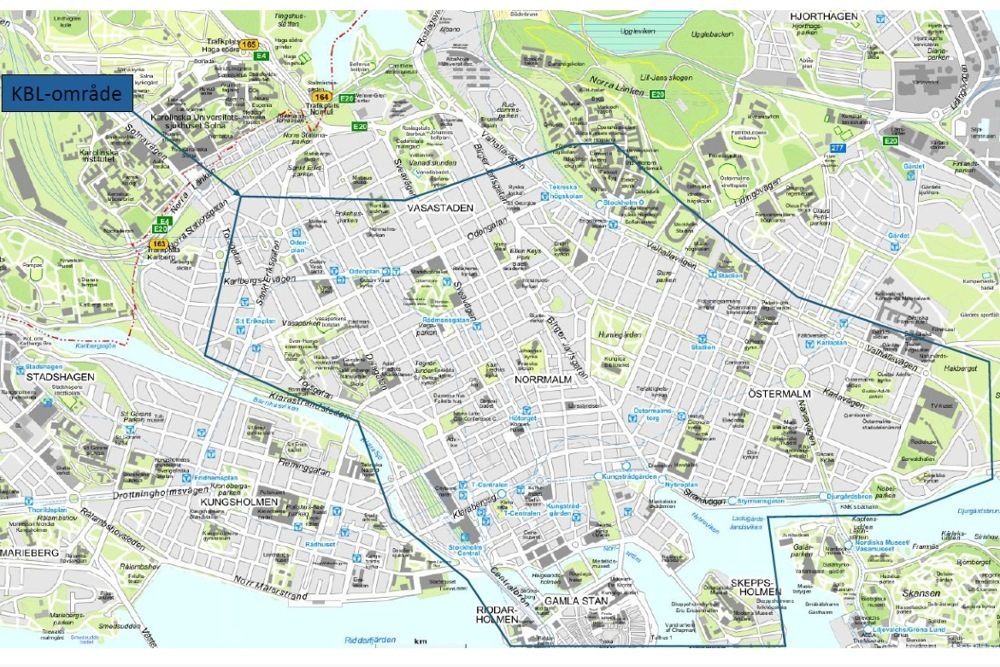
Swedish Police published an October 26 notice covering parts of central Stockholm from October 31, 2026 through April 30, 2027. It names Norrmalm, Södermalm, Vasastaden, Östermalm and Gamla stan and permits drone camera use as needed, around the clock within that period. The notice describes crime prevention, detection and investigation purposes. It does not say that aircraft will fly continuously throughout those six months. Read the primary source account.
Time and geography define different boundaries
The operating window allows use at different hours, while the as-needed qualification concerns whether a deployment occurs. Both belong in a faithful description. Removing either would change how a reader understands the announced scope. The source also provides maps of the affected areas, which are more specific than the names of large districts alone. A resident seeking the exact boundary should consult those original maps.
An authorization period is also distinct from a record of flights. To determine how often the capability is used, a reader would need operating data rather than the notice alone. That distinction does not minimize the significance of a broad operating window. It identifies the kind of evidence required for a claim about actual deployment frequency, duration or the number of people observed.
The notice includes a public-place limit
Police state that the decision does not permit filming into homes and concerns public places. The article reports that boundary as the authority’s account of the decision; it does not provide an independent legal determination for every possible flight. The practical significance is that the public has a stated limit against which an explanation of subsequent use can be assessed.
The notice also describes the police’s balancing of surveillance interests and individuals’ interests in avoiding observation. That is the institution’s stated basis, rather than evidence that everyone affected shares the assessment. A transparent operating account would make it possible to understand the purpose of a particular deployment without treating the existence of a general notice as a complete explanation for every collection decision.
Recorded material and live observation need separate accounts
The source says material may be used in investigations and as court evidence. That identifies a possible downstream use while leaving the handling of particular recordings dependent on the applicable process. Readers should not infer an undisclosed technology supplier, facial-recognition system or data-sharing arrangement from the fact that a drone camera may be used. None of those additional claims is established by this notice.
The same evidential discipline applies to identification. The authority states that individual identification is generally not possible at the heights its drones normally use. That is a qualified institutional statement about typical operation. It should not be rewritten as a technical guarantee that no person could ever be identifiable in any material, nor should the opposite be asserted without relevant evidence.
The difference between a published policy and an observed outcome also matters when evaluating the notice itself. Clear dates and maps make the decision easier to understand, but do not by themselves show how consistently the boundaries are applied. A useful follow-up would identify what aggregate information about deployments and retained recordings can be shared without exposing an active investigation. That could support public scrutiny of the announced arrangement while keeping the analysis grounded in actual records. Neither the most reassuring nor the most alarming interpretation should replace evidence of practice.
The near-term change is a published time-and-area decision that begins October 31. Its wider significance concerns how a remotely operated observation capability is explained and accounted for in public space. The next useful evidence is proportionate reporting of actual use, tied to the stated purposes and limits. The notice provides a starting boundary; subsequent deployment and handling records are what would show how that boundary operates in practice. Clear reporting of each subsequent milestone would keep that distinction visible.
Source organizations: Swedish Police Authority.
References
Questions, news tips or corrections? Contact [email protected].